

TIME Ch)
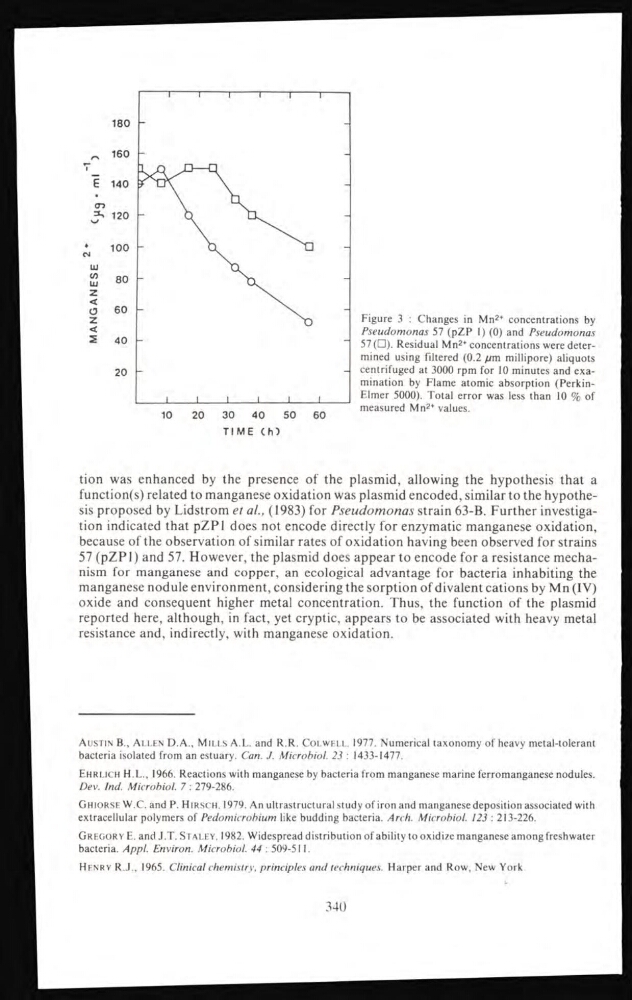
Figure 3 : changes in Mn2+ concentrations by
Pseudomonas 57 (pZP 1) (0) and Pseudomonas
57 ( ). Residual Mn2+ concentrations were determined using filtered (0.2 µm millipore) aliquots
centrifuged at 3000rpm for 10 minutes and examination by Flame atomic absorption (PerkinElmer 5000). Toral error was less than 10 % of
measured Mn2+ values.
tion was enhanced by the presence of the plasmid, allowing the hypothesis that a
function(s) related to manganese oxidation was plasmid encoded, similar to the hypothesis proposed by Lidstrom et ai, (1983) for Pseudomonas strain 63-B. Further investigation indicated that pZPl does not encode directly for enzymatic manganese oxidation,
because of the observation of similar rates of oxidation having been observed for strains
57 (pZPl) and 57. However, the plasmid does appear to encode for a resistance mechanism for manganese and copper, an ecological advantage for bacteria inhabiting the
manganese nodule environment, considering the sorption of divalent cations by Mn (IV)
oxide and consequent higher metal concentration. Thus, the function of the plasmid
reported here, although, in fact, yet cryptic, appears to be associated with heavy metal
resistance and, indirectly, with manganese oxidation.
AUSTIN B., ALLEN D.A., MILLS A.L. and R.R. COLWELL, 1977. Numerical taxonomy of heavy metal-tolerant
bacteria isolated from an estuary. Can. J. Microbiol. 23 : 1433-1477.
EHRLICH H.L., 1966. Reactions with manganese by bacteria from manganese marine ferromanganese nodules.
Dev. Ind. Microbiol. 7: 279-286.
GHIORSE W.C. and P. HIRSCH, 1979. An ultrastructural study of iron and manganese deposition associated with
extracellular polymers of Pedomicrobium like budding bacteria. Arch. Microbiol. 123 : 213-226.
GREGORY E. and J.T. STALEY, 1982. Widespread distribution of ability to oxidize manganese among freshwater
bacteria. Appl. Environ. Microbiol. 44 : 509-511.
HENRY R.J., 1965. Clinical chemistry, principles and techniques. Harper and Row, New York.
340
Figure 3 : changes in Mn2+ concentrations by
Pseudomonas 57 (pZP 1) (0) and Pseudomonas
57 ( ). Residual Mn2+ concentrations were determined using filtered (0.2 µm millipore) aliquots
centrifuged at 3000rpm for 10 minutes and examination by Flame atomic absorption (PerkinElmer 5000). Toral error was less than 10 % of
measured Mn2+ values.
tion was enhanced by the presence of the plasmid, allowing the hypothesis that a
function(s) related to manganese oxidation was plasmid encoded, similar to the hypothesis proposed by Lidstrom et ai, (1983) for Pseudomonas strain 63-B. Further investigation indicated that pZPl does not encode directly for enzymatic manganese oxidation,
because of the observation of similar rates of oxidation having been observed for strains
57 (pZPl) and 57. However, the plasmid does appear to encode for a resistance mechanism for manganese and copper, an ecological advantage for bacteria inhabiting the
manganese nodule environment, considering the sorption of divalent cations by Mn (IV)
oxide and consequent higher metal concentration. Thus, the function of the plasmid
reported here, although, in fact, yet cryptic, appears to be associated with heavy metal
resistance and, indirectly, with manganese oxidation.
AUSTIN B., ALLEN D.A., MILLS A.L. and R.R. COLWELL, 1977. Numerical taxonomy of heavy metal-tolerant
bacteria isolated from an estuary. Can. J. Microbiol. 23 : 1433-1477.
EHRLICH H.L., 1966. Reactions with manganese by bacteria from manganese marine ferromanganese nodules.
Dev. Ind. Microbiol. 7: 279-286.
GHIORSE W.C. and P. HIRSCH, 1979. An ultrastructural study of iron and manganese deposition associated with
extracellular polymers of Pedomicrobium like budding bacteria. Arch. Microbiol. 123 : 213-226.
GREGORY E. and J.T. STALEY, 1982. Widespread distribution of ability to oxidize manganese among freshwater
bacteria. Appl. Environ. Microbiol. 44 : 509-511.
HENRY R.J., 1965. Clinical chemistry, principles and techniques. Harper and Row, New York.
340