

spectra. Unfortunately most of the standard spectral compilations have been made with
conventional IR spectrophotometers and are only crude approximations of what can be
achieved with the FT/ IR instruments. The solution to this problem is just as it is in mass
spectroscopy to generate reference spectra with authentic samples.
5. Since a large capacity computer is required to transform the signals this computer can
also be utilized to manipulate the signals. The generation of difference spectra by
electronically subtracting before and after treatments allows small differences to be
detected. These small differences can be further increased by plotting derivatives of the
spectra.
6. The high capacity of the array processors allow for 64,000 Fourier transforms/second.
This makes possible the online monitoring of successive scans. The computer can be
programmed to discard scans that are outside specific limits set by the spectroscopist.
This facilitates the use of repetitive scanning that greatly increases the sensitivity of
analyses.
7. The high signal to noise ratio allows measurement in the far infrared region (100010 cm -1 ). The weak vibrations that involve heavy metallic atoms can now be included in
the spectra.
Use of the FT/IR in microbial biofilm studies has been reviewed (Nichols et al. 1985).
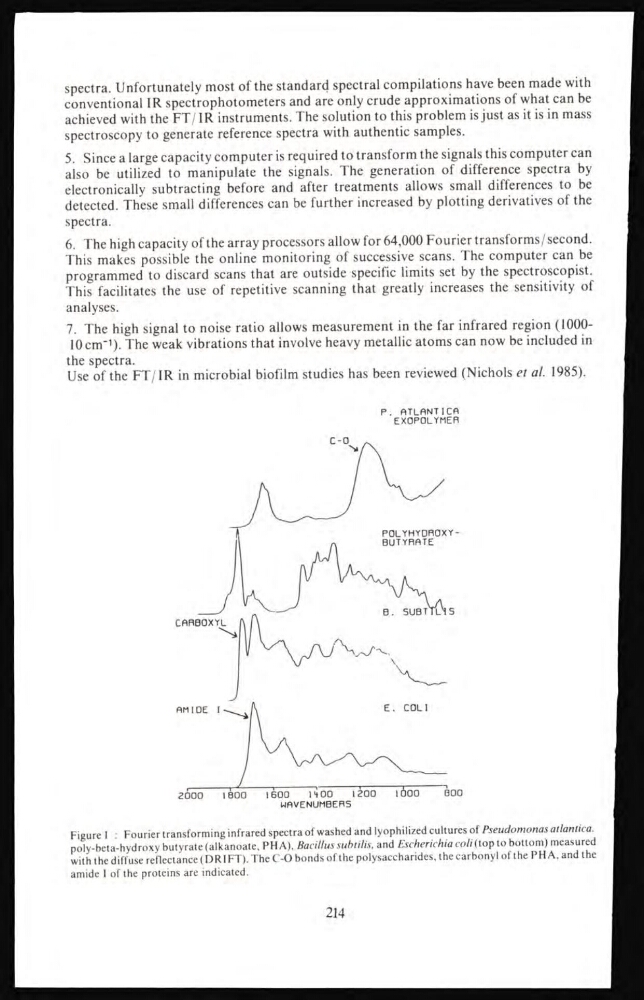
Figure 1 : Fourier transforming infrared spectra of washed and lyophilized cultures of Pseudomonas atlantica.
poly-beta-hydroxy butyrate (alkanoate, PHA), Bacillus subtilis, and Escherichia coli (top to bottom) measured
with the diffuse reflectance (DRIFT). The C-O bonds of the polysaccharides, the carbonyl of the PH A, and the
amide 1 of the proteins are indicated.
214
conventional IR spectrophotometers and are only crude approximations of what can be
achieved with the FT/ IR instruments. The solution to this problem is just as it is in mass
spectroscopy to generate reference spectra with authentic samples.
5. Since a large capacity computer is required to transform the signals this computer can
also be utilized to manipulate the signals. The generation of difference spectra by
electronically subtracting before and after treatments allows small differences to be
detected. These small differences can be further increased by plotting derivatives of the
spectra.
6. The high capacity of the array processors allow for 64,000 Fourier transforms/second.
This makes possible the online monitoring of successive scans. The computer can be
programmed to discard scans that are outside specific limits set by the spectroscopist.
This facilitates the use of repetitive scanning that greatly increases the sensitivity of
analyses.
7. The high signal to noise ratio allows measurement in the far infrared region (100010 cm -1 ). The weak vibrations that involve heavy metallic atoms can now be included in
the spectra.
Use of the FT/IR in microbial biofilm studies has been reviewed (Nichols et al. 1985).
Figure 1 : Fourier transforming infrared spectra of washed and lyophilized cultures of Pseudomonas atlantica.
poly-beta-hydroxy butyrate (alkanoate, PHA), Bacillus subtilis, and Escherichia coli (top to bottom) measured
with the diffuse reflectance (DRIFT). The C-O bonds of the polysaccharides, the carbonyl of the PH A, and the
amide 1 of the proteins are indicated.
214