

Component
Concentration
nmoles/g dry wt.
Sensitivity
moles
Equivalence
(10 12 E. coli/g dry wt.)
Extractable Phospholipid
Phosphate
Glycerol Phosphate
50
50
10 -9
10 -11
2 x 10 7
2 x 10 5
Ester-linked Extractable
Fatty Acids
100
3 x 10 -13
3 x 10 3
Muramic acid/glucosamine
14.5
3 x 10 -13
2 x 10 4
LPS-Lipid a hydroxy
Fatty Acids
13.5
2 x 10 -13
1 x 10 4
Teichoic Acid
Glycerol/ Ribitol
341
10 -11
3 x 10 4
Diphytanyl Glycerol Ether
1.7
4 x 10 -14
4 x 10 4
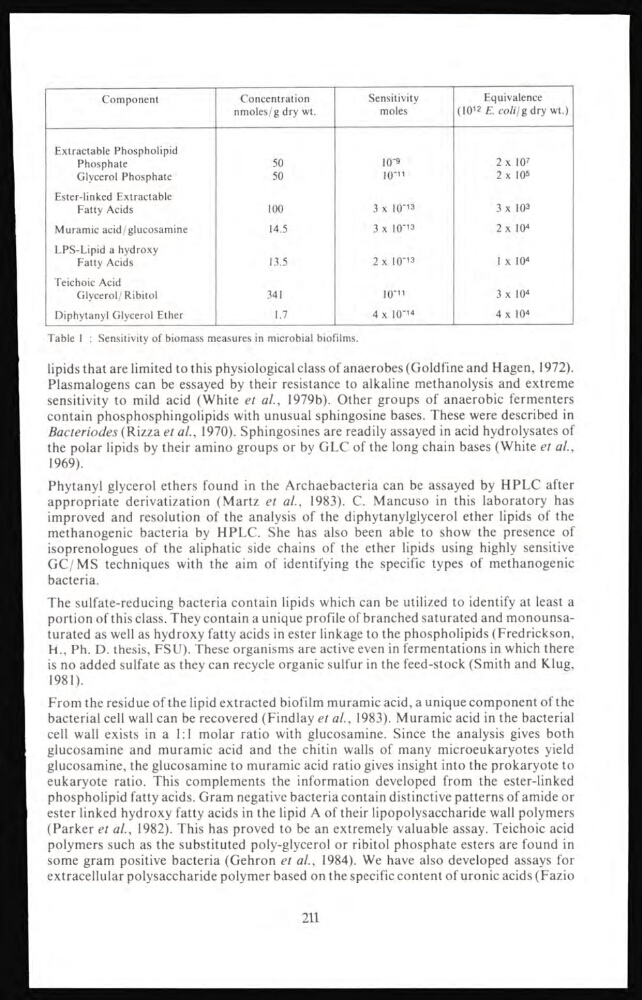
Table 1 : Sensitivity of biomass measures in microbial biofilms.
lipids that are limited to this physiological class of anaerobes (Goldfine and Hagen, 1972).
Plasmalogens can be essayed by their resistance to alkaline methanolysis and extreme
sensitivity to mild acid (White et al., 1979b). Other groups of anaerobic fermenters
contain phosphosphingolipids with unusual sphingosine bases. These were described in
Bacteriodes (Rizza et ai, 1970). Sphingosines are readily assayed in acid hydrolysates of
the polar lipids by their amino groups or by GLC of the long chain bases (White et al.,
1969).
Phytanyl glycerol ethers found in the Archaebacteria can be assayed by HPLC after
appropriate derivatization (Martz et ai. 1983). C. Mancuso in this laboratory has
improved and resolution of the analysis of the diphytanylglycerol ether lipids of the
methanogenic bacteria by HPLC. She has also been able to show the presence of
isoprenologues of the aliphatic side chains of the ether lipids using highly sensitive
GC/MS techniques with the aim of identifying the specific types of methanogenic
bacteria.
The sulfate-reducing bacteria contain lipids which can be utilized to identify at least a
portion of this class. They contain a unique profile of branched saturated and monounsaturated as well as hydroxy fatty acids in ester linkage to the phospholipids (Fredrickson,
H., Ph. D. thesis, FSU). These organisms are active even in fermentations in which there
is no added sulfate as they can recycle organic sulfur in the feed-stock (Smith and Klug,
1981).
From the residue of the lipid extracted biofilm muramic acid, a unique component of the
bacterial cell wall can be recovered (Findlay et ai, 1983). Muramic acid in the bacterial
cell wall exists in a 1:1 molar ratio with glucosamine. Since the analysis gives both
glucosamine and muramic acid and the chitin walls of many microeukaryotes yield
glucosamine, the glucosamine to muramic acid ratio gives insight into the prokaryote to
eukaryote ratio. This complements the information developed from the ester-linked
phospholipid fatty acids. Gram negative bacteria contain distinctive patterns of amide or
ester linked hydroxy fatty acids in the lipid A of their lipopolysaccharide wall polymers
(Parker et ai, 1982). This has proved to be an extremely valuable assay. Teichoic acid
polymers such as the substituted poly-glycerol or ribitol phosphate esters are found in
some gram positive bacteria (Gehron et ai, 1984). We have also developed assays for
extracellular polysaccharide polymer based on the specific content of uronic acids (Fazio
211
Concentration
nmoles/g dry wt.
Sensitivity
moles
Equivalence
(10 12 E. coli/g dry wt.)
Extractable Phospholipid
Phosphate
Glycerol Phosphate
50
50
10 -9
10 -11
2 x 10 7
2 x 10 5
Ester-linked Extractable
Fatty Acids
100
3 x 10 -13
3 x 10 3
Muramic acid/glucosamine
14.5
3 x 10 -13
2 x 10 4
LPS-Lipid a hydroxy
Fatty Acids
13.5
2 x 10 -13
1 x 10 4
Teichoic Acid
Glycerol/ Ribitol
341
10 -11
3 x 10 4
Diphytanyl Glycerol Ether
1.7
4 x 10 -14
4 x 10 4
Table 1 : Sensitivity of biomass measures in microbial biofilms.
lipids that are limited to this physiological class of anaerobes (Goldfine and Hagen, 1972).
Plasmalogens can be essayed by their resistance to alkaline methanolysis and extreme
sensitivity to mild acid (White et al., 1979b). Other groups of anaerobic fermenters
contain phosphosphingolipids with unusual sphingosine bases. These were described in
Bacteriodes (Rizza et ai, 1970). Sphingosines are readily assayed in acid hydrolysates of
the polar lipids by their amino groups or by GLC of the long chain bases (White et al.,
1969).
Phytanyl glycerol ethers found in the Archaebacteria can be assayed by HPLC after
appropriate derivatization (Martz et ai. 1983). C. Mancuso in this laboratory has
improved and resolution of the analysis of the diphytanylglycerol ether lipids of the
methanogenic bacteria by HPLC. She has also been able to show the presence of
isoprenologues of the aliphatic side chains of the ether lipids using highly sensitive
GC/MS techniques with the aim of identifying the specific types of methanogenic
bacteria.
The sulfate-reducing bacteria contain lipids which can be utilized to identify at least a
portion of this class. They contain a unique profile of branched saturated and monounsaturated as well as hydroxy fatty acids in ester linkage to the phospholipids (Fredrickson,
H., Ph. D. thesis, FSU). These organisms are active even in fermentations in which there
is no added sulfate as they can recycle organic sulfur in the feed-stock (Smith and Klug,
1981).
From the residue of the lipid extracted biofilm muramic acid, a unique component of the
bacterial cell wall can be recovered (Findlay et ai, 1983). Muramic acid in the bacterial
cell wall exists in a 1:1 molar ratio with glucosamine. Since the analysis gives both
glucosamine and muramic acid and the chitin walls of many microeukaryotes yield
glucosamine, the glucosamine to muramic acid ratio gives insight into the prokaryote to
eukaryote ratio. This complements the information developed from the ester-linked
phospholipid fatty acids. Gram negative bacteria contain distinctive patterns of amide or
ester linked hydroxy fatty acids in the lipid A of their lipopolysaccharide wall polymers
(Parker et ai, 1982). This has proved to be an extremely valuable assay. Teichoic acid
polymers such as the substituted poly-glycerol or ribitol phosphate esters are found in
some gram positive bacteria (Gehron et ai, 1984). We have also developed assays for
extracellular polysaccharide polymer based on the specific content of uronic acids (Fazio
211