

Total sample
3 µm fraction
Oosterschelds winter
- 0.4 (39)
0.5 (39)
summer
2.9 (40)
7.7 (37)
Grevelingen winter
- 0.6 ( 9)
1.3 ( 9)
summer
6.1 ( 7)
5.9 ( 7)
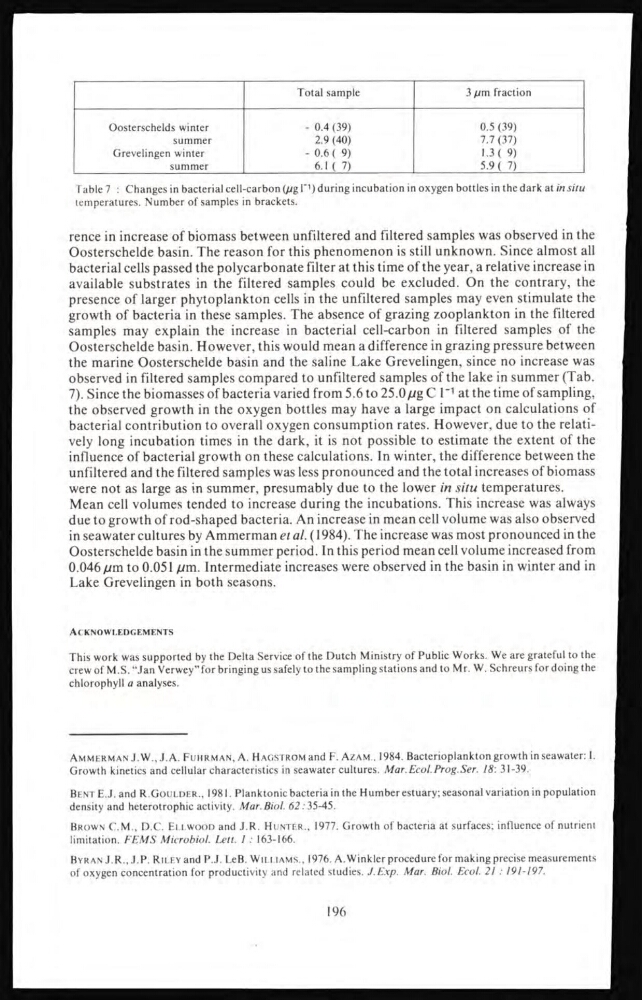
Table 7 : Changes in bacterial cell-carbon (µg P) during incubation in oxygen bottles in the dark at in situ
temperatures. Number of samples in brackets.
rence in increase of biomass between unfiltered and filtered samples was observed in the
Oosterschelde basin. The reason for this phenomenon is still unknown. Since almost all
bacterial cells passed the polycarbonate filter at this time of the year, a relative increase in
available substrates in the filtered samples could be excluded. On the contrary, the
presence of larger phytoplankton cells in the unfiltered samples may even stimulate the
growth of bacteria in these samples. The absence of grazing zooplankton in the filtered
samples may explain the increase in bacterial cell-carbon in filtered samples of the
Oosterschelde basin. However, this would mean a difference in grazing pressure between
the marine Oosterschelde basin and the saline Lake Grevelingen, since no increase was
observed in filtered samples compared to unfiltered samples of the lake in summer (Tab.
7). Since the biomasses of bacteria varied from 5.6 to 25.0 µg C l -1 at the time of sampling,
the observed growth in the oxygen bottles may have a large impact on calculations of
bacterial contribution to overall oxygen consumption rates. However, due to the relatively long incubation times in the dark, it is not possible to estimate the extent of the
influence of bacterial growth on these calculations. In winter, the difference between the
unfiltered and the filtered samples was less pronounced and the total increases of biomass
were not as large as in summer, presumably due to the lower in situ temperatures.
Mean cell volumes tended to increase during the incubations. This increase was always
due to growth of rod-shaped bacteria. An increase in mean cell volume was also observed
in seawater cultures by Ammerman et al. (1984). The increase was most pronounced in the
Oosterschelde basin in the summer period. In this period mean cell volume increased from
0.046 µm to 0.051 yum. Intermediate increases were observed in the basin in winter and in
Lake Grevelingen in both seasons.
ACKNOWLEDGEMENTS
This work was supported by the Delta Service of the Dutch Ministry of Public Works. We are grateful to the
crew of M.S. “Jan Verwey”for bringing us safely to the sampling stations and to Mr. W. Schreurs for doing the
chlorophyll a analyses.
AMMERMAN J.W., J.A. FUHRMAN, A. HAGSTROM and F. AZAM., 1984. Bacterioplankton growth in seawater: I.
Growth kinetics and cellular characteristics in seawater cultures. Mar. Ecol.Prog.Ser. 18: 31-39.
BENT E. J. and R. GOULDER., 1981. Planktonic bacteria in the Humber estuary; seasonal variation in population
density and heterotrophic activity. Mar.Biol. 62:35-45.
BROWN C.M., D.C. ELLWOOD and J.R. HUNTER., 1977. Growth of bacteria at surfaces; influence of nutrient
limitation. FEMS Microbiol. Lett. 1 : 163-166.
BYRAN J.R., J.P. RILEY and P.J. LeB. WILLIAMS., 1976. A. Winkler procedure for making precise measurements
of oxygen concentration for productivity and related studies. J. Exp. Mar. Biol. Ecol. 21 : 191-197.
196
3 µm fraction
Oosterschelds winter
- 0.4 (39)
0.5 (39)
summer
2.9 (40)
7.7 (37)
Grevelingen winter
- 0.6 ( 9)
1.3 ( 9)
summer
6.1 ( 7)
5.9 ( 7)
Table 7 : Changes in bacterial cell-carbon (µg P) during incubation in oxygen bottles in the dark at in situ
temperatures. Number of samples in brackets.
rence in increase of biomass between unfiltered and filtered samples was observed in the
Oosterschelde basin. The reason for this phenomenon is still unknown. Since almost all
bacterial cells passed the polycarbonate filter at this time of the year, a relative increase in
available substrates in the filtered samples could be excluded. On the contrary, the
presence of larger phytoplankton cells in the unfiltered samples may even stimulate the
growth of bacteria in these samples. The absence of grazing zooplankton in the filtered
samples may explain the increase in bacterial cell-carbon in filtered samples of the
Oosterschelde basin. However, this would mean a difference in grazing pressure between
the marine Oosterschelde basin and the saline Lake Grevelingen, since no increase was
observed in filtered samples compared to unfiltered samples of the lake in summer (Tab.
7). Since the biomasses of bacteria varied from 5.6 to 25.0 µg C l -1 at the time of sampling,
the observed growth in the oxygen bottles may have a large impact on calculations of
bacterial contribution to overall oxygen consumption rates. However, due to the relatively long incubation times in the dark, it is not possible to estimate the extent of the
influence of bacterial growth on these calculations. In winter, the difference between the
unfiltered and the filtered samples was less pronounced and the total increases of biomass
were not as large as in summer, presumably due to the lower in situ temperatures.
Mean cell volumes tended to increase during the incubations. This increase was always
due to growth of rod-shaped bacteria. An increase in mean cell volume was also observed
in seawater cultures by Ammerman et al. (1984). The increase was most pronounced in the
Oosterschelde basin in the summer period. In this period mean cell volume increased from
0.046 µm to 0.051 yum. Intermediate increases were observed in the basin in winter and in
Lake Grevelingen in both seasons.
ACKNOWLEDGEMENTS
This work was supported by the Delta Service of the Dutch Ministry of Public Works. We are grateful to the
crew of M.S. “Jan Verwey”for bringing us safely to the sampling stations and to Mr. W. Schreurs for doing the
chlorophyll a analyses.
AMMERMAN J.W., J.A. FUHRMAN, A. HAGSTROM and F. AZAM., 1984. Bacterioplankton growth in seawater: I.
Growth kinetics and cellular characteristics in seawater cultures. Mar. Ecol.Prog.Ser. 18: 31-39.
BENT E. J. and R. GOULDER., 1981. Planktonic bacteria in the Humber estuary; seasonal variation in population
density and heterotrophic activity. Mar.Biol. 62:35-45.
BROWN C.M., D.C. ELLWOOD and J.R. HUNTER., 1977. Growth of bacteria at surfaces; influence of nutrient
limitation. FEMS Microbiol. Lett. 1 : 163-166.
BYRAN J.R., J.P. RILEY and P.J. LeB. WILLIAMS., 1976. A. Winkler procedure for making precise measurements
of oxygen concentration for productivity and related studies. J. Exp. Mar. Biol. Ecol. 21 : 191-197.
196