

by direct counts is rather small when compared to other macrophyte systems such as kelp
beds (Linley and Field, 1982; Davis et al., 1983) where the amount of structural carbohydrates per plant is lower and cell numbers range from 10
5 to 10
8 ml - 1 . At the present stage
of reseach no explanation can be offered to account for the low densities of suspended and
attached bacteria. However, it should be pointed out that the concentration of monomeric carbohydrates in the water (Fig. 3) is low, compared to the total DOC, and that
dissolved free amino acids are 100 to 200 times lower than the dissolved sugar compounds
(Velimirov, in prep.); also most of the DOC in the water may be present in highly
polymerized from which is more resistent to degradation. Further information was
obtained by SEM observations of suspended particles, showing that only 1 % of the latter.
November
February
Bacteria (mg C.m -3 )
DOC (gC.m-3)
POM (g AFDW.m -3
0.248 (0.043)
4.82 (8.21 )
8.27 (2.42 )
0.223 (0.102)
2.15 (1.072)
10.54 (5.28)
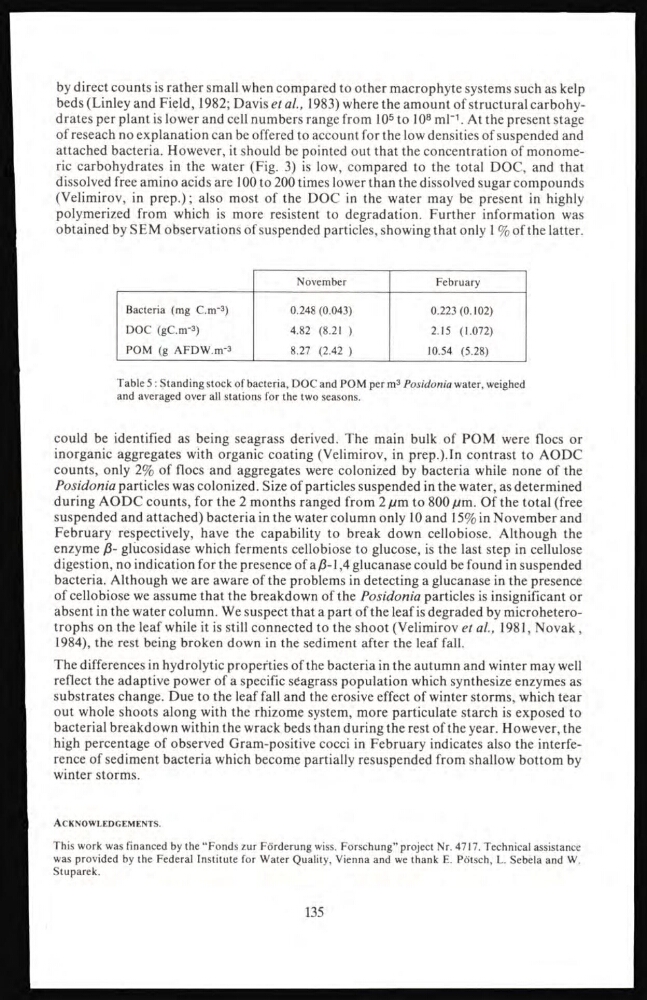
Table 5 : Standing stock of bacteria, DOC and POM per m
3 Posidonia water, weighed
and averaged over all stations for the two seasons.
could be identified as being seagrass derived. The main bulk of POM were flocs or
inorganic aggregates with organic coating (Velimirov, in prep.). In contrast to AODC
counts, only 2% of flocs and aggregates were colonized by bacteria while none of the
Posidonia particles was colonized. Size of particles suspended in the water, as determined
during AODC counts, for the 2 months ranged from 2 µm to 800 µm. Of the total (free
suspended and attached) bacteria in the water column only 10 and 15% in November and
February respectively, have the capability to break down cellobiose. Although the
enzyme β- glucosidase which ferments cellobiose to glucose, is the last step in cellulose
digestion, no indication for the presence of a β-1,4 glucanase could be found in suspended
bacteria. Although we are aware of the problems in detecting a glucanase in the presence
of cellobiose we assume that the breakdown of the Posidonia particles is insignificant or
absent in the water column. We suspect that a part of the leaf is degraded by microheterotrophs on the leaf while it is still connected to the shoot (Velimirov et ai, 1981, Novak,
1984), the rest being broken down in the sediment after the leaf fall.
The differences in hydrolytic properties of the bacteria in the autumn and winter may well
reflect the adaptive power of a specific seagrass population which synthesize enzymes as
substrates change. Due to the leaf fall and the erosive effect of winter storms, which tear
out whole shoots along with the rhizome system, more particulate starch is exposed to
bacterial breakdown within the wrack beds than during the rest of the year. However, the
high percentage of observed Gram-positive cocci in February indicates also the interference of sediment bacteria which become partially resuspended from shallow bottom by
winter storms.
ACKNOWLEDGEMENTS.
This work was financed by the “Fonds zur Förderung wiss. Forschung” project Nr. 4717. Technical assistance
was provided by the Federal Institute for Water Quality, Vienna and we thank E. Pötsch, L. Sebela and W.
Stuparek.
135
beds (Linley and Field, 1982; Davis et al., 1983) where the amount of structural carbohydrates per plant is lower and cell numbers range from 10
5 to 10
8 ml - 1 . At the present stage
of reseach no explanation can be offered to account for the low densities of suspended and
attached bacteria. However, it should be pointed out that the concentration of monomeric carbohydrates in the water (Fig. 3) is low, compared to the total DOC, and that
dissolved free amino acids are 100 to 200 times lower than the dissolved sugar compounds
(Velimirov, in prep.); also most of the DOC in the water may be present in highly
polymerized from which is more resistent to degradation. Further information was
obtained by SEM observations of suspended particles, showing that only 1 % of the latter.
November
February
Bacteria (mg C.m -3 )
DOC (gC.m-3)
POM (g AFDW.m -3
0.248 (0.043)
4.82 (8.21 )
8.27 (2.42 )
0.223 (0.102)
2.15 (1.072)
10.54 (5.28)
Table 5 : Standing stock of bacteria, DOC and POM per m
3 Posidonia water, weighed
and averaged over all stations for the two seasons.
could be identified as being seagrass derived. The main bulk of POM were flocs or
inorganic aggregates with organic coating (Velimirov, in prep.). In contrast to AODC
counts, only 2% of flocs and aggregates were colonized by bacteria while none of the
Posidonia particles was colonized. Size of particles suspended in the water, as determined
during AODC counts, for the 2 months ranged from 2 µm to 800 µm. Of the total (free
suspended and attached) bacteria in the water column only 10 and 15% in November and
February respectively, have the capability to break down cellobiose. Although the
enzyme β- glucosidase which ferments cellobiose to glucose, is the last step in cellulose
digestion, no indication for the presence of a β-1,4 glucanase could be found in suspended
bacteria. Although we are aware of the problems in detecting a glucanase in the presence
of cellobiose we assume that the breakdown of the Posidonia particles is insignificant or
absent in the water column. We suspect that a part of the leaf is degraded by microheterotrophs on the leaf while it is still connected to the shoot (Velimirov et ai, 1981, Novak,
1984), the rest being broken down in the sediment after the leaf fall.
The differences in hydrolytic properties of the bacteria in the autumn and winter may well
reflect the adaptive power of a specific seagrass population which synthesize enzymes as
substrates change. Due to the leaf fall and the erosive effect of winter storms, which tear
out whole shoots along with the rhizome system, more particulate starch is exposed to
bacterial breakdown within the wrack beds than during the rest of the year. However, the
high percentage of observed Gram-positive cocci in February indicates also the interference of sediment bacteria which become partially resuspended from shallow bottom by
winter storms.
ACKNOWLEDGEMENTS.
This work was financed by the “Fonds zur Förderung wiss. Forschung” project Nr. 4717. Technical assistance
was provided by the Federal Institute for Water Quality, Vienna and we thank E. Pötsch, L. Sebela and W.
Stuparek.
135