

The suprabenthic communities were sampled during two Oxybent cruises
(December and January 1999) with a modified version of the suprabenthic sledge Macer-Giroq described by Dauvin et al. (1995). The gear is
equipped with four superimposed nets (0.5 mm mesh size, sampling in
the 10-40, 45-75, 80-110 and 115-145 cm water layers above the bottom)
and with a mechanical opening-closing system acting by contact with thc
sea bottom. The area sampled on thc sca-bed was calculated from measurements given by flowmeters located in cach net box (see Dauvin et al.,
1995). Before laboratory examination, thc samplcs were preserved on
board with 10% neutralized formalin.
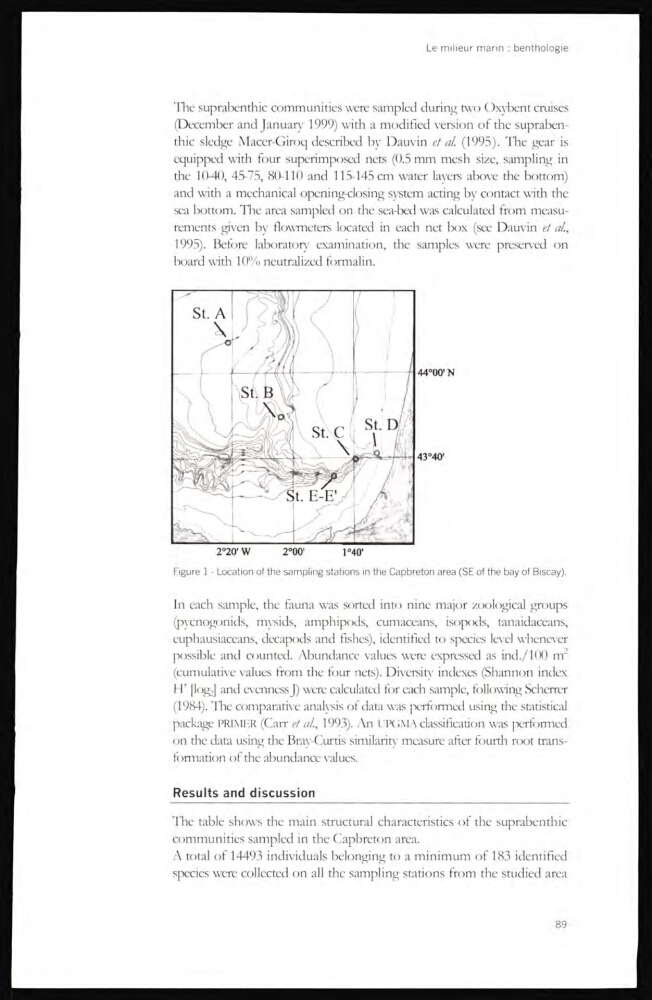
Figure 1 - Location of the sampling stations in the Capbreton area (SE of the bay of Biscay).
In each sample, the fauna was sorted into nine major zoological groups
(pycnogonids, mtsids, amphipods, cumaceans, isopods, tanaidaceans,
euphausiaceans, decapods and fishes), identified to species level whenever
possible and counted. Abundance values were cxpressed as ind./100 m
2
(cumulative values trom the four nets). Diversitt’ indexes (Shannon index
H’ [log 2 ] and evenness J) were calculated for each sample, following Scherrer
(1984). The comparative analysis of data was performed using the statistical
package PRIMER (Carr et al., 1993). An UPGMA classiftcation was performed
on the data using the Bray-Curtis similarity’ measure after fourth root transformation of the abundance values.
Results and discussion
The table shows the main structural characteristics of the suprabenthic
communitics sampled in the Capbreton area.
A total of 14493 individuals bclonging to a minimum of 183 identifïed
species were collected on all the sampling stations from the studied area
89
(December and January 1999) with a modified version of the suprabenthic sledge Macer-Giroq described by Dauvin et al. (1995). The gear is
equipped with four superimposed nets (0.5 mm mesh size, sampling in
the 10-40, 45-75, 80-110 and 115-145 cm water layers above the bottom)
and with a mechanical opening-closing system acting by contact with thc
sea bottom. The area sampled on thc sca-bed was calculated from measurements given by flowmeters located in cach net box (see Dauvin et al.,
1995). Before laboratory examination, thc samplcs were preserved on
board with 10% neutralized formalin.
Figure 1 - Location of the sampling stations in the Capbreton area (SE of the bay of Biscay).
In each sample, the fauna was sorted into nine major zoological groups
(pycnogonids, mtsids, amphipods, cumaceans, isopods, tanaidaceans,
euphausiaceans, decapods and fishes), identified to species level whenever
possible and counted. Abundance values were cxpressed as ind./100 m
2
(cumulative values trom the four nets). Diversitt’ indexes (Shannon index
H’ [log 2 ] and evenness J) were calculated for each sample, following Scherrer
(1984). The comparative analysis of data was performed using the statistical
package PRIMER (Carr et al., 1993). An UPGMA classiftcation was performed
on the data using the Bray-Curtis similarity’ measure after fourth root transformation of the abundance values.
Results and discussion
The table shows the main structural characteristics of the suprabenthic
communitics sampled in the Capbreton area.
A total of 14493 individuals bclonging to a minimum of 183 identifïed
species were collected on all the sampling stations from the studied area
89