

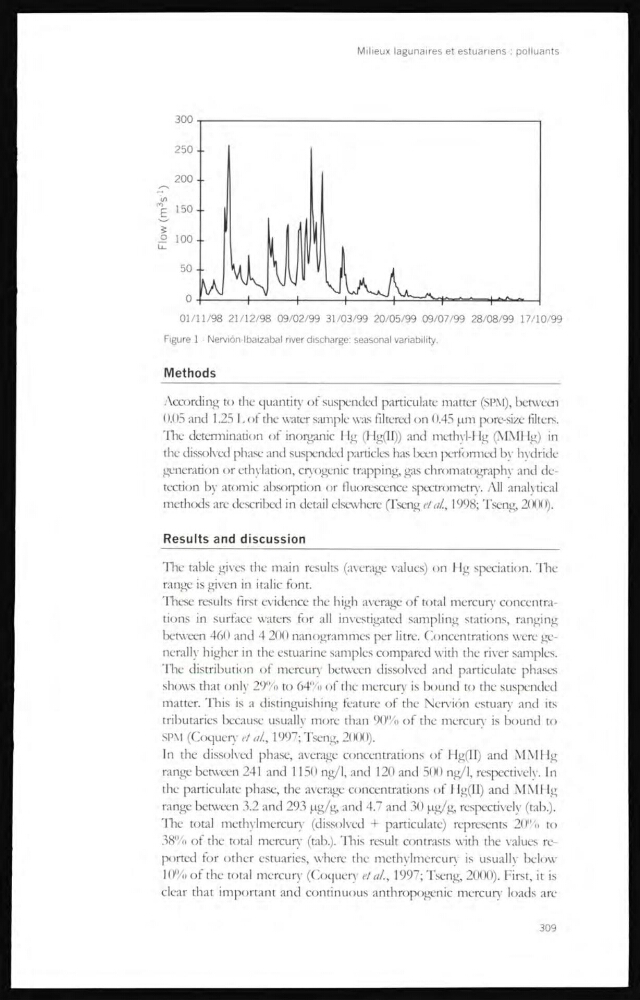
Figure 1 - Nervión-lbaizabal river discharge: seasonal variability.
Methods
According to thc quantity of suspcnded particulatc matter (SPM), betwecn
0.05 and 1.25 L of the water samplc was filtered on 0.45 pm pore-size filters.
The determination of inoiganic Hg (Hg(H)) and methyl-Hg (MMHg) in
the dissolved phase and suspended particlcs has been performed by hydride
generation or ethylation, cn-ogcnic trapping, gas chromatography and detection by atomic absorption or fluorescence spectrometry. All analytical
methods are described in detail elscwhcre (Tscng et aL, 1998; Tseng, 2000).
Results and discussion
The table gives the main results (average values) on Hg speciation. The
rangc is given in italic font.
Thcse results first cvidcncc thc high average of total mercurv concentrations in surfacc waters for all investigated sampling stations, ranging
between 460 and 4 200 nanogrammes per litre. Concentrations were generally higher in the estuarine samples compared with the river samples.
The distribution of mercury between dissolved and particulate phases
shows that only 29% to 64% of thc mercury is bound to the suspended
matter. This is a distinguishing feature of the Nerviôn estuarv and its
tributaries becausc usually more than 90% of thc mercury is b(tund to
SPM (Coquery et al., 1997;Tseng, 2000).
In the dissolved phase, average concentrations of Hg(II) and MMHg
range between 241 and 1150 ng/1, and 120 and 500 ng/1, respectively. In
the particulate phasc, the average concentrations of Hg(Il) and MMI 1g
range between 3.2 and 293 gg/g, and 4.7 and 30 |ug/g, respectively (tab.).
The total methylmercury (dissolved + particulatc) represents 20°/o to
38% of the total mercury' (tab.). This result contrasts with the values reported for other cstuarics, where the methylmercury is usually below
10% of the total mercury (Coqucry et al., 1997; Tseng, 20011). First, it is
clear that important and continuous anthropogenic mercurv loads arc
309
Methods
According to thc quantity of suspcnded particulatc matter (SPM), betwecn
0.05 and 1.25 L of the water samplc was filtered on 0.45 pm pore-size filters.
The determination of inoiganic Hg (Hg(H)) and methyl-Hg (MMHg) in
the dissolved phase and suspended particlcs has been performed by hydride
generation or ethylation, cn-ogcnic trapping, gas chromatography and detection by atomic absorption or fluorescence spectrometry. All analytical
methods are described in detail elscwhcre (Tscng et aL, 1998; Tseng, 2000).
Results and discussion
The table gives the main results (average values) on Hg speciation. The
rangc is given in italic font.
Thcse results first cvidcncc thc high average of total mercurv concentrations in surfacc waters for all investigated sampling stations, ranging
between 460 and 4 200 nanogrammes per litre. Concentrations were generally higher in the estuarine samples compared with the river samples.
The distribution of mercury between dissolved and particulate phases
shows that only 29% to 64% of thc mercury is bound to the suspended
matter. This is a distinguishing feature of the Nerviôn estuarv and its
tributaries becausc usually more than 90% of thc mercury is b(tund to
SPM (Coquery et al., 1997;Tseng, 2000).
In the dissolved phase, average concentrations of Hg(II) and MMHg
range between 241 and 1150 ng/1, and 120 and 500 ng/1, respectively. In
the particulate phasc, the average concentrations of Hg(Il) and MMI 1g
range between 3.2 and 293 gg/g, and 4.7 and 30 |ug/g, respectively (tab.).
The total methylmercury (dissolved + particulatc) represents 20°/o to
38% of the total mercury' (tab.). This result contrasts with the values reported for other cstuarics, where the methylmercury is usually below
10% of the total mercury (Coqucry et al., 1997; Tseng, 20011). First, it is
clear that important and continuous anthropogenic mercurv loads arc
309