

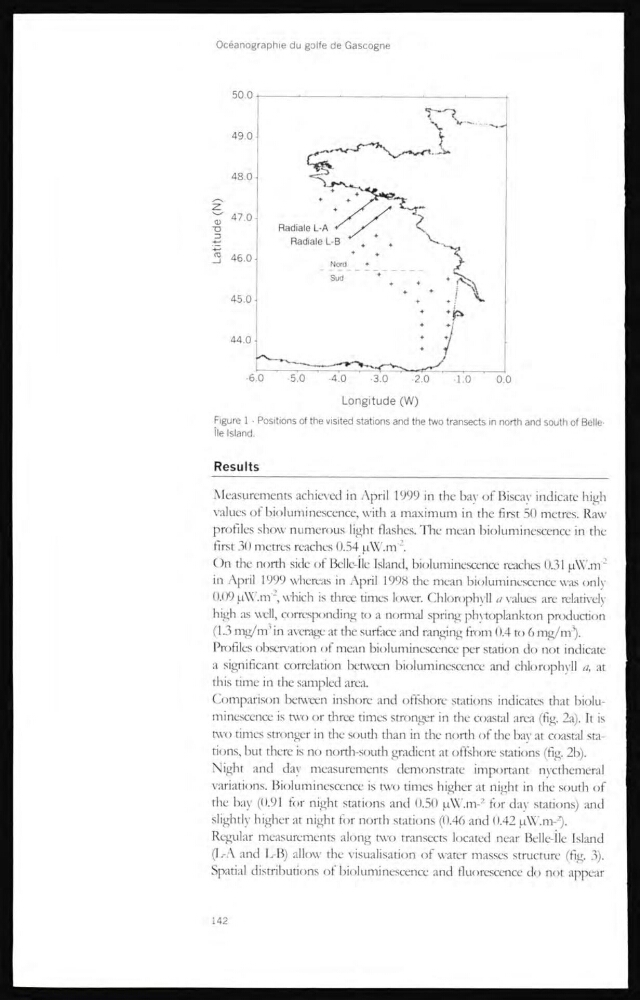
Figure 1 - Positions of the visited stations and the two transects in north and south of Belleile Island.
Results
Measurements achieved in April 1999 in the bay of Biscay indicate high
values of bioluminescence, with a maximum in the first 50 metres. Raw
profiles show numerous light flashes. The mean bioluminescence in the
first 30 metres reaches 0.54 µW.m
-2 .
( )n the north side of Belle-île island, bioluminescence reaches 0.31 pW.m
2
in April 1999 whereas in April 1998 the mean bioluminescence was only
0.09 µW.m
-2 , which is three times lower. Chlorophyll a values are relatively
high as well, corresponding to a normal spring phytoplankton production
(1.3 mg/m
3 in average at the surface and ranging from 0.4 to 6 mg/m
3 ).
Profiles observation of mean bioluminescence per station do nol indicate
a significant correlation between bioluminescence and chlorophyll a, at
this time in the sampled area.
Comparison between inshore and offshore stations indicates that bioluminescence is two or three times stronger in the coastal area (fig. 2a). It is
two times stronger in the south than in the north of the bav at coastal stations, but there is no north-south gradient at offshore stations (fig. 2b).
Night and day measurements demonstrate important nycthemeral
variations. Bioluminescence is two times higher at night in the south of
the bay (0.91 for night stations and 0.50 µW.m2 for day stations) and
slightly higher at night for north stations (0.46 and 0.42 µW.m2 ).
Regular measurements along two transects located near Belle-île Island
(RA and L-B) allow the visualisation of water masses structure (fig. 3).
Spatial distributions of bioluminescence and fluorescence do not appear
142
Results
Measurements achieved in April 1999 in the bay of Biscay indicate high
values of bioluminescence, with a maximum in the first 50 metres. Raw
profiles show numerous light flashes. The mean bioluminescence in the
first 30 metres reaches 0.54 µW.m
-2 .
( )n the north side of Belle-île island, bioluminescence reaches 0.31 pW.m
2
in April 1999 whereas in April 1998 the mean bioluminescence was only
0.09 µW.m
-2 , which is three times lower. Chlorophyll a values are relatively
high as well, corresponding to a normal spring phytoplankton production
(1.3 mg/m
3 in average at the surface and ranging from 0.4 to 6 mg/m
3 ).
Profiles observation of mean bioluminescence per station do nol indicate
a significant correlation between bioluminescence and chlorophyll a, at
this time in the sampled area.
Comparison between inshore and offshore stations indicates that bioluminescence is two or three times stronger in the coastal area (fig. 2a). It is
two times stronger in the south than in the north of the bav at coastal stations, but there is no north-south gradient at offshore stations (fig. 2b).
Night and day measurements demonstrate important nycthemeral
variations. Bioluminescence is two times higher at night in the south of
the bay (0.91 for night stations and 0.50 µW.m2 for day stations) and
slightly higher at night for north stations (0.46 and 0.42 µW.m2 ).
Regular measurements along two transects located near Belle-île Island
(RA and L-B) allow the visualisation of water masses structure (fig. 3).
Spatial distributions of bioluminescence and fluorescence do not appear
142