

4. CHEMOHECEPTION
83
The anatomy of the nose has also been related to the ecological habits
of the fishes (Pfeifler, 1963b, 1964, 1965; Teichmann, 1954). On the basis
of development of the nose and eye, Teichmann (1954) classified the
fishes mentioned above into three groups: ( 1 ) species in which the eye
and nose are well developed (Plzoxinus and Gobio ); ( 2 ) species in which
the eye is better developed than the nose (Esox and Gusterosteus) ; and
( 3 ) species in which the nose is exceptionally well developed compared
with the eye ( Anguilla and Lotu). The definitions of these groups correspond well with the morphological classification made by Bume ( 1909) :
group 1 includes the fish with oval olfactory rosettes; group 2 includes
most of the round rosetted species; and group 3 the elongate rosetted
species.
Olfactory epithelia in fishes generally occurs in isolated sensory areas
separated by columnar ciliated cell areas (indifferent epithelium). Three
types of arrangements of the sensory cells in the olfactory epithelium
have been observed (Holl, 1965): ( 1 ) continuous except for the dorsal
parts of the olfactory folds (Anguilla and ZctuZuurus); ( 2 ) separated in
large areas between the folds ( E s o x ) ; and ( 3 ) dispersed in small islands,
in which the sense cells are arranged somewhat like taste buds (Phoxinus
and C yprinus) .
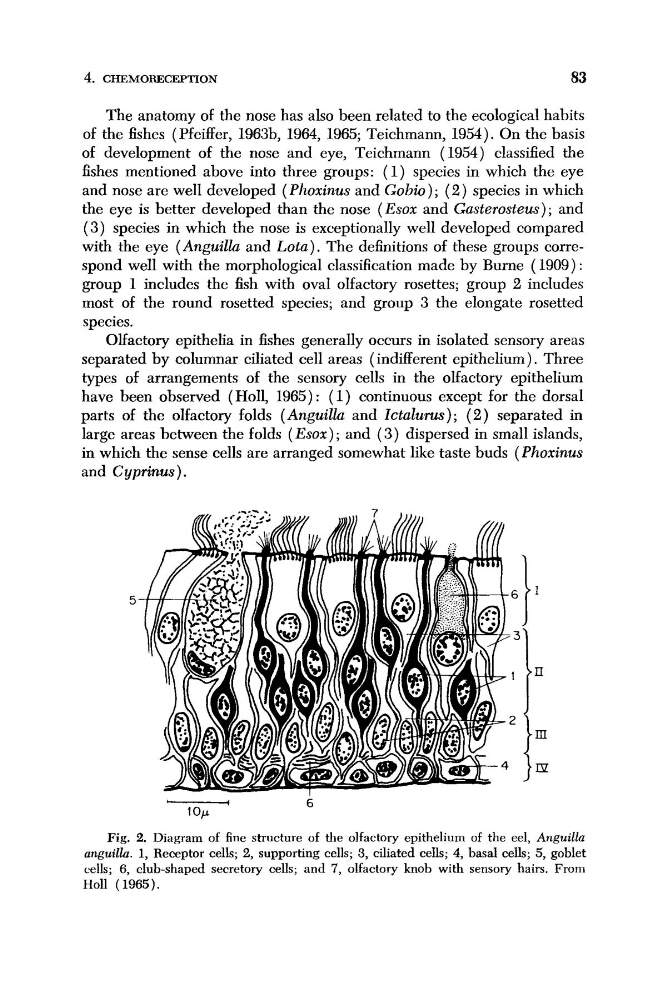
Fig. 2. Diagram of fine structure of the olfactory epithelium of the eel, Anguillu
anguille. 1, Receptor cells; 2, supporting cells; 3, ciliated cells; 4, basal cells; 5, goblet
cells; 6, club-shaped secretory cells; and 7, olfactory knob with sensory hairs. From
Holl ( 1965).
83
The anatomy of the nose has also been related to the ecological habits
of the fishes (Pfeifler, 1963b, 1964, 1965; Teichmann, 1954). On the basis
of development of the nose and eye, Teichmann (1954) classified the
fishes mentioned above into three groups: ( 1 ) species in which the eye
and nose are well developed (Plzoxinus and Gobio ); ( 2 ) species in which
the eye is better developed than the nose (Esox and Gusterosteus) ; and
( 3 ) species in which the nose is exceptionally well developed compared
with the eye ( Anguilla and Lotu). The definitions of these groups correspond well with the morphological classification made by Bume ( 1909) :
group 1 includes the fish with oval olfactory rosettes; group 2 includes
most of the round rosetted species; and group 3 the elongate rosetted
species.
Olfactory epithelia in fishes generally occurs in isolated sensory areas
separated by columnar ciliated cell areas (indifferent epithelium). Three
types of arrangements of the sensory cells in the olfactory epithelium
have been observed (Holl, 1965): ( 1 ) continuous except for the dorsal
parts of the olfactory folds (Anguilla and ZctuZuurus); ( 2 ) separated in
large areas between the folds ( E s o x ) ; and ( 3 ) dispersed in small islands,
in which the sense cells are arranged somewhat like taste buds (Phoxinus
and C yprinus) .
Fig. 2. Diagram of fine structure of the olfactory epithelium of the eel, Anguillu
anguille. 1, Receptor cells; 2, supporting cells; 3, ciliated cells; 4, basal cells; 5, goblet
cells; 6, club-shaped secretory cells; and 7, olfactory knob with sensory hairs. From
Holl ( 1965).