

11. ELECTRORECEPTION
51 1
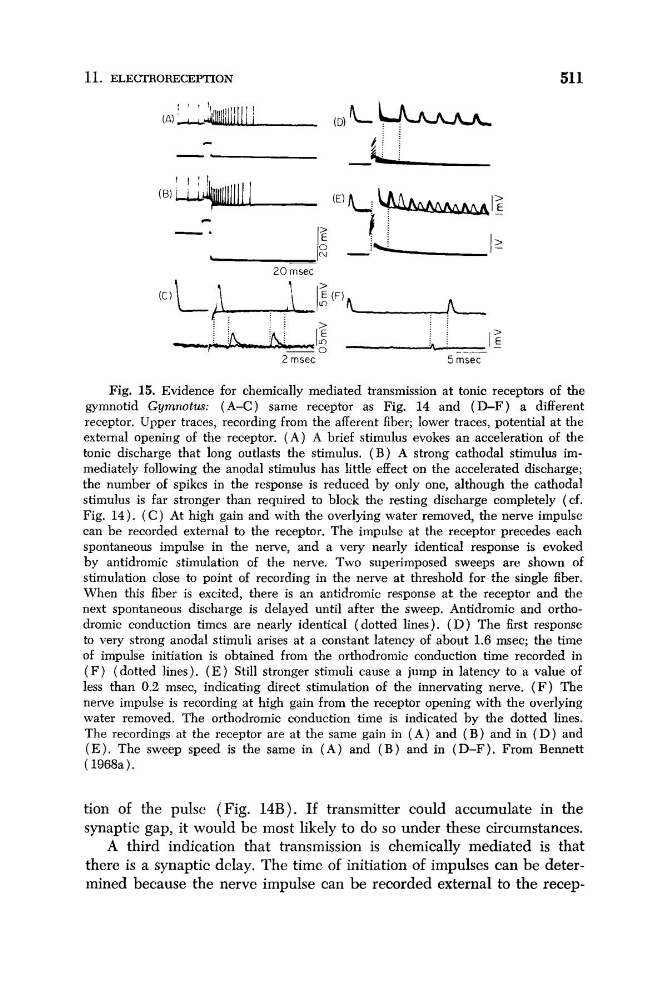
Fig. 15. Evidence for chemically mediated transmission at tonic receptors of the
gymnotid Gymnotus: (A-C) same receptor as Fig. 14 and (D-F) a different
receptor. Upper traces, recording from the afferent fiber; lower traces, potential at the
external opening of the receptor. ( A ) A brief stimulus evokes an acceleration of the
tonic discharge that long outlasts the stimulus. ( B ) A strong cathodal stimulus immediately following the anodal stimulus has little effect on the accelerated discharge;
the number of spikes in the response is reduced by only one, although the cathodal
stimulus is far stronger than required to block the resting discharge completely (cf.
Fig. 14). ( C ) At high gain and with the overlying water removed, the nerve impulse
can be recorded external to the receptor. The impulse at the receptor precedes each
spontaneous impulse in the nerve, and a very nearly identical response is evoked
by antidromic stimulation of the nerve. Two superimposed sweeps are shown of
stimulation close to point of recording in the nerve at threshold for the single fiber.
When this fiber is excited, there is an antidromic response at the receptor and the
next spontaneous discharge is delayed until after the sweep. Antidromic and orthodromic conduction times are nearly identical (dotted lines). ( D ) The first response
to very strong anodal stimuli arises at a constant latency of about 1.6 msec; the time
of impulse initiation is obtained from the orthodromic conduction time recorded in
( F ) (dotted lines). ( E ) Still stronger stimuli cause a jump in latency to a value of
less than 0.2 msec, indicating direct stimulation of the innervating nerve. ( F ) The
nerve impulse is recording at high gain from the receptor opening with the overlying
water removed. The orthodromic conduction time is indicated by the dotted lines.
The recordings at the receptor are at the same gain in ( A ) and ( B ) and in ( D ) and
( E ). The sweep speed is the same in ( A ) and ( B ) and in (D-F). From Bennett
(1968a).
tion of the pulse (Fig. 14B). If transmitter could accumulate in the
synaptic gap, it would be most likely to do so under these circumstances.
A third indication that transmission is chemically mediated is that
there is a synaptic delay. The time of initiation of impulses can be determined because the nerve impulse can be recorded external to the recep-
51 1
Fig. 15. Evidence for chemically mediated transmission at tonic receptors of the
gymnotid Gymnotus: (A-C) same receptor as Fig. 14 and (D-F) a different
receptor. Upper traces, recording from the afferent fiber; lower traces, potential at the
external opening of the receptor. ( A ) A brief stimulus evokes an acceleration of the
tonic discharge that long outlasts the stimulus. ( B ) A strong cathodal stimulus immediately following the anodal stimulus has little effect on the accelerated discharge;
the number of spikes in the response is reduced by only one, although the cathodal
stimulus is far stronger than required to block the resting discharge completely (cf.
Fig. 14). ( C ) At high gain and with the overlying water removed, the nerve impulse
can be recorded external to the receptor. The impulse at the receptor precedes each
spontaneous impulse in the nerve, and a very nearly identical response is evoked
by antidromic stimulation of the nerve. Two superimposed sweeps are shown of
stimulation close to point of recording in the nerve at threshold for the single fiber.
When this fiber is excited, there is an antidromic response at the receptor and the
next spontaneous discharge is delayed until after the sweep. Antidromic and orthodromic conduction times are nearly identical (dotted lines). ( D ) The first response
to very strong anodal stimuli arises at a constant latency of about 1.6 msec; the time
of impulse initiation is obtained from the orthodromic conduction time recorded in
( F ) (dotted lines). ( E ) Still stronger stimuli cause a jump in latency to a value of
less than 0.2 msec, indicating direct stimulation of the innervating nerve. ( F ) The
nerve impulse is recording at high gain from the receptor opening with the overlying
water removed. The orthodromic conduction time is indicated by the dotted lines.
The recordings at the receptor are at the same gain in ( A ) and ( B ) and in ( D ) and
( E ). The sweep speed is the same in ( A ) and ( B ) and in (D-F). From Bennett
(1968a).
tion of the pulse (Fig. 14B). If transmitter could accumulate in the
synaptic gap, it would be most likely to do so under these circumstances.
A third indication that transmission is chemically mediated is that
there is a synaptic delay. The time of initiation of impulses can be determined because the nerve impulse can be recorded external to the recep-