

314
SPIKES
J. DIAMOND
Rest
HyperPO’‘ 3 _________ / ______________________ Inhibitory noise level
4 1
t
Start of e.p.s.p.
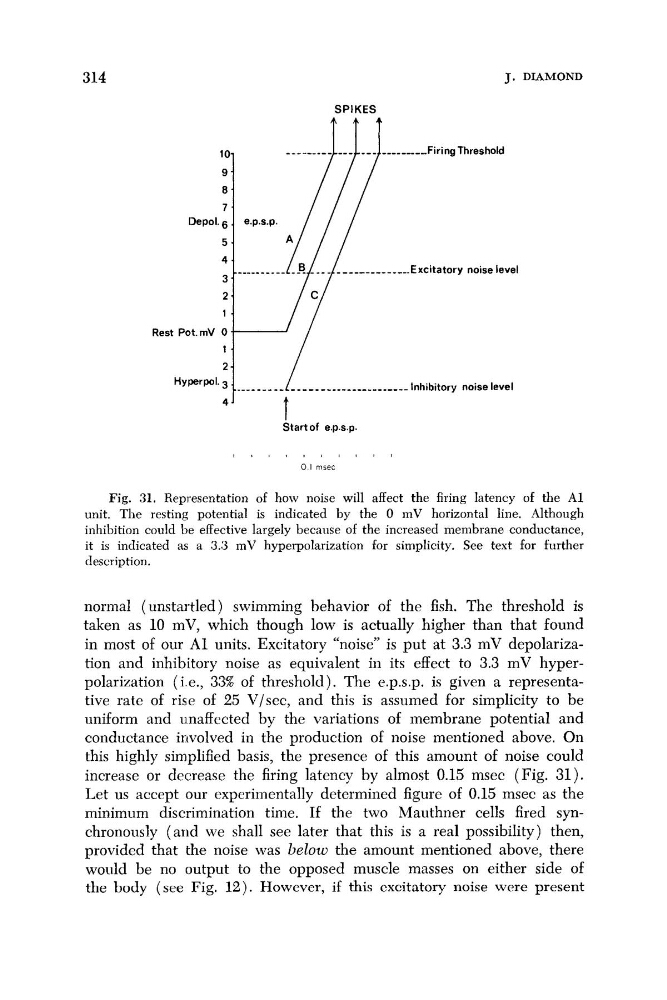
Fig. 31. Representation of how noise will affect the firing latency of the A1
unit. The resting potential is indicated by the 0 mV horizontal line. Although
inhibition could be effective largely because of the increased membrane conductance,
it is indicated as a 3.3 mV hyperpolarization for simplicity. See text for further
description.
normal (unstartled) swimming behavior of the fish. The threshold is
taken as 10 mV, which though low is actually higher than that found
in most of our A1 units. Excitatory “noise” is put at 3.3 mV depolarization and inhibitory noise as equivalent in its effect to 3.3 mV hyperpolarization (i.e., 33% of threshold). The e.p.s.p. is given a representative rate of rise of 25 V/sec, and this is assumed for simplicity to be
uniform and unaffected by the variations of membrane potential and
conductance involved in the production of noise mentioned above. On
this highly simplified basis, the presence of this amount of noise could
increase or decrease the firing latency by almost 0.15 msec (Fig. 31).
Let us accept our experimentally determined figure of 0.15 msec as the
minimum discrimination time. If the two Mauthner cells fired synchronously (and we shall see later that this is a real possibility) then,
provided that the noise was below the amount mentioned above, there
would be no output to the opposed muscle masses on either side of
the body (see Fig. 12). Howcvcr, if this cxcitntory noise were present
SPIKES
J. DIAMOND
Rest
HyperPO’‘ 3 _________ / ______________________ Inhibitory noise level
4 1
t
Start of e.p.s.p.
Fig. 31. Representation of how noise will affect the firing latency of the A1
unit. The resting potential is indicated by the 0 mV horizontal line. Although
inhibition could be effective largely because of the increased membrane conductance,
it is indicated as a 3.3 mV hyperpolarization for simplicity. See text for further
description.
normal (unstartled) swimming behavior of the fish. The threshold is
taken as 10 mV, which though low is actually higher than that found
in most of our A1 units. Excitatory “noise” is put at 3.3 mV depolarization and inhibitory noise as equivalent in its effect to 3.3 mV hyperpolarization (i.e., 33% of threshold). The e.p.s.p. is given a representative rate of rise of 25 V/sec, and this is assumed for simplicity to be
uniform and unaffected by the variations of membrane potential and
conductance involved in the production of noise mentioned above. On
this highly simplified basis, the presence of this amount of noise could
increase or decrease the firing latency by almost 0.15 msec (Fig. 31).
Let us accept our experimentally determined figure of 0.15 msec as the
minimum discrimination time. If the two Mauthner cells fired synchronously (and we shall see later that this is a real possibility) then,
provided that the noise was below the amount mentioned above, there
would be no output to the opposed muscle masses on either side of
the body (see Fig. 12). Howcvcr, if this cxcitntory noise were present