

230
0. MWENSTEIN
aspect, however, lies outside the scope of the present chapter (but see
Chapter 6 by Tavolga, this volume).
Sound reception usually goes hand in hand with pitch discrimination.
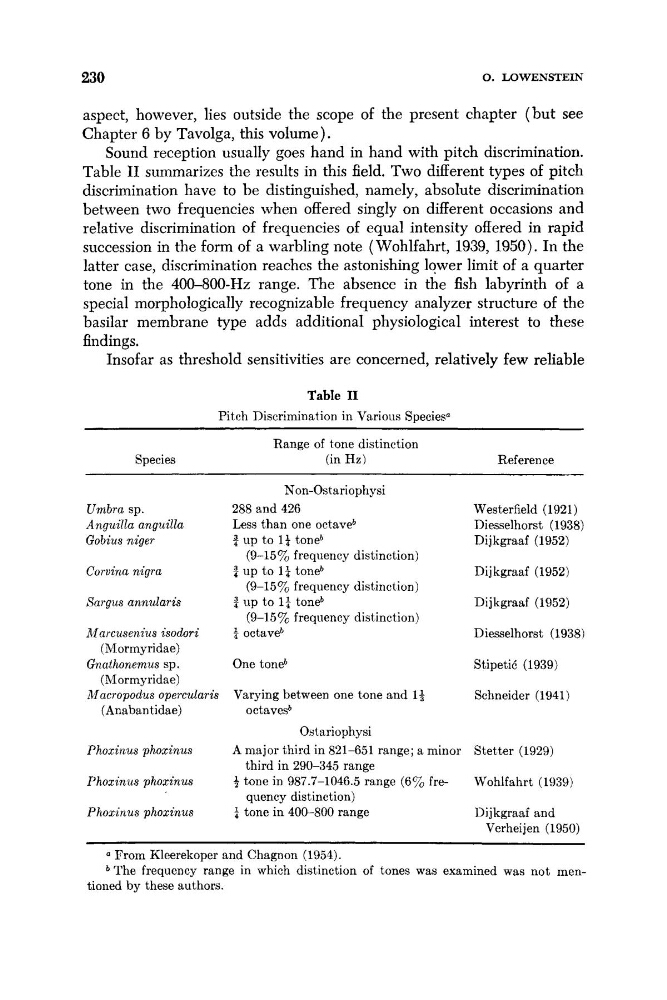
Table I1 summarizes the results in this field. Two different types of pitch
discrimination have to be distinguished, namely, absolute discrimination
between two frequencies when offered singly on different occasions and
relative discrimination of frequencies of equal intensity offered in rapid
succession in the form of a warbling note ( Wohlfahrt, 1939, 1950). In the
latter case, discrimination reaches the astonishing lower limit of a quarter
tone in the 400-800-Hz range. The absence in the fish labyrinth of a
special morphologically recognizable frequency analyzer structure of the
basilar membrane type adds additional physiological interest to these
findings.
Insofar as threshold sensitivities are concerned, relatively few reliable
Table I1
Pitch Discrimination in Various Speciesa
Range of tone distinction
Species
(in Hz)
Reference
Umbra sp.
Anguilla anguilla
Gobius niger
Corvina nigra
Sargus annularis
Marcusenius isodori
(Mormyridae)
Gnathonemus sp.
(Mormyridae)
Macropodus opercularis
(Anaban tidae)
Non-Ostariophysi
288 and 426
Less than one octaveb
4 up to l a toneb
9 up to l a toneb
t up to 1: toneb
+ octaveb
One tone*
(9-15% frequency distinction)
(9-15y0 frequency distinction)
(9-15y0 frequency distinction)
Varying between one tone and If
octavesb
Westerfield (1921)
Diesselhorst (1938)
Dij kgraaf (1952)
Dijkgraaf (1952)
Dijkgraaf (1952)
Diesselhorst (1938)
Stipetid (1939)
Schneider (1941)
Ostariophysi
third in 290-345 range
quency distinction)
Phoxinus phoxinus
Phoxinus phoxinus
Phoxinus phoxinus
t tone in 40k300 range
Dijkgraaf and
A major third in 821-651 range; a minor
+ tone in 987.7-1046.5 range (670 freStetter (1929)
Wohlfahrt (1939)
Verheijen (1950)
a From Kleerekoper and Chagnon (1952).
b T h e frequency range in which distinction of tones was examined was not mentioned by these authors.
0. MWENSTEIN
aspect, however, lies outside the scope of the present chapter (but see
Chapter 6 by Tavolga, this volume).
Sound reception usually goes hand in hand with pitch discrimination.
Table I1 summarizes the results in this field. Two different types of pitch
discrimination have to be distinguished, namely, absolute discrimination
between two frequencies when offered singly on different occasions and
relative discrimination of frequencies of equal intensity offered in rapid
succession in the form of a warbling note ( Wohlfahrt, 1939, 1950). In the
latter case, discrimination reaches the astonishing lower limit of a quarter
tone in the 400-800-Hz range. The absence in the fish labyrinth of a
special morphologically recognizable frequency analyzer structure of the
basilar membrane type adds additional physiological interest to these
findings.
Insofar as threshold sensitivities are concerned, relatively few reliable
Table I1
Pitch Discrimination in Various Speciesa
Range of tone distinction
Species
(in Hz)
Reference
Umbra sp.
Anguilla anguilla
Gobius niger
Corvina nigra
Sargus annularis
Marcusenius isodori
(Mormyridae)
Gnathonemus sp.
(Mormyridae)
Macropodus opercularis
(Anaban tidae)
Non-Ostariophysi
288 and 426
Less than one octaveb
4 up to l a toneb
9 up to l a toneb
t up to 1: toneb
+ octaveb
One tone*
(9-15% frequency distinction)
(9-15y0 frequency distinction)
(9-15y0 frequency distinction)
Varying between one tone and If
octavesb
Westerfield (1921)
Diesselhorst (1938)
Dij kgraaf (1952)
Dijkgraaf (1952)
Dijkgraaf (1952)
Diesselhorst (1938)
Stipetid (1939)
Schneider (1941)
Ostariophysi
third in 290-345 range
quency distinction)
Phoxinus phoxinus
Phoxinus phoxinus
Phoxinus phoxinus
t tone in 40k300 range
Dijkgraaf and
A major third in 821-651 range; a minor
+ tone in 987.7-1046.5 range (670 freStetter (1929)
Wohlfahrt (1939)
Verheijen (1950)
a From Kleerekoper and Chagnon (1952).
b T h e frequency range in which distinction of tones was examined was not mentioned by these authors.