

1. VISUAL PIGMENTS
anterior :
i posterior
7
(B)
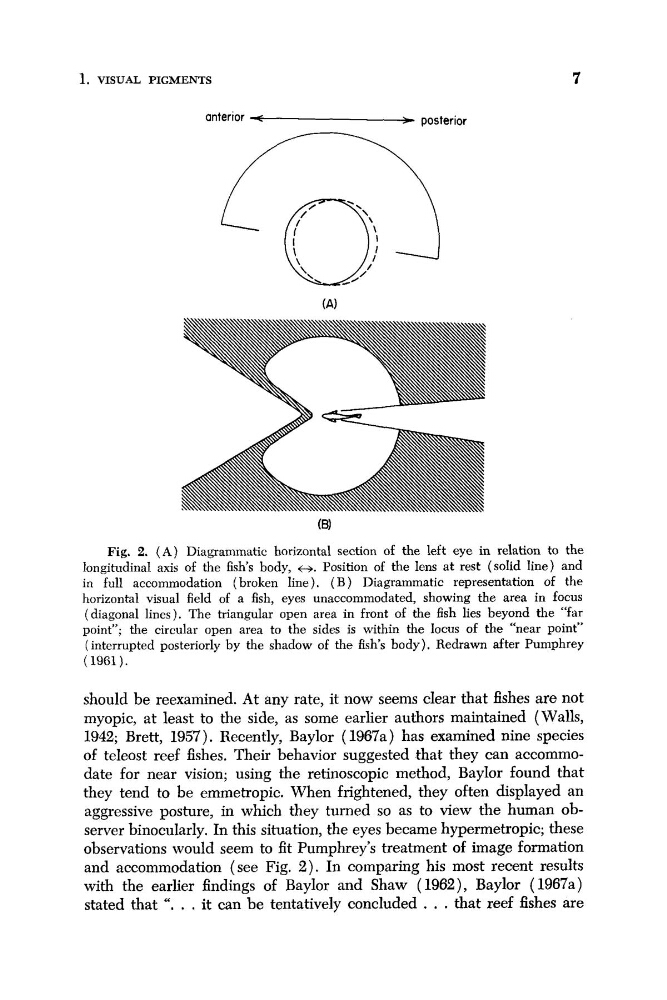
Fig. 2. ( A ) Diagrammatic horizontal section of the left eye in relation to the
longitudinal axis of the fish‘s body, ts. Position of the lens at rest (solid line) and
in full accommodation (broken line). ( B ) Diagrammatic representation of the
horizontal visual field of a fish, eyes unaccommodated, showing the area in focus
(diagonal lines). The triangular open area in front of the fish lies beyond the “far
point”; the circular open area to the sides is within the locus of the “near point”
(interrupted posteriorly by the shadow of the fish‘s body). Redrawn after Puniphrey
( 1961 ).
should be reexamined. At any rate, it now seems clear that fishes are not
myopic, at least to the side, as some earlier authors maintained (Walls,
1942; Brett, 1957). Recently, Baylor ( 1967a) has examined nine species
of teleost reef fishes. Their behavior suggested that they can accommodate for near vision; using the retinoscopic method, Baylor found that
they tend to be emmetropic. When frightened, they often displayed an
aggressive posture, in which they turned so as to view the human observer binocularly. In this situation, the eyes became hypermetropic; these
observations would seem to fit Pumphrey’s treatment of image formation
and accommodation (see Fig. 2 ) . In comparing his most recent results
with the earlier findings of Baylor and Shaw (1962), Baylor ( 1967a)
stated that “, . . it can be tentatively concluded . . . that reef fishes are
anterior :
i posterior
7
(B)
Fig. 2. ( A ) Diagrammatic horizontal section of the left eye in relation to the
longitudinal axis of the fish‘s body, ts. Position of the lens at rest (solid line) and
in full accommodation (broken line). ( B ) Diagrammatic representation of the
horizontal visual field of a fish, eyes unaccommodated, showing the area in focus
(diagonal lines). The triangular open area in front of the fish lies beyond the “far
point”; the circular open area to the sides is within the locus of the “near point”
(interrupted posteriorly by the shadow of the fish‘s body). Redrawn after Puniphrey
( 1961 ).
should be reexamined. At any rate, it now seems clear that fishes are not
myopic, at least to the side, as some earlier authors maintained (Walls,
1942; Brett, 1957). Recently, Baylor ( 1967a) has examined nine species
of teleost reef fishes. Their behavior suggested that they can accommodate for near vision; using the retinoscopic method, Baylor found that
they tend to be emmetropic. When frightened, they often displayed an
aggressive posture, in which they turned so as to view the human observer binocularly. In this situation, the eyes became hypermetropic; these
observations would seem to fit Pumphrey’s treatment of image formation
and accommodation (see Fig. 2 ) . In comparing his most recent results
with the earlier findings of Baylor and Shaw (1962), Baylor ( 1967a)
stated that “, . . it can be tentatively concluded . . . that reef fishes are