

4. CHEMORECEPTION
85
Nonsensory ciliated epithelial cell
receptor ending
-
Receptor with microvilli
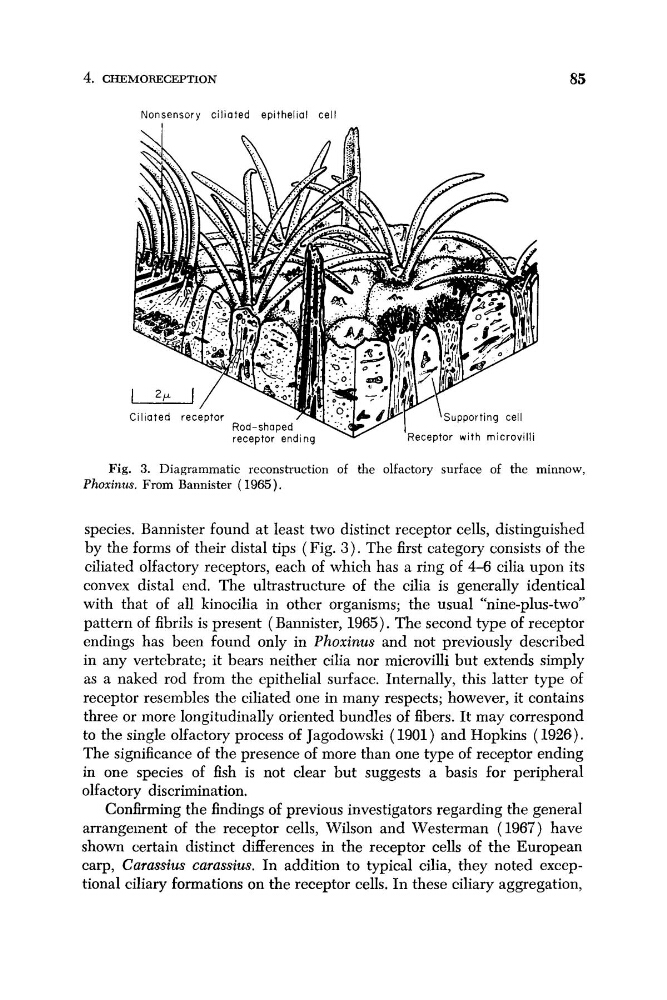
Fig. 3. Diagrammatic reconstruction of the olfactory surface of the minnow,
Phoxinus. From Bannister ( 1965).
species. Bannister found at least two distinct receptor cells, distinguished
by the forms of their distal tips (Fig. 3 ) . The first category consists of the
ciliated olfactory receptors, each of which has a ring of 4-6 cilia upon its
convex distal end. The ultrastructure of the cilia is generally identical
with that of all kinocilia in other organisms; the usual “nine-plus-two’’
pattern of fibrils is present (Bannister, 1965). The second type of receptor
endings has been found only in Phoxinus and not previously described
in any vertebrate; it bears neither cilia nor microvilli but extends simply
as a naked rod from the epithelial surface. Internally, this latter type of
receptor resembles the ciliated one in many respects; however, it contains
three or more longitudinally oriented bundles of fibers. It may correspond
to the single olfactory process of Jagodowski ( 1901) and Hopkins ( 1926).
The significance of the presence of more than one type of receptor ending
in one species of fish is not clear but suggests a basis for peripheral
olfactory discrimination.
Confirming the findings of previous investigators regarding the general
arrangement of the receptor cells, Wilson and Westerman (1967) have
shown certain distinct differences in the receptor cells of the European
carp, Carassius carassius. In addition to typical cilia, they noted exceptional ciliary formations on the receptor cells. In these ciliary aggregation,
85
Nonsensory ciliated epithelial cell
receptor ending
-
Receptor with microvilli
Fig. 3. Diagrammatic reconstruction of the olfactory surface of the minnow,
Phoxinus. From Bannister ( 1965).
species. Bannister found at least two distinct receptor cells, distinguished
by the forms of their distal tips (Fig. 3 ) . The first category consists of the
ciliated olfactory receptors, each of which has a ring of 4-6 cilia upon its
convex distal end. The ultrastructure of the cilia is generally identical
with that of all kinocilia in other organisms; the usual “nine-plus-two’’
pattern of fibrils is present (Bannister, 1965). The second type of receptor
endings has been found only in Phoxinus and not previously described
in any vertebrate; it bears neither cilia nor microvilli but extends simply
as a naked rod from the epithelial surface. Internally, this latter type of
receptor resembles the ciliated one in many respects; however, it contains
three or more longitudinally oriented bundles of fibers. It may correspond
to the single olfactory process of Jagodowski ( 1901) and Hopkins ( 1926).
The significance of the presence of more than one type of receptor ending
in one species of fish is not clear but suggests a basis for peripheral
olfactory discrimination.
Confirming the findings of previous investigators regarding the general
arrangement of the receptor cells, Wilson and Westerman (1967) have
shown certain distinct differences in the receptor cells of the European
carp, Carassius carassius. In addition to typical cilia, they noted exceptional ciliary formations on the receptor cells. In these ciliary aggregation,