

46
J. N. BALL AND BRIDGET I. BAKER
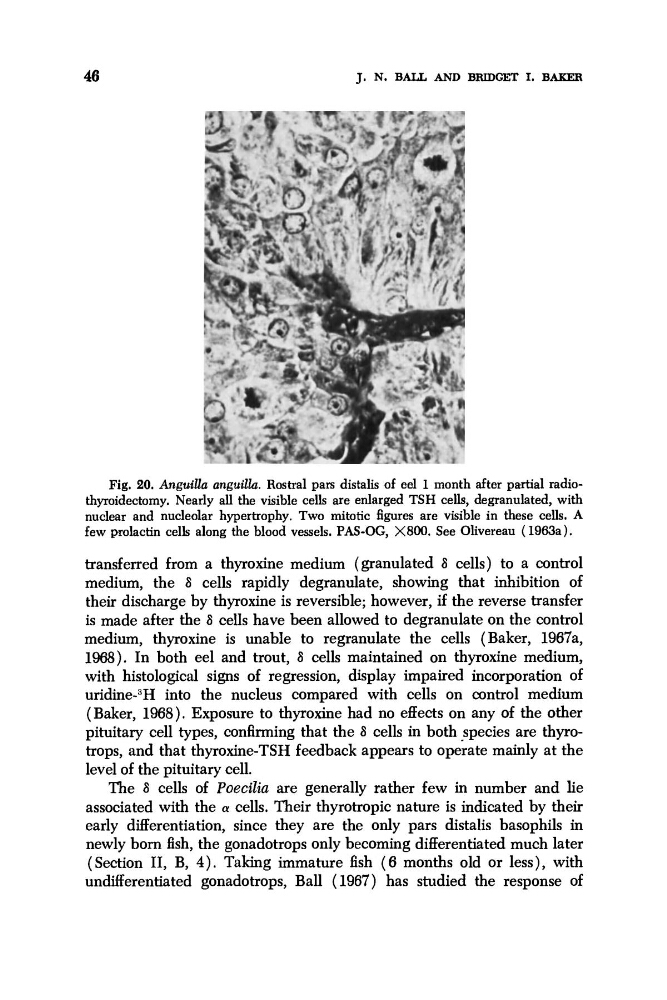
Fig. 20. AnguiUa anguilla. Rostra1 pars distalis of eel 1 month after partial radiothyroidectomy. Nearly all the visible cells are enlarged TSH cells, degranulated, with
nuclear and nucleolar hypertrophy. Two mitotic figures are visible in these cells. A
few prolactin cells along the blood vessels. PAS-OG, X800. See Olivereau (1963a).
transferred from a thyroxine medium (granulated 6 cells) to a control
medium, the 6 cells rapidly degranulate, showing that inhibition of
their discharge by thyroxine is reversible; however, if the reverse transfer
is made after the 6 cells have been allowed to degranulate on the control
medium, thyroxine is unable to regranulate the cells (Baker, 1967a,
1968). In both eel and trout, 6 cells maintained on thyroxine medium,
with histological signs of regression, display impaired incorporation of
uridine-3H into the nucleus compared with cells on control medium
(Baker, 1968). Exposure to thyroxine had no effects on any of the other
pituitary cell types, confirming that the 6 cells in both species are thyrotrops, and that thyroxine-TSH feedback appears to operate mainly at the
level of the pituitary cell.
The 6 cells of Poecilia are generally rather few in number and lie
associated with the CY cells. Their thyrotropic nature is indicated by their
early differentiation, since they are the only pars distalis basophils in
newly born fish, the gonadotrops only becoming differentiated much later
(Section 11, B, 4). Taking immature fish ( 6 months old or less), with
undifferentiated gonadotrops, Ball ( 1967) has studied the response of
J. N. BALL AND BRIDGET I. BAKER
Fig. 20. AnguiUa anguilla. Rostra1 pars distalis of eel 1 month after partial radiothyroidectomy. Nearly all the visible cells are enlarged TSH cells, degranulated, with
nuclear and nucleolar hypertrophy. Two mitotic figures are visible in these cells. A
few prolactin cells along the blood vessels. PAS-OG, X800. See Olivereau (1963a).
transferred from a thyroxine medium (granulated 6 cells) to a control
medium, the 6 cells rapidly degranulate, showing that inhibition of
their discharge by thyroxine is reversible; however, if the reverse transfer
is made after the 6 cells have been allowed to degranulate on the control
medium, thyroxine is unable to regranulate the cells (Baker, 1967a,
1968). In both eel and trout, 6 cells maintained on thyroxine medium,
with histological signs of regression, display impaired incorporation of
uridine-3H into the nucleus compared with cells on control medium
(Baker, 1968). Exposure to thyroxine had no effects on any of the other
pituitary cell types, confirming that the 6 cells in both species are thyrotrops, and that thyroxine-TSH feedback appears to operate mainly at the
level of the pituitary cell.
The 6 cells of Poecilia are generally rather few in number and lie
associated with the CY cells. Their thyrotropic nature is indicated by their
early differentiation, since they are the only pars distalis basophils in
newly born fish, the gonadotrops only becoming differentiated much later
(Section 11, B, 4). Taking immature fish ( 6 months old or less), with
undifferentiated gonadotrops, Ball ( 1967) has studied the response of