

146
A. M. PERI(s
(d)
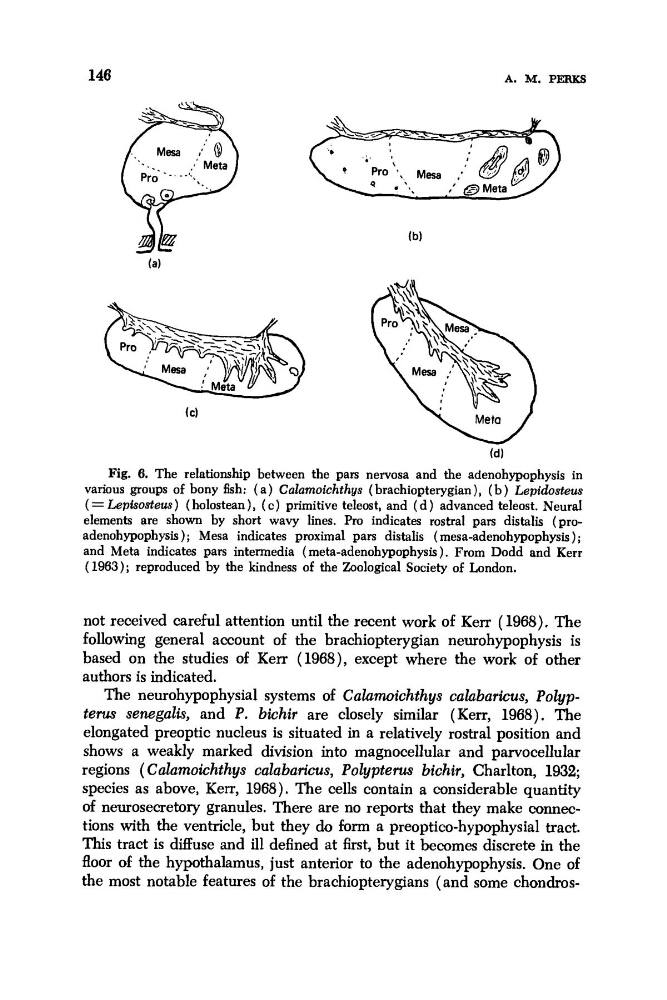
Fig. 6. The relationship between the pars nervosa and the adenohypophysis in
various groups of bony fish: ( a ) Calamoichthys (brachiopterygian), ( b ) Lepidosteus
( = Lepkrosteus) (holostean), ( c ) primitive teleost, and ( d ) advanced teleost. Neural
elements are shown by short wavy lines. Pro indicates rostral pars distalis (proadenohypophysis ) ; Mesa indicates proximal pars distalis ( mesa-adenohypophysis ) ;
and Meta indicates pars intermedia (meta-adenohypophysis). From Dodd and Kerr
(1963); reproduced by the kindness of the Zoological Society of London.
not received careful attention until the recent work of Kerr (19%). The
following general account of the brachiopterygian neurohypophysis is
based on the studies of Kerr (1968), except where the work of other
authors is indicated.
The neurohypophysial systems of Calumuichthys calabaricus, Polypterm senegalis, and P . bichir are closely similar (Kerr, 1968). The
elongated preoptic nucleus is situated in a relatively rostral position and
shows a weakly marked division into magnocellular and parvocellular
regions ( Calamoichthys calabaricus, Polypterm bichir, Charlton, 1932;
species as above, Kerr, 1968). The cells contain a considerable quantity
of neurosecretory granules. There are no reports that they make connections with the ventricle, but they do form a preoptioo-hypophysial tract.
This tract is diffuse and ill defined at first, but it becomes discrete in the
floor of the hypothalamus, just anterior to the adenohypophysis. One of
the most notable features of the brachiopterygians (and some chondros-
A. M. PERI(s
(d)
Fig. 6. The relationship between the pars nervosa and the adenohypophysis in
various groups of bony fish: ( a ) Calamoichthys (brachiopterygian), ( b ) Lepidosteus
( = Lepkrosteus) (holostean), ( c ) primitive teleost, and ( d ) advanced teleost. Neural
elements are shown by short wavy lines. Pro indicates rostral pars distalis (proadenohypophysis ) ; Mesa indicates proximal pars distalis ( mesa-adenohypophysis ) ;
and Meta indicates pars intermedia (meta-adenohypophysis). From Dodd and Kerr
(1963); reproduced by the kindness of the Zoological Society of London.
not received careful attention until the recent work of Kerr (19%). The
following general account of the brachiopterygian neurohypophysis is
based on the studies of Kerr (1968), except where the work of other
authors is indicated.
The neurohypophysial systems of Calumuichthys calabaricus, Polypterm senegalis, and P . bichir are closely similar (Kerr, 1968). The
elongated preoptic nucleus is situated in a relatively rostral position and
shows a weakly marked division into magnocellular and parvocellular
regions ( Calamoichthys calabaricus, Polypterm bichir, Charlton, 1932;
species as above, Kerr, 1968). The cells contain a considerable quantity
of neurosecretory granules. There are no reports that they make connections with the ventricle, but they do form a preoptioo-hypophysial tract.
This tract is diffuse and ill defined at first, but it becomes discrete in the
floor of the hypothalamus, just anterior to the adenohypophysis. One of
the most notable features of the brachiopterygians (and some chondros-