

1. ANATOMY AND PHYSIOLOGY OF THE CENTRAL NERVOUS SYSTEM
65
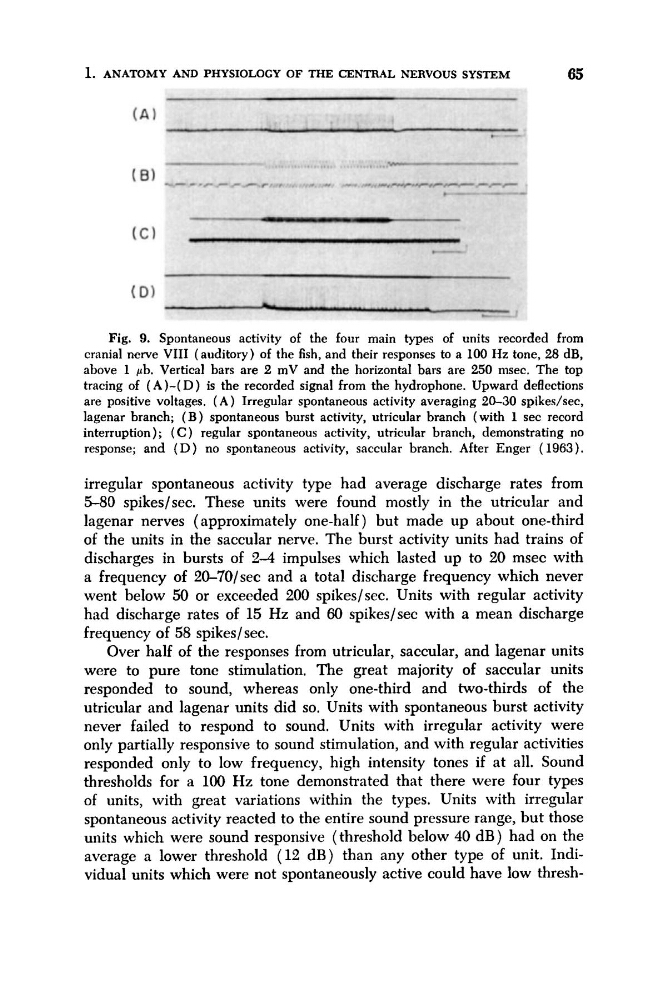
Fig. 9. Spontaneous activity of the four main types of units recorded from
cranial nerve VIII (auditory) of the fish, and their responses to a 100 Hz tone, 28 dB,
above 1 pb. Vertical bars are 2 mV and the horizontal bars are 250 msec. The top
tracing of (A)-( D ) is the recorded signal from the hydrophone. Upward deflections
are positive voltages. (A) Irregular spontaneous activity averaging 20-30 spikedsec,
lagenar branch; (B) spontaneous burst activity, utricular branch (with 1 sec record
interruption); ( C ) regular spontaneous activity, utricular branch, demonstrating no
response; and ( D ) no spontaneous activity, saccular branch. After Enger ( 1963).
irregular spontaneous activity type had average discharge rates from
5-80 spikeslsec. These units were found mostly in the utricular and
lagenar nerves (approximately one-half ) but made up about one-third
of the units in the saccular nerve. The burst activity units had trains of
discharges in bursts of 2-4 impulses which lasted up to 20 msec with
a frequency of 20-70/sec and a total discharge frequency which never
went below 50 or exceeded 200 spikes/sec. Units with regular activity
had discharge rates of 15 Hz and 60 spikes/sec with a mean discharge
frequency of 58 spikeslsec.
Over half of the responses from utricular, saccular, and lagenar units
were to pure tone stimulation. The great majority of saccular units
responded to sound, whereas only one-third and two-thirds of the
utricular and lagenar units did so. Units with spontaneous burst activity
never failed to respond to sound. Units with irregular activity were
only partially responsive to sound stimulation, and with regular activities
responded only to low frequency, high intensity tones if at all. Sound
thresholds for a 100 Hz tone demonstrated that there were four types
of units, with great variations within the types. Units with irregular
spontaneous activity reacted to the entire sound pressure range, but those
units which were sound responsive (threshold below 40 dB) had on the
average a lower threshold (12 dB) than any other type of unit. Individual units which were not spontaneously active could have low thresh-
65
Fig. 9. Spontaneous activity of the four main types of units recorded from
cranial nerve VIII (auditory) of the fish, and their responses to a 100 Hz tone, 28 dB,
above 1 pb. Vertical bars are 2 mV and the horizontal bars are 250 msec. The top
tracing of (A)-( D ) is the recorded signal from the hydrophone. Upward deflections
are positive voltages. (A) Irregular spontaneous activity averaging 20-30 spikedsec,
lagenar branch; (B) spontaneous burst activity, utricular branch (with 1 sec record
interruption); ( C ) regular spontaneous activity, utricular branch, demonstrating no
response; and ( D ) no spontaneous activity, saccular branch. After Enger ( 1963).
irregular spontaneous activity type had average discharge rates from
5-80 spikeslsec. These units were found mostly in the utricular and
lagenar nerves (approximately one-half ) but made up about one-third
of the units in the saccular nerve. The burst activity units had trains of
discharges in bursts of 2-4 impulses which lasted up to 20 msec with
a frequency of 20-70/sec and a total discharge frequency which never
went below 50 or exceeded 200 spikes/sec. Units with regular activity
had discharge rates of 15 Hz and 60 spikes/sec with a mean discharge
frequency of 58 spikeslsec.
Over half of the responses from utricular, saccular, and lagenar units
were to pure tone stimulation. The great majority of saccular units
responded to sound, whereas only one-third and two-thirds of the
utricular and lagenar units did so. Units with spontaneous burst activity
never failed to respond to sound. Units with irregular activity were
only partially responsive to sound stimulation, and with regular activities
responded only to low frequency, high intensity tones if at all. Sound
thresholds for a 100 Hz tone demonstrated that there were four types
of units, with great variations within the types. Units with irregular
spontaneous activity reacted to the entire sound pressure range, but those
units which were sound responsive (threshold below 40 dB) had on the
average a lower threshold (12 dB) than any other type of unit. Individual units which were not spontaneously active could have low thresh-