

426
JOHAN B. STEEN
Depth ( m )
0
I00
200
300
400
._
0
0
n
2 0 2
0
0
1 0 =
10
20
30
40
Pressure (atrn)
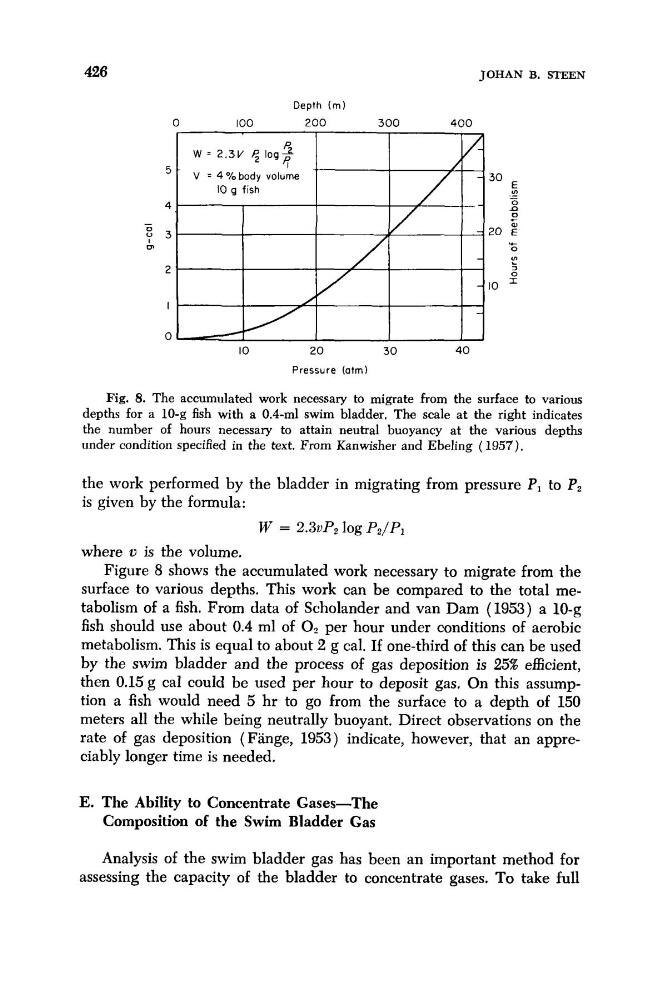
Fig. 8. The accumulated work necessary to migrate from the surface to various
depths for a 10-g fish with a 0.4-ml swim bladder. The scale at the right indicates
the number of hours necessary to attain neutral buoyancy at the various depths
under condition specified in the text. From Kanwisher and Ebeling (1957).
the work performed by the bladder in migrating from pressure PI to P,
is given by the formula:
where is the volume.
Figure 8 shows the accumulated work necessary to migrate from the
surface to various depths. This work can be compared to the total metabolism of a fish. From data of Scholander and van Dam (1953) a 10-g
fish should use about 0.4 ml of O2 per hour under conditions of aerobic
metabolism. This is equal to about 2 g cal. If one-third of this can be used
by the swim bladder and the process of gas deposition is 25% efficient,
then 0.15g cal could be used per hour to deposit gas. On this assumption a fish would need 5 hr to go from the surface to a depth of 150
meters all the while being neutrally buoyant. Direct observations on the
rate of gas deposition (Fange, 1953) indicate, however, that an appreciably longer time is needed.
E. The Ability to Concentrate Gases-The
Composition of the Swim Bladder Gas
Analysis of the swim bladder gas has been an important method for
assessing the capacity of the bladder to concentrate gases. To take full
JOHAN B. STEEN
Depth ( m )
0
I00
200
300
400
._
0
0
n
2 0 2
0
0
1 0 =
10
20
30
40
Pressure (atrn)
Fig. 8. The accumulated work necessary to migrate from the surface to various
depths for a 10-g fish with a 0.4-ml swim bladder. The scale at the right indicates
the number of hours necessary to attain neutral buoyancy at the various depths
under condition specified in the text. From Kanwisher and Ebeling (1957).
the work performed by the bladder in migrating from pressure PI to P,
is given by the formula:
where is the volume.
Figure 8 shows the accumulated work necessary to migrate from the
surface to various depths. This work can be compared to the total metabolism of a fish. From data of Scholander and van Dam (1953) a 10-g
fish should use about 0.4 ml of O2 per hour under conditions of aerobic
metabolism. This is equal to about 2 g cal. If one-third of this can be used
by the swim bladder and the process of gas deposition is 25% efficient,
then 0.15g cal could be used per hour to deposit gas. On this assumption a fish would need 5 hr to go from the surface to a depth of 150
meters all the while being neutrally buoyant. Direct observations on the
rate of gas deposition (Fange, 1953) indicate, however, that an appreciably longer time is needed.
E. The Ability to Concentrate Gases-The
Composition of the Swim Bladder Gas
Analysis of the swim bladder gas has been an important method for
assessing the capacity of the bladder to concentrate gases. To take full