

10. THE SWIM BLADDER AS A HYDROSTATIC ORGAN
n
Prereie artery
+j- y 4 t
4
c
Postrete vein
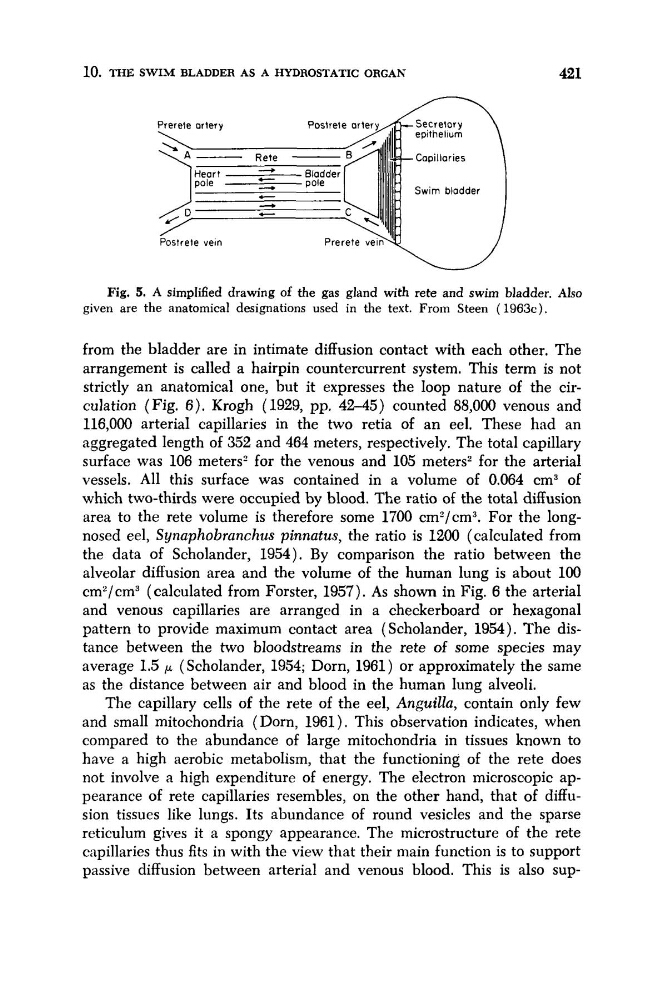
Fig. 5. A simplified drawing of the gas gland with rete and swim bladder.
given are the anatomical designations used in the text. From Steen ( 1 9 6 3 ~ ) .
421
Also
from the bladder are in intimate diffusion contact with each other, The
arrangement is called a hairpin countercurrent system. This term is not
strictly an anatomical one, but it expresses the loop nature of the circulation (Fig. 6). Krogh (1929, pp, 4 2 4 5 ) counted 88,000 venous and
116,000 arterial capillaries in the two retia of an eel. These had an
aggregated length of 352 and 464 meters, respectively. The total capillary
surface was 106 meters? for the venous and 105 meters? for the arterial
vessels. All this surface was contained in a volume of 0.064 cm3 of
which two-thirds were occupied by blood. The ratio of the total diffusion
area to the rete volume is therefore some 1700 cm2/cm3. For the longnosed eel, Synaphobrunchus pinnutus, the ratio is 1200 (caIculated from
the data of Scholander, 1954). By comparison the ratio between the
alveolar diffusion area and the volume of the human lung is about 100
cm2/cm3 (calculated from Forster, 1957). As shown in Fig. 6 the arterial
and venous capillaries are arranged in a checkerboard or hexagonal
pattern to provide maximum contact area (Scholander, 1954). The distance between the two bloodstreams in the rete of some species may
average 1.5 , U (Scholander, 1954; Dorn, 1961) or approximately the same
as the distance between air and blood in the human lung alveoli.
The capillary cells of the rete of the eel, Anguillu, contain only few
and small mitochondria (Dorn, 1961). This observation indicates, when
compared to the abundance of large mitochondria in tissues known to
have a high aerobic metabolism, that the functioning of the rete does
not involve a high expenditure of energy. The electron microscopic appearance of rete capillaries resembles, on the other hand, that of diffusion tissues like lungs. Its abundance of round vesicles and the sparse
reticulum gives it a spongy appearance. The microstructure of the rete
capillaries thus fits in with the view that their main function is to support
passive diffusion between arterial and venous blood. This is also sup-
n
Prereie artery
+j- y 4 t
4
c
Postrete vein
Fig. 5. A simplified drawing of the gas gland with rete and swim bladder.
given are the anatomical designations used in the text. From Steen ( 1 9 6 3 ~ ) .
421
Also
from the bladder are in intimate diffusion contact with each other, The
arrangement is called a hairpin countercurrent system. This term is not
strictly an anatomical one, but it expresses the loop nature of the circulation (Fig. 6). Krogh (1929, pp, 4 2 4 5 ) counted 88,000 venous and
116,000 arterial capillaries in the two retia of an eel. These had an
aggregated length of 352 and 464 meters, respectively. The total capillary
surface was 106 meters? for the venous and 105 meters? for the arterial
vessels. All this surface was contained in a volume of 0.064 cm3 of
which two-thirds were occupied by blood. The ratio of the total diffusion
area to the rete volume is therefore some 1700 cm2/cm3. For the longnosed eel, Synaphobrunchus pinnutus, the ratio is 1200 (caIculated from
the data of Scholander, 1954). By comparison the ratio between the
alveolar diffusion area and the volume of the human lung is about 100
cm2/cm3 (calculated from Forster, 1957). As shown in Fig. 6 the arterial
and venous capillaries are arranged in a checkerboard or hexagonal
pattern to provide maximum contact area (Scholander, 1954). The distance between the two bloodstreams in the rete of some species may
average 1.5 , U (Scholander, 1954; Dorn, 1961) or approximately the same
as the distance between air and blood in the human lung alveoli.
The capillary cells of the rete of the eel, Anguillu, contain only few
and small mitochondria (Dorn, 1961). This observation indicates, when
compared to the abundance of large mitochondria in tissues known to
have a high aerobic metabolism, that the functioning of the rete does
not involve a high expenditure of energy. The electron microscopic appearance of rete capillaries resembles, on the other hand, that of diffusion tissues like lungs. Its abundance of round vesicles and the sparse
reticulum gives it a spongy appearance. The microstructure of the rete
capillaries thus fits in with the view that their main function is to support
passive diffusion between arterial and venous blood. This is also sup-