

8. THE REGULATION OF BREATHING
343
A - po, 160 mm Hg,
pcO. 3.2 m m Hg
Corbon dioxide (mm Hq)
(0 )
Corbon dioxide ( m m lig)
(b)
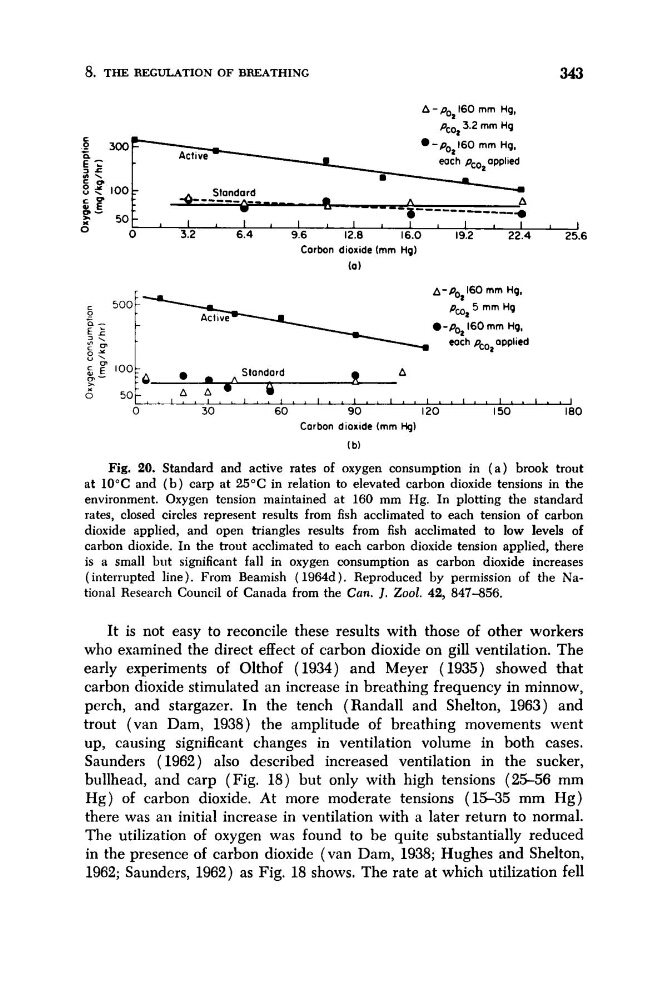
Fig. 20. Standard and active rates of oxygen consumption in ( a ) brook trout
at 10°C and ( b ) carp at 25°C in relation to elevated carbon dioxide tensions in the
environment. Oxygen tension maintained at 160 mm Hg. In plotting the standard
rates, closed circles represent results from fish acclimated to each tension of carbon
dioxide applied, and open triangles results from fish acclimated to low levels of
carbon dioxide. In the trout acclimated to each carbon dioxide tension applied, there
is a small but significant fall in oxygen consumption as carbon dioxide increases
(interrupted line). From Beamish (1964d). Reproduced by permission of the National Research Council of Canada from the Can. 1. Zool. 42, 847-856.
It is not easy to reconcile these results with those of other workers
who examined the direct effect of carbon dioxide on gill ventilation. The
early experiments of Olthof (1934) and Meyer (1935) showed that
carbon dioxide stimulated an increase in breathing frequency in minnow,
perch, and stargazer. In the tench (Randall and Shelton, 1963) and
trout (van Dam, 1938) the amplitude of breathing movements went
up, causing significant changes in ventilation volume in both cases.
Saunders (1962) also described increased ventilation in the sucker,
bullhead, and carp (Fig. 18) but only with high tensions (25-56 mm
Hg) of carbon dioxide. At more moderate tensions (1535 mm H g )
there was an initial increase in ventilation with a later return to normal.
The utilization of oxygen was found to be quite substantially reduced
in the presence of carbon dioxide (van Dam, 1938; Hughes and Shelton,
1962; Saunders, 1962) as Fig. 18 shows. The rate at which utilization fell
343
A - po, 160 mm Hg,
pcO. 3.2 m m Hg
Corbon dioxide (mm Hq)
(0 )
Corbon dioxide ( m m lig)
(b)
Fig. 20. Standard and active rates of oxygen consumption in ( a ) brook trout
at 10°C and ( b ) carp at 25°C in relation to elevated carbon dioxide tensions in the
environment. Oxygen tension maintained at 160 mm Hg. In plotting the standard
rates, closed circles represent results from fish acclimated to each tension of carbon
dioxide applied, and open triangles results from fish acclimated to low levels of
carbon dioxide. In the trout acclimated to each carbon dioxide tension applied, there
is a small but significant fall in oxygen consumption as carbon dioxide increases
(interrupted line). From Beamish (1964d). Reproduced by permission of the National Research Council of Canada from the Can. 1. Zool. 42, 847-856.
It is not easy to reconcile these results with those of other workers
who examined the direct effect of carbon dioxide on gill ventilation. The
early experiments of Olthof (1934) and Meyer (1935) showed that
carbon dioxide stimulated an increase in breathing frequency in minnow,
perch, and stargazer. In the tench (Randall and Shelton, 1963) and
trout (van Dam, 1938) the amplitude of breathing movements went
up, causing significant changes in ventilation volume in both cases.
Saunders (1962) also described increased ventilation in the sucker,
bullhead, and carp (Fig. 18) but only with high tensions (25-56 mm
Hg) of carbon dioxide. At more moderate tensions (1535 mm H g )
there was an initial increase in ventilation with a later return to normal.
The utilization of oxygen was found to be quite substantially reduced
in the presence of carbon dioxide (van Dam, 1938; Hughes and Shelton,
1962; Saunders, 1962) as Fig. 18 shows. The rate at which utilization fell