

340
G. SHELTON
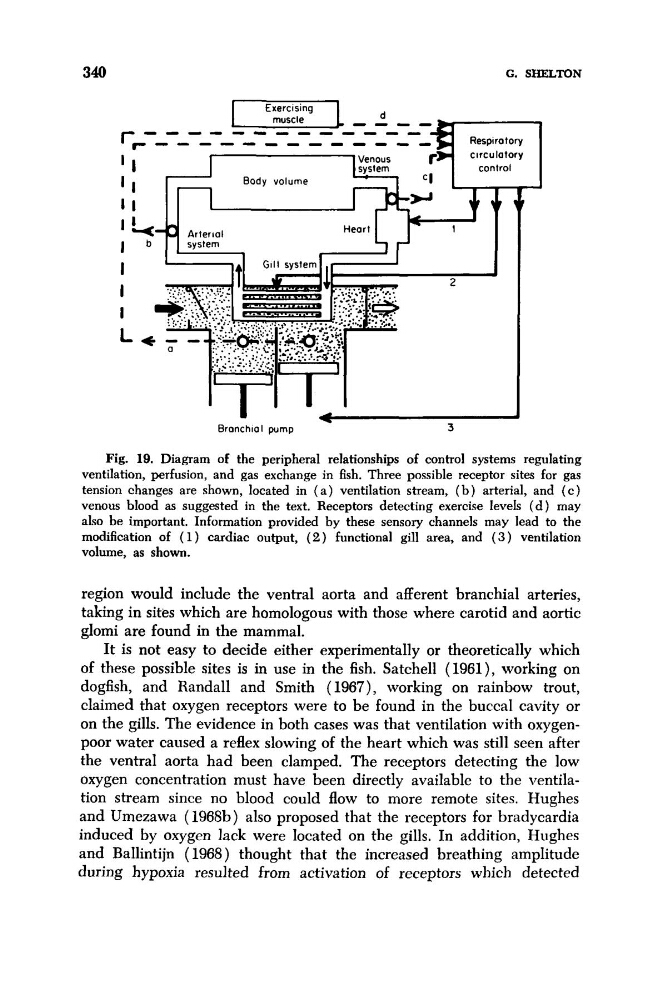
Fig. 19. Diagram of the peripheral relationships of control systems regulating
ventilation, perfusion, and gas exchange in fish. Three possible receptor sites for gas
tension changes are shown, located in ( a ) ventilation stream, ( b ) arterial, and ( c )
venous blood as suggested in the text. Receptors detecting exercise levels ( d ) may
also be important. Information provided by these sensory channels may lead to the
modification of ( 1 ) cardiac output, ( 2 ) functional gill area, and ( 3 ) ventilation
volume, as shown.
region would include the ventral aorta and afferent branchial arteries,
taking in sites which are homologous with those where carotid and aortic
glomi are found in the mammal.
It is not easy to decide either experimentally or theoretically which
of these possible sites is in use in the fish. Satchel1 (1961), working on
dogfish, and Randall and Smith (1967), working on rainbow trout,
claimed that oxygen receptors were to be found in the buccal cavity or
on the gills. The evidence in both cases was that ventilation with oxygenpoor water caused a reflex slowing of the heart which was still seen after
the ventral aorta had been clamped. The receptors detecting the low
oxygen concentration must have been directly available to the ventilation stream since no blood could flow to more remote sites. Hughes
and Umezawa (1968b) also proposed that the receptors for bradycardia
induced by oxygen lack were located on the gills. In addition, Hughes
and Ballintijn ( 1968 ) thought that the increased breathing amplitude
during hypoxia resulted from activation of receptors which detected
G. SHELTON
Fig. 19. Diagram of the peripheral relationships of control systems regulating
ventilation, perfusion, and gas exchange in fish. Three possible receptor sites for gas
tension changes are shown, located in ( a ) ventilation stream, ( b ) arterial, and ( c )
venous blood as suggested in the text. Receptors detecting exercise levels ( d ) may
also be important. Information provided by these sensory channels may lead to the
modification of ( 1 ) cardiac output, ( 2 ) functional gill area, and ( 3 ) ventilation
volume, as shown.
region would include the ventral aorta and afferent branchial arteries,
taking in sites which are homologous with those where carotid and aortic
glomi are found in the mammal.
It is not easy to decide either experimentally or theoretically which
of these possible sites is in use in the fish. Satchel1 (1961), working on
dogfish, and Randall and Smith (1967), working on rainbow trout,
claimed that oxygen receptors were to be found in the buccal cavity or
on the gills. The evidence in both cases was that ventilation with oxygenpoor water caused a reflex slowing of the heart which was still seen after
the ventral aorta had been clamped. The receptors detecting the low
oxygen concentration must have been directly available to the ventilation stream since no blood could flow to more remote sites. Hughes
and Umezawa (1968b) also proposed that the receptors for bradycardia
induced by oxygen lack were located on the gills. In addition, Hughes
and Ballintijn ( 1968 ) thought that the increased breathing amplitude
during hypoxia resulted from activation of receptors which detected