

1. ANATOMY AND PHYSIOLOGY OF THE CENTRAL NERVOUS SYSTEM
iPri m. gen. cortex
13
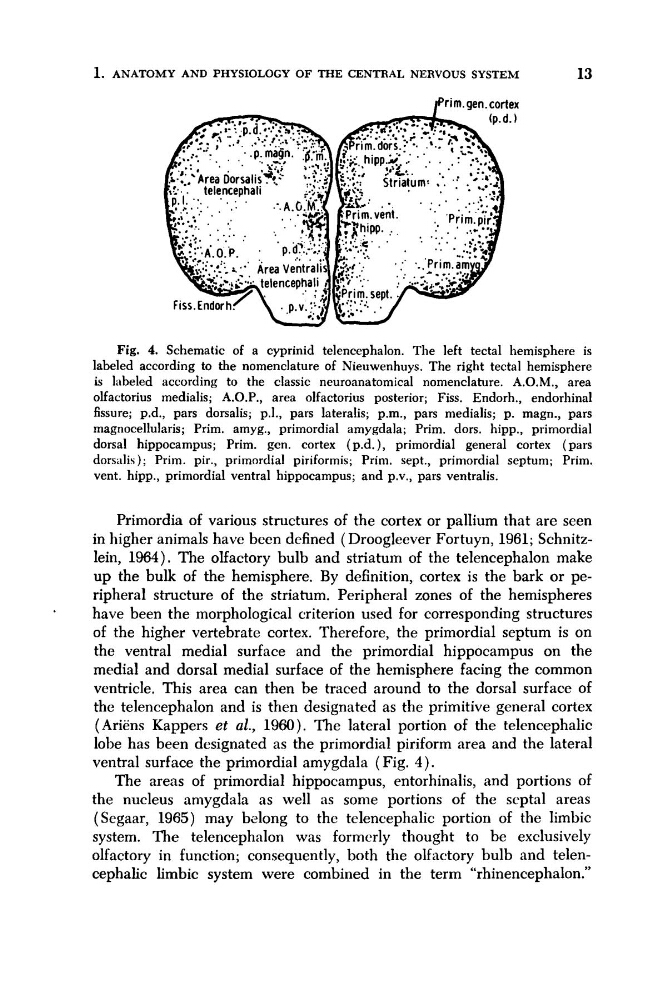
Fig. 4. Schematic of a cyprinid telencephalon. The left tectal hemisphere is
labeled according to the nomenclature of Nieuwenhuys. The right tectal hemisphere
is labeled according to the classic neuroanatomical nomenclature. A.O.M., area
olfactorius medialis; A.O.P., area olfactorius posterior; Fiss. Endorh., endorhinal
fissure; p.d., pars dorsalis; p.L, pars lateralis; p.m., pars medialis; p. magn., pars
magnocellularis; Prim. amyg., primordial amygdala; Prim. dors. hipp., primordial
dorsal hippocampus; Prim. gen. cortex (p.d.), primordial general cortex (pars
dorsalis ); Prim. pir., primordial piriformis; Prim. sept., primordial septum; Prim.
vent. hipp., primordial ventral hippocampus; and P.v., pars ventralis.
Primordia of various structures of the cortex or pallium that are seen
in higher animals have been defined (Droogleever Fortuyn, 1961; Schnitzlein, 1964). The olfactory bulb and striatum of the telencephalon make
up the bulk of the hemisphere. By definition, cortex is the bark or peripheral structure of the striatum. Peripheral zones of the hemispheres
have been the morphological criterion used for corresponding structures
of the higher vertebrate cortex. Therefore, the primordial septum is on
the ventral medial surface and the primordial hippocampus on the
medial and dorsal medial surface of the hemisphere facing the common
ventricle. This area can then be traced around to the dorsal surface of
the telencephalon and is then designated as the primitive general cortex
(Ariens Kappers et aZ., 1 W ) . The lateral portion of the telencephalic
lobe has been designated as the primordial piriform area and the lateral
ventral surface the primordial amygdala ( Fig. 4 ) .
The areas of primordial hippocampus, entorhinalis, and portions of
the nucleus amygdala as well as some portions of the septa1 areas
(Segaar, 1965) may belong to the telencephalic portion of the limbic
system. The telencephalon was formerly thought to be exclusively
olfactory in function; consequently, both the olfactory bulb and telencephalic limbic system were combined in the term “rhinencephalon.”
*
iPri m. gen. cortex
13
Fig. 4. Schematic of a cyprinid telencephalon. The left tectal hemisphere is
labeled according to the nomenclature of Nieuwenhuys. The right tectal hemisphere
is labeled according to the classic neuroanatomical nomenclature. A.O.M., area
olfactorius medialis; A.O.P., area olfactorius posterior; Fiss. Endorh., endorhinal
fissure; p.d., pars dorsalis; p.L, pars lateralis; p.m., pars medialis; p. magn., pars
magnocellularis; Prim. amyg., primordial amygdala; Prim. dors. hipp., primordial
dorsal hippocampus; Prim. gen. cortex (p.d.), primordial general cortex (pars
dorsalis ); Prim. pir., primordial piriformis; Prim. sept., primordial septum; Prim.
vent. hipp., primordial ventral hippocampus; and P.v., pars ventralis.
Primordia of various structures of the cortex or pallium that are seen
in higher animals have been defined (Droogleever Fortuyn, 1961; Schnitzlein, 1964). The olfactory bulb and striatum of the telencephalon make
up the bulk of the hemisphere. By definition, cortex is the bark or peripheral structure of the striatum. Peripheral zones of the hemispheres
have been the morphological criterion used for corresponding structures
of the higher vertebrate cortex. Therefore, the primordial septum is on
the ventral medial surface and the primordial hippocampus on the
medial and dorsal medial surface of the hemisphere facing the common
ventricle. This area can then be traced around to the dorsal surface of
the telencephalon and is then designated as the primitive general cortex
(Ariens Kappers et aZ., 1 W ) . The lateral portion of the telencephalic
lobe has been designated as the primordial piriform area and the lateral
ventral surface the primordial amygdala ( Fig. 4 ) .
The areas of primordial hippocampus, entorhinalis, and portions of
the nucleus amygdala as well as some portions of the septa1 areas
(Segaar, 1965) may belong to the telencephalic portion of the limbic
system. The telencephalon was formerly thought to be exclusively
olfactory in function; consequently, both the olfactory bulb and telencephalic limbic system were combined in the term “rhinencephalon.”
*