

8. THE REGULATION OF BREATHING
299
Col=0.5 crn
I sec
woter
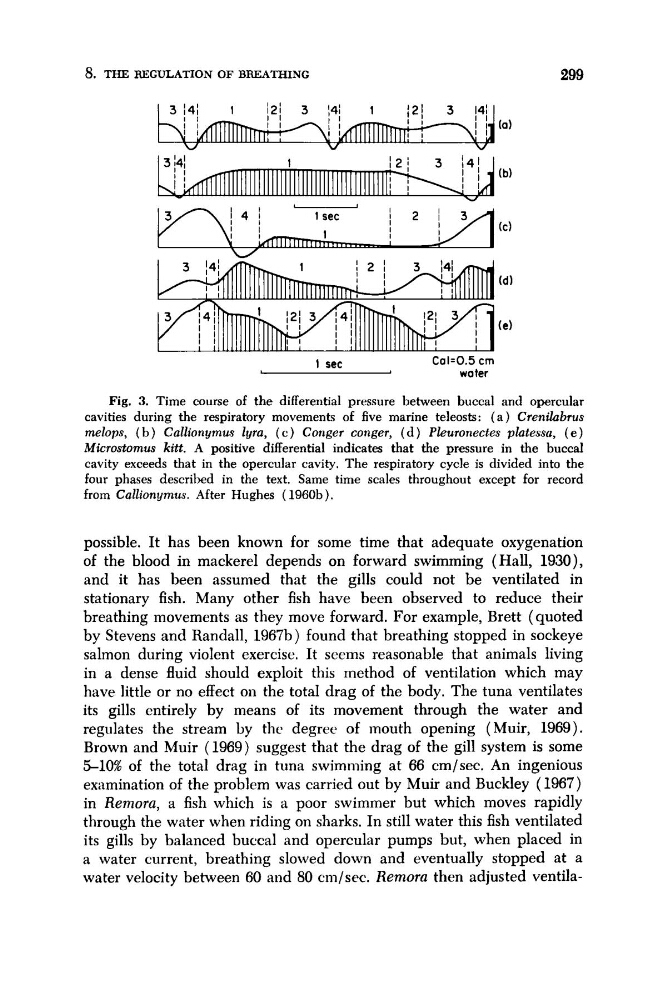
Fig. 3. Time course of the differential pressure between buccal and opercular
cavities during the respiratory movements of five marine teleosts: ( a ) Crenilabrus
melops, ( b ) Callionymus lyra, ( c ) Conger conger, ( d ) Pleuronectes plotessa, ( e )
Microstomus kitt. A positive differential indicates that the pressure in the buccal
cavity exceeds that in the opercular cavity. The respiratory cycle is divided into the
four phases described in the text. Same time scales throughout except for record
from Callionymus. After Hughes (1960b).
possible. It has been known for some time that adequate oxygenation
of the blood in mackerel depends on forward swimming (Hall, 1930),
and it has been assumed that the gills could not be ventilated in
stationary fish. Many other fish have been observed to reduce their
breathing movements as they move forward. For example, Brett (quoted
by Stevens and Randall, 1967b) found that breathing stopped in sockeye
salmon during violent exercise. It seems reasonable that animals living
in a dense fluid should exploit this method of ventilation which may
have little or no effect on the total drag of the body. The tuna ventilates
its gills entirely by means of its movement through the water and
regulates the stream by the degree of mouth opening (Muir, 1969).
Brown and Muir (1969) suggest that the drag of the gill system is some
5-1056 of the total drag in tuna swimming at 66 cmlsec. An ingenious
examination of the problem was carried out by Muir and Buckley (1967)
in Remora, a fish which is a poor swimmer but which moves rapidly
through the water when riding on sharks. In still water this fish ventilated
its gills by balanced buccal and opercular pumps but, when placed in
a water current, breathing slowed down and eventually stopped at a
water velocity between 60 and 80 cni/sec. Remora then adjusted ventila-
299
Col=0.5 crn
I sec
woter
Fig. 3. Time course of the differential pressure between buccal and opercular
cavities during the respiratory movements of five marine teleosts: ( a ) Crenilabrus
melops, ( b ) Callionymus lyra, ( c ) Conger conger, ( d ) Pleuronectes plotessa, ( e )
Microstomus kitt. A positive differential indicates that the pressure in the buccal
cavity exceeds that in the opercular cavity. The respiratory cycle is divided into the
four phases described in the text. Same time scales throughout except for record
from Callionymus. After Hughes (1960b).
possible. It has been known for some time that adequate oxygenation
of the blood in mackerel depends on forward swimming (Hall, 1930),
and it has been assumed that the gills could not be ventilated in
stationary fish. Many other fish have been observed to reduce their
breathing movements as they move forward. For example, Brett (quoted
by Stevens and Randall, 1967b) found that breathing stopped in sockeye
salmon during violent exercise. It seems reasonable that animals living
in a dense fluid should exploit this method of ventilation which may
have little or no effect on the total drag of the body. The tuna ventilates
its gills entirely by means of its movement through the water and
regulates the stream by the degree of mouth opening (Muir, 1969).
Brown and Muir (1969) suggest that the drag of the gill system is some
5-1056 of the total drag in tuna swimming at 66 cmlsec. An ingenious
examination of the problem was carried out by Muir and Buckley (1967)
in Remora, a fish which is a poor swimmer but which moves rapidly
through the water when riding on sharks. In still water this fish ventilated
its gills by balanced buccal and opercular pumps but, when placed in
a water current, breathing slowed down and eventually stopped at a
water velocity between 60 and 80 cni/sec. Remora then adjusted ventila-