

C. SHELTON
Mouth
movement
Cperculor
movement
Buccol
volve
Operculor
volve
Pressure
in cm
woter
Buccol
cavity
positive
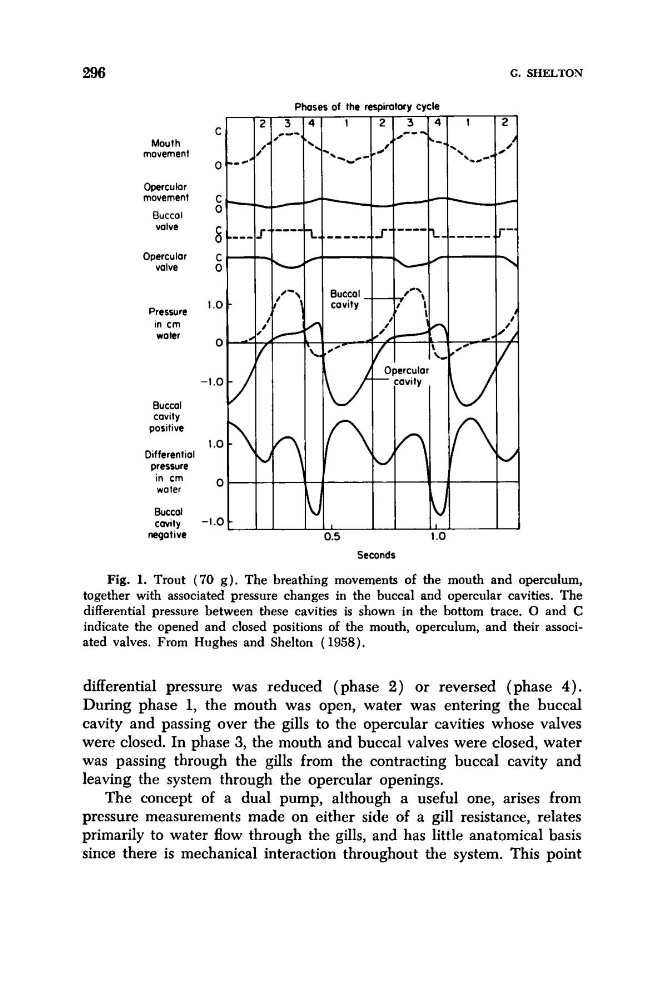
Fig. 1. Trout (70 9). The breathing movements of the mouth and operculum,
together with associated pressure changes in the buccal and opercular cavities. The
differential pressure between these cavities is shown in the bottom trace. 0 and C
indicate the opened and closed positions of the mouth, operculum, and their associated valves. From Hughes and Shelton (1958).
differential pressure was reduced (phase 2) or reversed (phase 4).
During phase 1, the mouth was open, water was entering the buccal
cavity and passing over the gills to the opercular cavities whose valves
were closed. In phase 3, the mouth and buccal valves were closed, water
was passing through the gills from the contracting buccal cavity and
leaving the system through the opercular openings.
The concept of a dual pump, although a useful one, arises from
pressure measurements made on either side of a gill resistance, relates
primarily to water flow through the gills, and has little anatomical basis
since there is mechanical interaction throughout the system. This point
Mouth
movement
Cperculor
movement
Buccol
volve
Operculor
volve
Pressure
in cm
woter
Buccol
cavity
positive
Fig. 1. Trout (70 9). The breathing movements of the mouth and operculum,
together with associated pressure changes in the buccal and opercular cavities. The
differential pressure between these cavities is shown in the bottom trace. 0 and C
indicate the opened and closed positions of the mouth, operculum, and their associated valves. From Hughes and Shelton (1958).
differential pressure was reduced (phase 2) or reversed (phase 4).
During phase 1, the mouth was open, water was entering the buccal
cavity and passing over the gills to the opercular cavities whose valves
were closed. In phase 3, the mouth and buccal valves were closed, water
was passing through the gills from the contracting buccal cavity and
leaving the system through the opercular openings.
The concept of a dual pump, although a useful one, arises from
pressure measurements made on either side of a gill resistance, relates
primarily to water flow through the gills, and has little anatomical basis
since there is mechanical interaction throughout the system. This point