

276
D. J. RANDALL
COP + H20 = H2CO3 = H' + HCO3
Red blood
cell
C02 + H20 = H2CO3 = H* + HCO;
Slow
Water
<
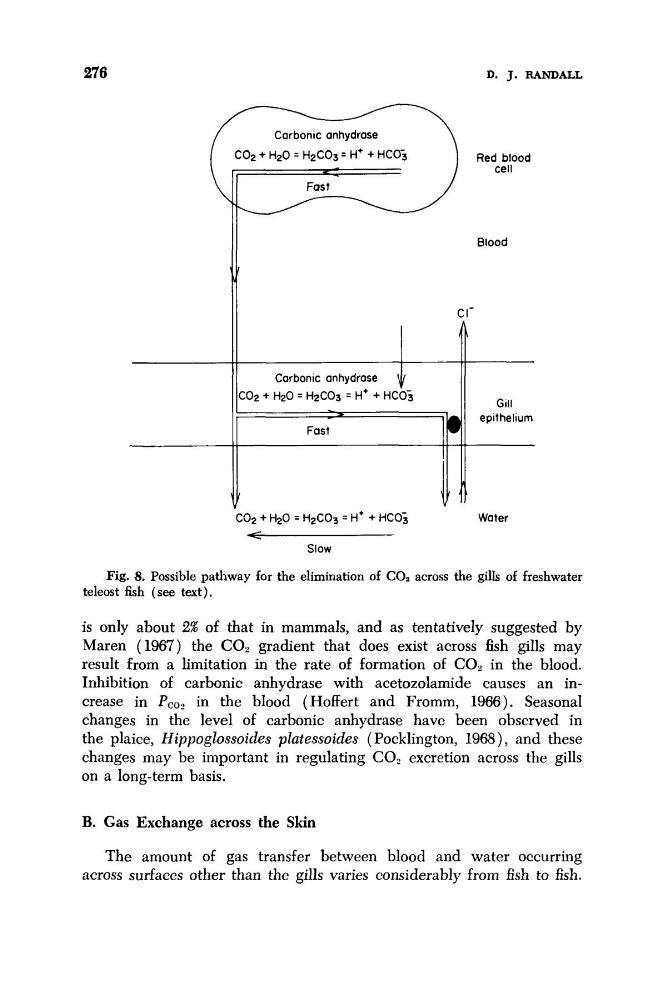
Fig. 8. Possible pathway for the elimination of CO, across the gills of freshwater
teleost fish (see text).
is only about 2% of that in mammals, and as tentatively suggested by
Maren (1967) the CO, gradient that does exist across fish gills may
result from a limitation in the rate of formation of CO, in the blood.
Inhibition of carbonic anhydrase with acetozolamide causes an increase in PCo2 in the blood (Hoffert and Fromm, 1966). Seasonal
changes in the level of carbonic anhydrase have been observed in
the plaice, Hippoglossoides platessoides ( Pocklington, 1968 ) , and these
changes may be important in regulating CO, excretion across the gills
on a long-term basis.
B. Gas Exchange across the Skin
The amount of gas transfer between blood and water occurring
across surfaces other than the gills varies considerably from fish to fish.
D. J. RANDALL
COP + H20 = H2CO3 = H' + HCO3
Red blood
cell
C02 + H20 = H2CO3 = H* + HCO;
Slow
Water
<
Fig. 8. Possible pathway for the elimination of CO, across the gills of freshwater
teleost fish (see text).
is only about 2% of that in mammals, and as tentatively suggested by
Maren (1967) the CO, gradient that does exist across fish gills may
result from a limitation in the rate of formation of CO, in the blood.
Inhibition of carbonic anhydrase with acetozolamide causes an increase in PCo2 in the blood (Hoffert and Fromm, 1966). Seasonal
changes in the level of carbonic anhydrase have been observed in
the plaice, Hippoglossoides platessoides ( Pocklington, 1968 ) , and these
changes may be important in regulating CO, excretion across the gills
on a long-term basis.
B. Gas Exchange across the Skin
The amount of gas transfer between blood and water occurring
across surfaces other than the gills varies considerably from fish to fish.