

7. GAS EXCHANGE IN FISH
267
Gill arch
Secondary lamellae
Water
Afferent branchial artery
Efferent branchial artery
flow
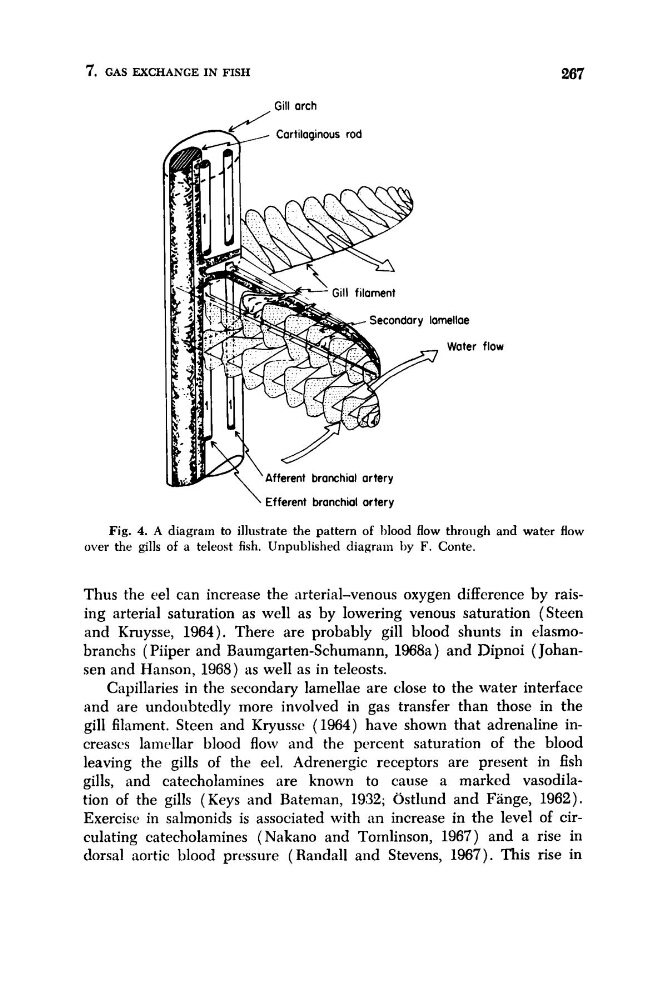
Fig. 4. A diagram to illustrate the pattern of blood flow through and water flow
over the gills of a teleost fish. Unpublished diagram by F. Conte.
Thus the eel can increase the arterial-venous oxygen difference by raising arterial saturation as well as by lowering venous saturation (Steen
and Kruysse, 1964). There are probably gill blood shunts in elasmobranchs (Piiper and Baumgarten-Schumann, 1968a) and Dipnoi (Johansen and Hanson, 1968) as well as in teleosts.
Capillaries in the secondary lamellae are close to the water interface
and are undoubtcdly more involved in gas transfer than those in the
gill filament. Steen and Kryussc (1964) have shown that adrenaline increases lamellar blood flow and the percent saturation of the blood
leaving the gills of the eel. Adrenergic receptors are present in fish
gills, and catecholamines are known to cause a marked vasodilation of the gills (Keys and Batenian, 1932; Ostlund and Fange, 1962).
Exercise in salmonids is associated with an increase in the level of circulating catecholamines (Nakano and Tomlinson, 1967) and a rise in
dorsal aortic blood pressure (Randall and Stevens, 1967). This rise in
267
Gill arch
Secondary lamellae
Water
Afferent branchial artery
Efferent branchial artery
flow
Fig. 4. A diagram to illustrate the pattern of blood flow through and water flow
over the gills of a teleost fish. Unpublished diagram by F. Conte.
Thus the eel can increase the arterial-venous oxygen difference by raising arterial saturation as well as by lowering venous saturation (Steen
and Kruysse, 1964). There are probably gill blood shunts in elasmobranchs (Piiper and Baumgarten-Schumann, 1968a) and Dipnoi (Johansen and Hanson, 1968) as well as in teleosts.
Capillaries in the secondary lamellae are close to the water interface
and are undoubtcdly more involved in gas transfer than those in the
gill filament. Steen and Kryussc (1964) have shown that adrenaline increases lamellar blood flow and the percent saturation of the blood
leaving the gills of the eel. Adrenergic receptors are present in fish
gills, and catecholamines are known to cause a marked vasodilation of the gills (Keys and Batenian, 1932; Ostlund and Fange, 1962).
Exercise in salmonids is associated with an increase in the level of circulating catecholamines (Nakano and Tomlinson, 1967) and a rise in
dorsal aortic blood pressure (Randall and Stevens, 1967). This rise in