

164
D. J. RANDALL
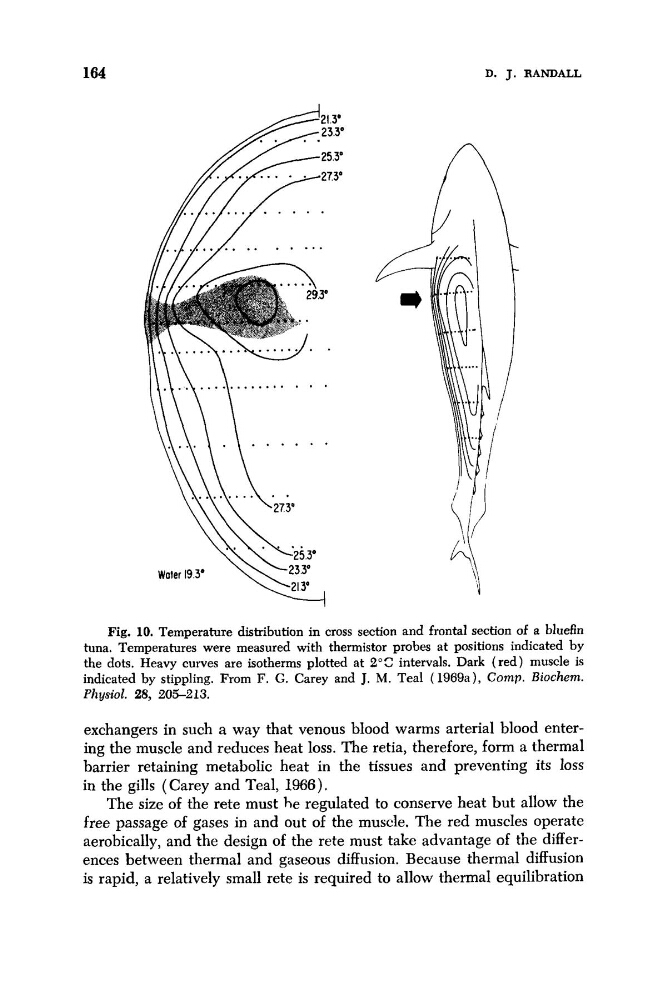
Fig. 10. Temperature distribution in cross section and frontal section of a bluefin
tuna. Temperatures were measured with thermistor probes at positions indicated by
the dots. Heavy curves are isotherms plotted at 2% intervals. Dark (red) muscle is
indicated by stippling. From F. G. Carey and J, M. Teal (1969a), Comp. Biochem.
Physiol. 28, 205-213.
exchangers in such a way that venous blood warms arterial blood entering the muscle and reduces heat loss. The retia, therefore, form a thermal
barrier retaining metabolic heat in the tissues and preventing its loss
in the gills (Carey and Teal, 1966).
The size of the rete must he regulated to conserve heat but allow the
free passage of gases in and out of the muscle. The red muscles operate
aerobically, and the design of the rete must take advantage of the differences between thermal and gaseous diffusion. Because thermal diffusion
is rapid, a relatively small rete is required to allow thermal equilibration
D. J. RANDALL
Fig. 10. Temperature distribution in cross section and frontal section of a bluefin
tuna. Temperatures were measured with thermistor probes at positions indicated by
the dots. Heavy curves are isotherms plotted at 2% intervals. Dark (red) muscle is
indicated by stippling. From F. G. Carey and J, M. Teal (1969a), Comp. Biochem.
Physiol. 28, 205-213.
exchangers in such a way that venous blood warms arterial blood entering the muscle and reduces heat loss. The retia, therefore, form a thermal
barrier retaining metabolic heat in the tissues and preventing its loss
in the gills (Carey and Teal, 1966).
The size of the rete must he regulated to conserve heat but allow the
free passage of gases in and out of the muscle. The red muscles operate
aerobically, and the design of the rete must take advantage of the differences between thermal and gaseous diffusion. Because thermal diffusion
is rapid, a relatively small rete is required to allow thermal equilibration