

4. THE CIRCULATORY SYSTEM
149
40
W
I
E
E
- 20
?!
?!
n
ul u)
0
lsovolumetric
relaxation
Area = ventricular
stroke work
lsovolumet r ic
contraction
1
Filling phase volume increase -
0.1 ml
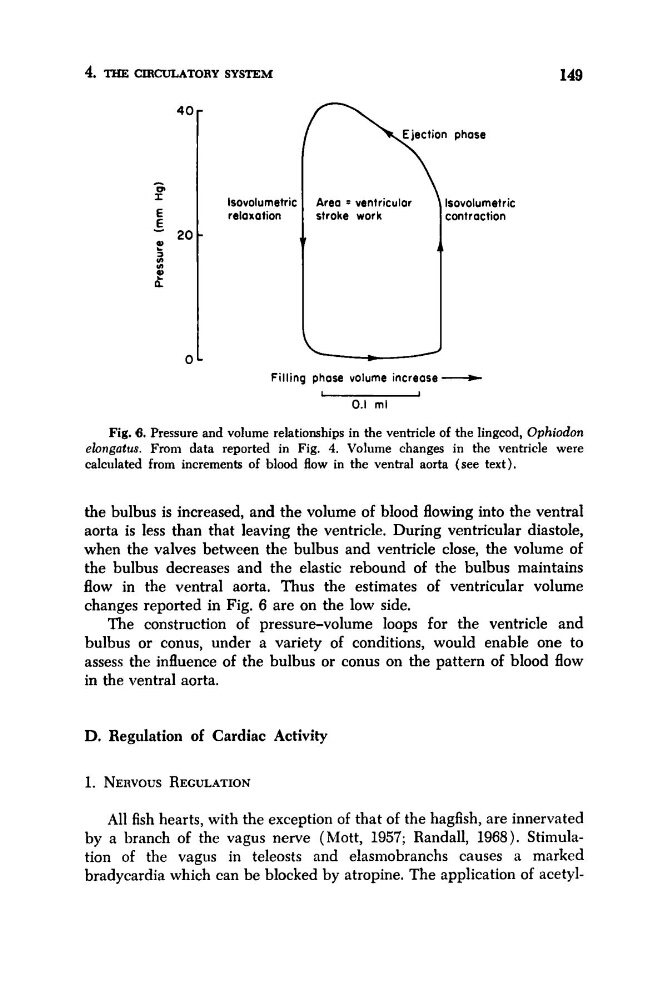
Fig. 6. Pressure and volume relationships in the ventricle of the lingcod, Ophiodon
elongatus. From data reported in Fig. 4. Volume changes in the ventricle were
calculated from increments of blood flow in the ventral aorta (see text).
the bulbus is increased, and the volume of blood flowing into the ventral
aorta is less than that leaving the ventricle. During ventricular diastole,
when the valves between the bulbus and ventricle close, the volume of
the bulbus decreases and the elastic rebound of the bulbus maintains
flow in the ventral aorta. Thus the estimates of ventricular volume
changes reported in Fig. 6 are on the low side.
The construction of pressure-volume loops for the ventricle and
bulbus or conus, under a variety of conditions, would enable one to
assess the influence of the bulbus or conus on the pattern of blood flow
in the ventral aorta.
D. Regulation of Cardiac Activity
1. NERVOUS REGULATION
All fish hearts, with the exception of that of the hagfish, are innervated
by a branch of the vagus nerve (Mott, 1957; Randall, 1968). Stimulation of the vagus in teleosts and elasmobranchs causes a marked
bradycardia which can be blocked by atropine. The application of acetyl-
149
40
W
I
E
E
- 20
?!
?!
n
ul u)
0
lsovolumetric
relaxation
Area = ventricular
stroke work
lsovolumet r ic
contraction
1
Filling phase volume increase -
0.1 ml
Fig. 6. Pressure and volume relationships in the ventricle of the lingcod, Ophiodon
elongatus. From data reported in Fig. 4. Volume changes in the ventricle were
calculated from increments of blood flow in the ventral aorta (see text).
the bulbus is increased, and the volume of blood flowing into the ventral
aorta is less than that leaving the ventricle. During ventricular diastole,
when the valves between the bulbus and ventricle close, the volume of
the bulbus decreases and the elastic rebound of the bulbus maintains
flow in the ventral aorta. Thus the estimates of ventricular volume
changes reported in Fig. 6 are on the low side.
The construction of pressure-volume loops for the ventricle and
bulbus or conus, under a variety of conditions, would enable one to
assess the influence of the bulbus or conus on the pattern of blood flow
in the ventral aorta.
D. Regulation of Cardiac Activity
1. NERVOUS REGULATION
All fish hearts, with the exception of that of the hagfish, are innervated
by a branch of the vagus nerve (Mott, 1957; Randall, 1968). Stimulation of the vagus in teleosts and elasmobranchs causes a marked
bradycardia which can be blocked by atropine. The application of acetyl-