

118
GRAEME CAMPBELL
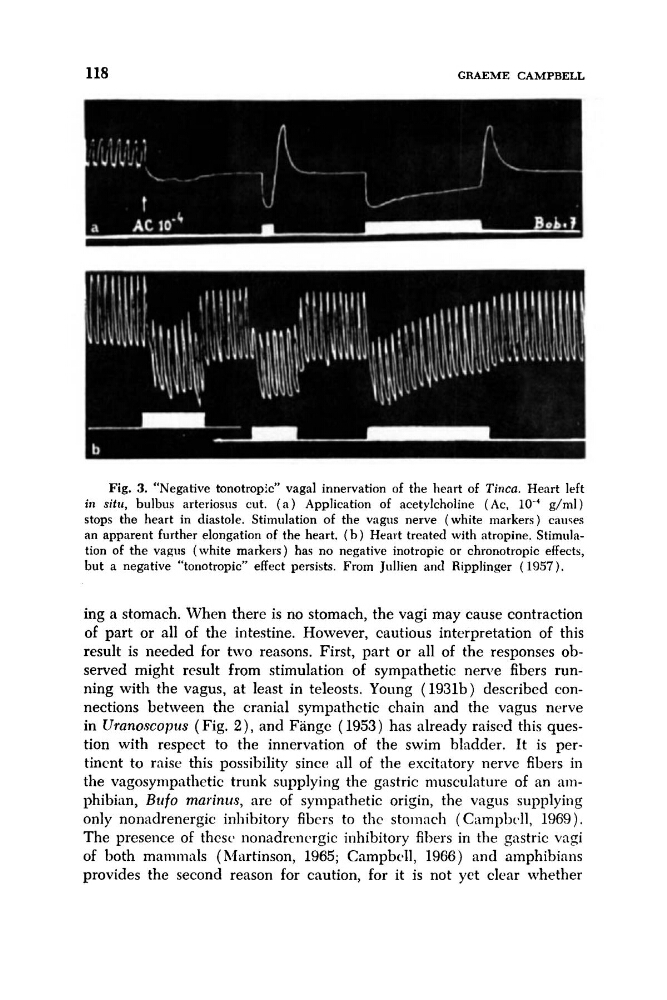
Fig. 3. “Negative tonotropic” vagal innervation of the hcart of Tinca. Heart left
in sitrr, bulbus arteriosus cut. ( a ) Application of acetylcholine (Ac,
g/ml)
stops the heart in diastole. Stimulation of the vngus nerve (white markers) causes
an apparent further elongation of the heart. ( b ) Heart treated with atropine. Stimulation of the vagus (white markers) has no negative inotropic or chronotropic effects,
but a negative “tonotropic” effect persists. From Jullien and Ripplinger ( 1957).
ing a stomach. When there is no stomach, the vagi may cause contraction
of part or all of the intestine. However, cautious interpretation of this
result is needed for two reasons. First, part or all of the responses observed might result from stimulation of sympathetic nerve fibers running with the vagus, at least in teleosts. Young (1931b) described connections between the cranial sympathetic chain and the vngus nerve
in Urunoscopus (Fig. 2 ) , and Fangc ( 1953) has already raiscd this question with respect to the innervation of the swim bladder. It is pertincnt to raise this possibility since all of the excitatory nerve fibers in
the vagosympathetic trunk supplying the gastric musculature of an amphibian, Bufo marinus, are of sympathetic origin, the vagus supplying
only nonadrenergic inhibitory fibers to thc stomach ( Campbc.11, 1969).
The presence of thcsc, nonadrcnc~rgic inhibitory fibers in the gastric vagi
of both mammnls ( Afartinson, 1965; Campbell, 1966) and amphibians
provides the second reason for caution, for it is not yct clcar whether
GRAEME CAMPBELL
Fig. 3. “Negative tonotropic” vagal innervation of the hcart of Tinca. Heart left
in sitrr, bulbus arteriosus cut. ( a ) Application of acetylcholine (Ac,
g/ml)
stops the heart in diastole. Stimulation of the vngus nerve (white markers) causes
an apparent further elongation of the heart. ( b ) Heart treated with atropine. Stimulation of the vagus (white markers) has no negative inotropic or chronotropic effects,
but a negative “tonotropic” effect persists. From Jullien and Ripplinger ( 1957).
ing a stomach. When there is no stomach, the vagi may cause contraction
of part or all of the intestine. However, cautious interpretation of this
result is needed for two reasons. First, part or all of the responses observed might result from stimulation of sympathetic nerve fibers running with the vagus, at least in teleosts. Young (1931b) described connections between the cranial sympathetic chain and the vngus nerve
in Urunoscopus (Fig. 2 ) , and Fangc ( 1953) has already raiscd this question with respect to the innervation of the swim bladder. It is pertincnt to raise this possibility since all of the excitatory nerve fibers in
the vagosympathetic trunk supplying the gastric musculature of an amphibian, Bufo marinus, are of sympathetic origin, the vagus supplying
only nonadrenergic inhibitory fibers to thc stomach ( Campbc.11, 1969).
The presence of thcsc, nonadrcnc~rgic inhibitory fibers in the gastric vagi
of both mammnls ( Afartinson, 1965; Campbell, 1966) and amphibians
provides the second reason for caution, for it is not yct clcar whether