

vanadium is present only i ~ s
7 11.p.m. of the ash weight, which compares
with 460 p.p.111. ash weight in Ascidia obliqwt Alder (Vinogradov, 1934)
but copper amounts to 600 p.p.ni. in Sulpa (Nicholls et al., 1959).
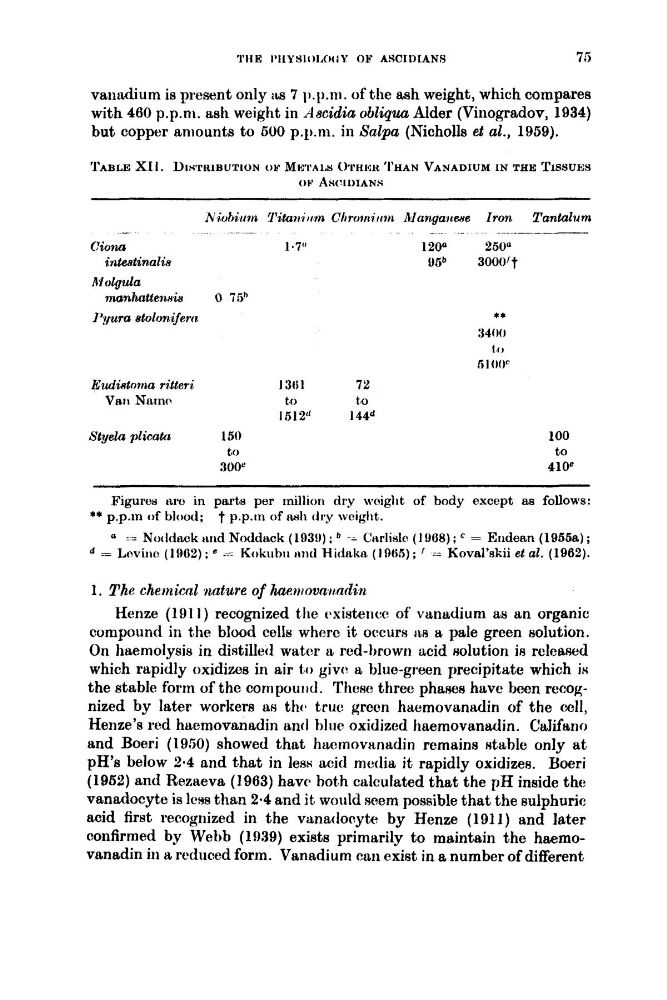
TABLE XI I . DISTRIBUTION o~ M P T A ~ S
CPI~HI.:R THAN VANADIUM IN TEE Trssu~s
oi? AS(-II)~ANS
Styela plicatu
160
to
ROO"
13u1
72
t 0
to
1612''
144d
100
to
410e
Figurea two in parts per million dry woiglit of body except aa follows:
: Ctlrlisla ( 1 968) ; = Eridean (1955a) ;
-- Kokubii tmd H idaka ( 1965) ; f == Koval'sbii et al. (1962).
** p.p.in of blood; t p.p.in of ash dry weight.
== Notldaok tirid Noddmk (1039) :
= Loviiro (1902) :
1. The chemical nature of hueuovnrrndin
Henze (1911) recognized the cbxisteiioc of vanadium as an organic
compound in the blood cells where it orcurs 11s a pale green solution.
On haernolysis in distilled watar a red-brown acid nolution iR rclcaHed
which rapidly oxidizes in air to givtb a blue-green precipitate which is
the stable forrn of the compoui~tl. Them three phases have been recognized by later workers
thc truc grccn haemovenadin of the czll,
Henze's rod haemovanadin and M t i c oxidized haemovanadin. Califtlrio
and Boeri (1950) showed that haornovanadin remains Htable only at
pH's below 3.4 and that in less acid mctlia it rapidly oxidizes. Boeri
(1952) and Rezaeva (1963) haw both calculated that the pH inside the
vanadocyte is lens than 2.4 and it would seem possible that the sulphuric
acid first recognized in the vanatlonyte by Henze (1911) and later
confirmed by Webb (1939) exists primarily to maintain the haemovanadin in 8 rcdiioed form. Vanadium can exist in a number of different
7 11.p.m. of the ash weight, which compares
with 460 p.p.111. ash weight in Ascidia obliqwt Alder (Vinogradov, 1934)
but copper amounts to 600 p.p.ni. in Sulpa (Nicholls et al., 1959).
TABLE XI I . DISTRIBUTION o~ M P T A ~ S
CPI~HI.:R THAN VANADIUM IN TEE Trssu~s
oi? AS(-II)~ANS
Styela plicatu
160
to
ROO"
13u1
72
t 0
to
1612''
144d
100
to
410e
Figurea two in parts per million dry woiglit of body except aa follows:
: Ctlrlisla ( 1 968) ; = Eridean (1955a) ;
-- Kokubii tmd H idaka ( 1965) ; f == Koval'sbii et al. (1962).
** p.p.in of blood; t p.p.in of ash dry weight.
== Notldaok tirid Noddmk (1039) :
= Loviiro (1902) :
1. The chemical nature of hueuovnrrndin
Henze (1911) recognized the cbxisteiioc of vanadium as an organic
compound in the blood cells where it orcurs 11s a pale green solution.
On haernolysis in distilled watar a red-brown acid nolution iR rclcaHed
which rapidly oxidizes in air to givtb a blue-green precipitate which is
the stable forrn of the compoui~tl. Them three phases have been recognized by later workers
thc truc grccn haemovenadin of the czll,
Henze's rod haemovanadin and M t i c oxidized haemovanadin. Califtlrio
and Boeri (1950) showed that haornovanadin remains Htable only at
pH's below 3.4 and that in less acid mctlia it rapidly oxidizes. Boeri
(1952) and Rezaeva (1963) haw both calculated that the pH inside the
vanadocyte is lens than 2.4 and it would seem possible that the sulphuric
acid first recognized in the vanatlonyte by Henze (1911) and later
confirmed by Webb (1939) exists primarily to maintain the haemovanadin in 8 rcdiioed form. Vanadium can exist in a number of different