

58
80Mislin ( I 964, 1965) tinti Mislin ;~ticl Krause (1964) reported the
existencca of chxtrasystoles or interpolated contractions occurring at the
moment of reverstit and c~otisidcrc~d that' these may have disturbed
pacemaker frcquenc-y HO tis to pcwiit reverml. This hutl not h e t i
confirmed by ot,hsr workcm I L I N ~ orol)ably t h extraAystolos recorded
were tho result of " eolli~ioiir " during the momcrit of r e v e r d when one
pacemaker is gaining dominance over mother (Anderson, 1968).
T
I
1
I
I
I
0 2
;
10
15
20
I
30
mm pressure
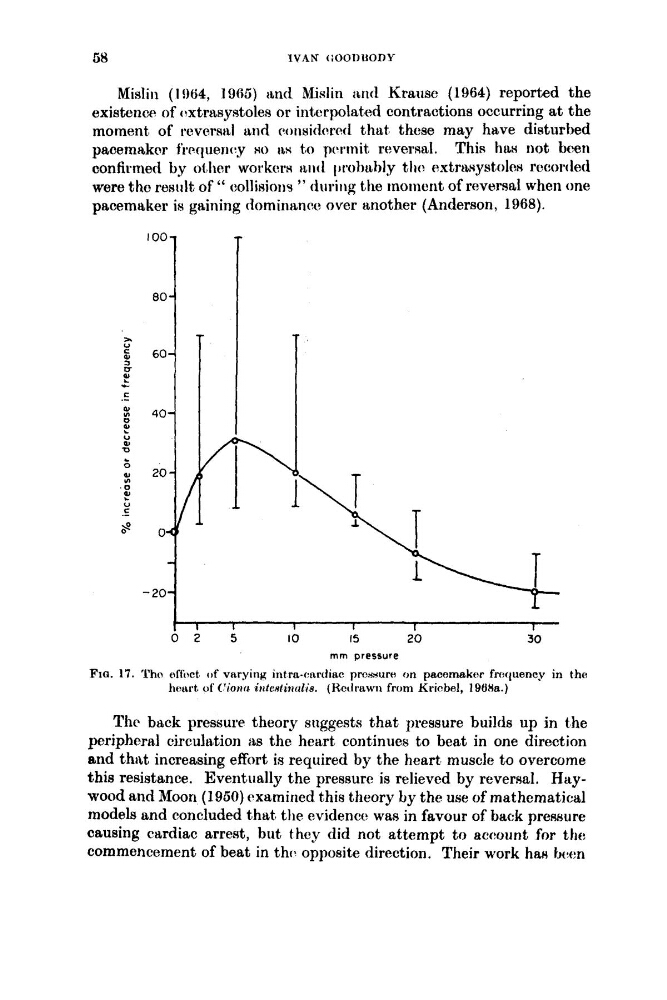
h a r t of C'iottcc infenlirictlie. (Izcilrawn from Krirbel, 19BXa.)
FIQ. 17. Tho effi)ct of varying intra-c.ardiar prossure on pacemaker frequency in the
The back pressure theory saggests that pressure builds up in the
peripheral circulation as the heart continues to beat in one direction
and thtit increasing effort is required by the heart muscle to overcome
this resistance. Eventually the pressure is relieved by reversal. Haywood and Moon (1950) examined this theory by the use of mathcrnaticltl
models and concluded that the evidencc was in favour of back preRsure
causing cardiac arrest, but they did not attempt to account for the
commencement of beat in th(1 opposite direction. Their work h w bwn
80Mislin ( I 964, 1965) tinti Mislin ;~ticl Krause (1964) reported the
existencca of chxtrasystoles or interpolated contractions occurring at the
moment of reverstit and c~otisidcrc~d that' these may have disturbed
pacemaker frcquenc-y HO tis to pcwiit reverml. This hutl not h e t i
confirmed by ot,hsr workcm I L I N ~ orol)ably t h extraAystolos recorded
were tho result of " eolli~ioiir " during the momcrit of r e v e r d when one
pacemaker is gaining dominance over mother (Anderson, 1968).
T
I
1
I
I
I
0 2
;
10
15
20
I
30
mm pressure
h a r t of C'iottcc infenlirictlie. (Izcilrawn from Krirbel, 19BXa.)
FIQ. 17. Tho effi)ct of varying intra-c.ardiar prossure on pacemaker frequency in the
The back pressure theory saggests that pressure builds up in the
peripheral circulation as the heart continues to beat in one direction
and thtit increasing effort is required by the heart muscle to overcome
this resistance. Eventually the pressure is relieved by reversal. Haywood and Moon (1950) examined this theory by the use of mathcrnaticltl
models and concluded that the evidencc was in favour of back preRsure
causing cardiac arrest, but they did not attempt to account for the
commencement of beat in th(1 opposite direction. Their work h w bwn