

438
C. B. COWEY AND J. R. SARGENT
'Cn,-0-CO-R,
'miz- 0- co - R,
Phosphollpase
(A)
R,-cO-O-fi
0 II
A
0
II
CHz-O-P-O-X'
'CH,-O-CO-R,
'cn,-on
R,--COzH
+ R,-COzH
- R,-CO-o n
+
Pancreatic
(B)
Rz-CO-O+H
Lipase
CHz-O-COR,
cn,-on
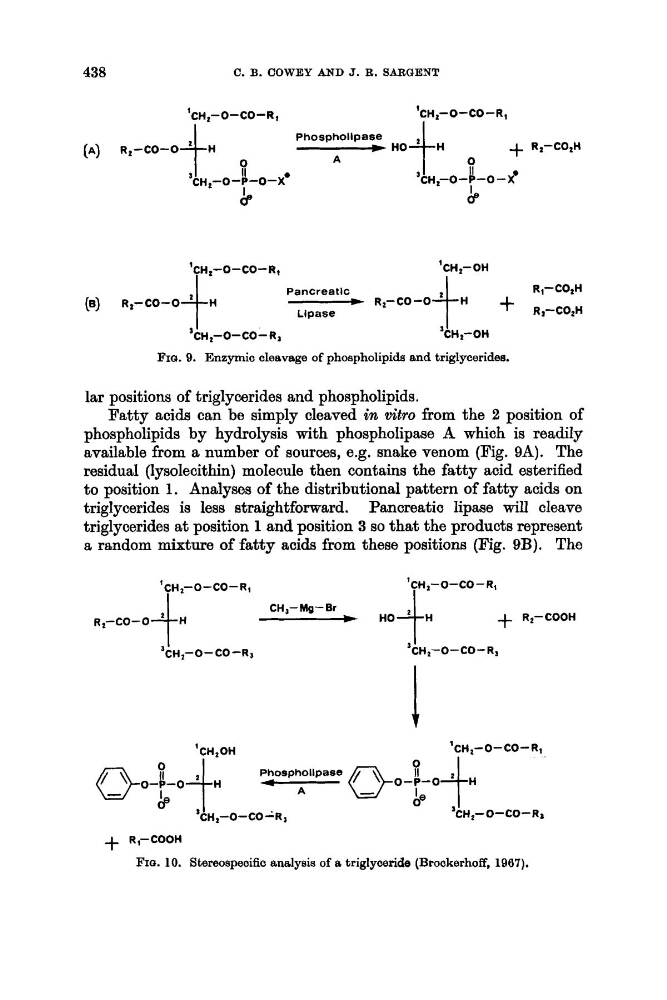
FIG. 9. Enzymic cleavage of phospholipids and triglycerides.
lar positions of triglycerides and phospholipids.
Fatty acids can be simply cleaved in vitro from the 2 position of
phospholipids by hydrolysis with phospholipase A which is readily
available from a number of sources, e.g. snake venom (Fig. 9A). The
residual (lysolecithin) molecule then contains the fatty acid esterified
to position 1. Analyses of the distributional pattern of fatty acids on
triglycerides is less straightforward. Pancreatic lipase will cleave
triglycerides at position 1 and position 3 so that the products represent
a random mixture of fatty acids from these positions (Fig. 9B). The
o - co - R,
HO $z-O-COR,
CH3-Mg- Br
Rz-CO-0
H
- n + R,-COOH
4
I
'CH *- 0 - CO -R 3
Phosphollpase
A
+ R,-COOH
FIG. 10. Stereospecific analysis of a triglyceride (Brockerhoff, 1967).
C. B. COWEY AND J. R. SARGENT
'Cn,-0-CO-R,
'miz- 0- co - R,
Phosphollpase
(A)
R,-cO-O-fi
0 II
A
0
II
CHz-O-P-O-X'
'CH,-O-CO-R,
'cn,-on
R,--COzH
+ R,-COzH
- R,-CO-o n
+
Pancreatic
(B)
Rz-CO-O+H
Lipase
CHz-O-COR,
cn,-on
FIG. 9. Enzymic cleavage of phospholipids and triglycerides.
lar positions of triglycerides and phospholipids.
Fatty acids can be simply cleaved in vitro from the 2 position of
phospholipids by hydrolysis with phospholipase A which is readily
available from a number of sources, e.g. snake venom (Fig. 9A). The
residual (lysolecithin) molecule then contains the fatty acid esterified
to position 1. Analyses of the distributional pattern of fatty acids on
triglycerides is less straightforward. Pancreatic lipase will cleave
triglycerides at position 1 and position 3 so that the products represent
a random mixture of fatty acids from these positions (Fig. 9B). The
o - co - R,
HO $z-O-COR,
CH3-Mg- Br
Rz-CO-0
H
- n + R,-COOH
4
I
'CH *- 0 - CO -R 3
Phosphollpase
A
+ R,-COOH
FIG. 10. Stereospecific analysis of a triglyceride (Brockerhoff, 1967).