

434
0. B. COWEY AND J. R. SARBENT
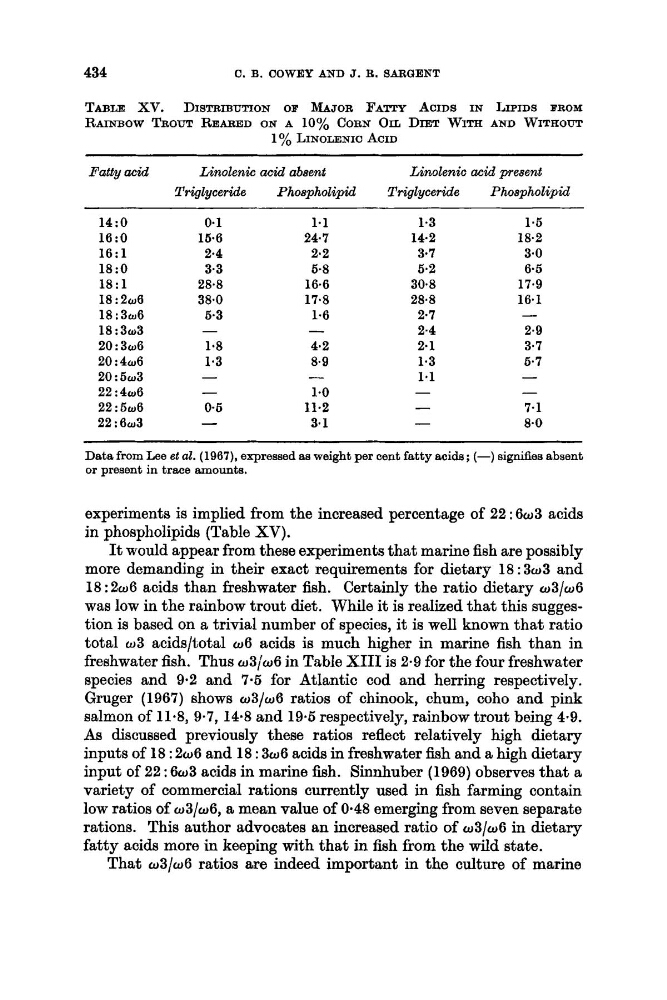
TABLE XV. DISTRIBUTION OF MAJOR FATTY ACIDS IN LIPIDS FROM
R A ~ ~ B O W
TRoa REARED ON A 10% CORN OIL DJXT WITH AND WITHOUT
1% LINOLENIC ACID
Fatty acid
ljinolenic acid absent
Linolenic acid present
Triglyceride
Phospholipid
Triglyceride
Phospholipid
14:O
16:O
1 6 : l
18:O
1 8 : l
18 : 2w6
18 : 3w6
18 : 303
20 : 3w6
20 : 4w6
20 : 6w3
22 : 4w6
22 : 6w6
22 : 6w3
0.1
16.6
2.4
3.3
28.8
38.0
6.3
1.8
1.3
-
1.1
24.7
2.2
6.8
16.6
17.8
1.6
4.2
8.9
1.0
11.2
3.1
-
-
1.3
14.2
3.7
6.2
30.8
28.8
2.7
2.4
2.1
1.3
1.1
1.8
18-2
3.0
6.6
17.9
16.1
2.9
3.7
6.7
-
7.1
8.0
Data from Lee et al. (1967), expressed as weight per cent fatty acids ; (-) si@es absent
or present in trace mounts.
experiments is implied from the increased percentage of 22 : 6w3 acids
in phospholipids (Table XV).
It would appear from these experiments that marine fish are possibly
more demanding in their exact requirements for dietary 18 : 3w3 and
18 : 2w6 acids than freshwater fish. Certainly the ratio dietary 03/w6
was low in the rainbow trout diet. While it is realized that this suggestion is based on a trivial number of species, it is well known that ratio
total 0 3 acidsltotal w6 acids is much higher in marine fish than in
freshwater fish. Thus w3/w6 in Table XI11 is 2.9 for the four freshwater
species and 9.2 and 7.5 for Atlantic cod and herring respectively.
Gruger (1967) shows u3/w6 ratios of chinook, chum, coho and pink
salmon of 11-8, 9-7, 14.8 and 19.5 respectively, rainbow trout being 4.9.
As discussed previously these ratios reflect relatively high dietary
inputs of 18 : 2w6 and 18 : 3w6 acids in freshwater fish and a high dietary
input of 22 : 6w3 acids in marine fish. Sinnhuber (1969) observes that a
variety of commercial rations currently used in fish farming contain
low ratios of w3/w6, a mean value of 0.48 emerging from seven separate
rations. This author advocates an increased ratio of w3/w6 in dietary
fatty acids more in keeping with that in fish from the wild state.
That w3/w6 ratios are indeed important in the culture of marine
0. B. COWEY AND J. R. SARBENT
TABLE XV. DISTRIBUTION OF MAJOR FATTY ACIDS IN LIPIDS FROM
R A ~ ~ B O W
TRoa REARED ON A 10% CORN OIL DJXT WITH AND WITHOUT
1% LINOLENIC ACID
Fatty acid
ljinolenic acid absent
Linolenic acid present
Triglyceride
Phospholipid
Triglyceride
Phospholipid
14:O
16:O
1 6 : l
18:O
1 8 : l
18 : 2w6
18 : 3w6
18 : 303
20 : 3w6
20 : 4w6
20 : 6w3
22 : 4w6
22 : 6w6
22 : 6w3
0.1
16.6
2.4
3.3
28.8
38.0
6.3
1.8
1.3
-
1.1
24.7
2.2
6.8
16.6
17.8
1.6
4.2
8.9
1.0
11.2
3.1
-
-
1.3
14.2
3.7
6.2
30.8
28.8
2.7
2.4
2.1
1.3
1.1
1.8
18-2
3.0
6.6
17.9
16.1
2.9
3.7
6.7
-
7.1
8.0
Data from Lee et al. (1967), expressed as weight per cent fatty acids ; (-) si@es absent
or present in trace mounts.
experiments is implied from the increased percentage of 22 : 6w3 acids
in phospholipids (Table XV).
It would appear from these experiments that marine fish are possibly
more demanding in their exact requirements for dietary 18 : 3w3 and
18 : 2w6 acids than freshwater fish. Certainly the ratio dietary 03/w6
was low in the rainbow trout diet. While it is realized that this suggestion is based on a trivial number of species, it is well known that ratio
total 0 3 acidsltotal w6 acids is much higher in marine fish than in
freshwater fish. Thus w3/w6 in Table XI11 is 2.9 for the four freshwater
species and 9.2 and 7.5 for Atlantic cod and herring respectively.
Gruger (1967) shows u3/w6 ratios of chinook, chum, coho and pink
salmon of 11-8, 9-7, 14.8 and 19.5 respectively, rainbow trout being 4.9.
As discussed previously these ratios reflect relatively high dietary
inputs of 18 : 2w6 and 18 : 3w6 acids in freshwater fish and a high dietary
input of 22 : 6w3 acids in marine fish. Sinnhuber (1969) observes that a
variety of commercial rations currently used in fish farming contain
low ratios of w3/w6, a mean value of 0.48 emerging from seven separate
rations. This author advocates an increased ratio of w3/w6 in dietary
fatty acids more in keeping with that in fish from the wild state.
That w3/w6 ratios are indeed important in the culture of marine