

FISH NUTRITION
421
fish have been reviewed by Zama (1964). Marine lipid biochemistry is
discussed in a recent paper by Malins and Wekell (1970).
Lipids in animals fulfil two broad general functions. I n the first
place they play a major role in the provision of energy ; secondly, they
are involved in maintaining the structural integrity of a wide variety
of biological membranes between and within cells.
The provision of chemical energy in the form of ATP depends very
largely on the oxidation of the fatty acid moieties of lipids through the
well-established pathway of beta oxidation which occurs in the
Lipid Class
(all contain esterlfled
fatty acids)
p e r 0 1 esters
Non-aolar
Trlglycerldes
(neutral)
lipids
Wax esters
L
r
Polar
llplds
(phosphoIlplds)
Phosphatldyl serlne
Phosphatldyl ethanolamlne 4Phosphatldyl chollne
Plas malogens
Sphlngomyelln
Cerebroslde
Ganglioside
Phosphatldyl lnosltol -
s
Cholesterol
Glycerol
Fatty alcohol
Phosphoet hanolamlne
Phosphoserlne
PhOSphOChOllne
Fatty alcohol
Sphlngoslne
Sugar
Neuramlnlc acld
PhoSpholnOSltOl
L
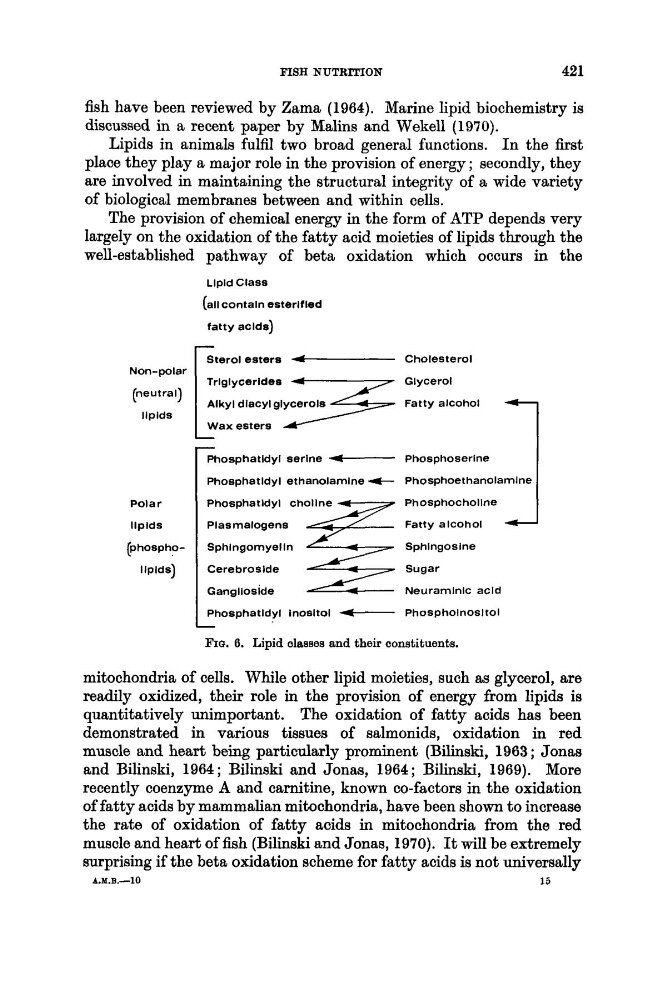
FIG. 6. Lipid classes tmd their constituents.
mitochondria of cells. While other lipid moieties, such as glycerol, are
readily oxidized, their role in the provision of energy from lipids is
quantitatively unimportant. The oxidation of fatty acids has been
demonstrated in various tissues of salmonids, oxidation in red
muscle and heart being particularly prominent (Bilinski, 1963 ; Jonas
and Bilinski, 1964; Bilinski and Jonas, 1964; Bilinski, 1969). More
recently coenzyme A and carnitine, known co-factors in the oxidation
of fatty acids by mammalian mitochondria, have been shown to increase
the rate of oxidation of fatty acids in mitochondria from the red
muscle and heart of fish (Bilinski and Jonas, 1970). It will be extremely
surprising if the beta oxidation scheme for fatty acids is not universally
A . H . B . - ~ ~
16
421
fish have been reviewed by Zama (1964). Marine lipid biochemistry is
discussed in a recent paper by Malins and Wekell (1970).
Lipids in animals fulfil two broad general functions. I n the first
place they play a major role in the provision of energy ; secondly, they
are involved in maintaining the structural integrity of a wide variety
of biological membranes between and within cells.
The provision of chemical energy in the form of ATP depends very
largely on the oxidation of the fatty acid moieties of lipids through the
well-established pathway of beta oxidation which occurs in the
Lipid Class
(all contain esterlfled
fatty acids)
p e r 0 1 esters
Non-aolar
Trlglycerldes
(neutral)
lipids
Wax esters
L
r
Polar
llplds
(phosphoIlplds)
Phosphatldyl serlne
Phosphatldyl ethanolamlne 4Phosphatldyl chollne
Plas malogens
Sphlngomyelln
Cerebroslde
Ganglioside
Phosphatldyl lnosltol -
s
Cholesterol
Glycerol
Fatty alcohol
Phosphoet hanolamlne
Phosphoserlne
PhOSphOChOllne
Fatty alcohol
Sphlngoslne
Sugar
Neuramlnlc acld
PhoSpholnOSltOl
L
FIG. 6. Lipid classes tmd their constituents.
mitochondria of cells. While other lipid moieties, such as glycerol, are
readily oxidized, their role in the provision of energy from lipids is
quantitatively unimportant. The oxidation of fatty acids has been
demonstrated in various tissues of salmonids, oxidation in red
muscle and heart being particularly prominent (Bilinski, 1963 ; Jonas
and Bilinski, 1964; Bilinski and Jonas, 1964; Bilinski, 1969). More
recently coenzyme A and carnitine, known co-factors in the oxidation
of fatty acids by mammalian mitochondria, have been shown to increase
the rate of oxidation of fatty acids in mitochondria from the red
muscle and heart of fish (Bilinski and Jonas, 1970). It will be extremely
surprising if the beta oxidation scheme for fatty acids is not universally
A . H . B . - ~ ~
16