

ASPECTS OF STRESS IN THE TROPICAL MBRINE ENVIRONMENT
227
so few species, but the value is undoubtedly lower than on temperate
shores.
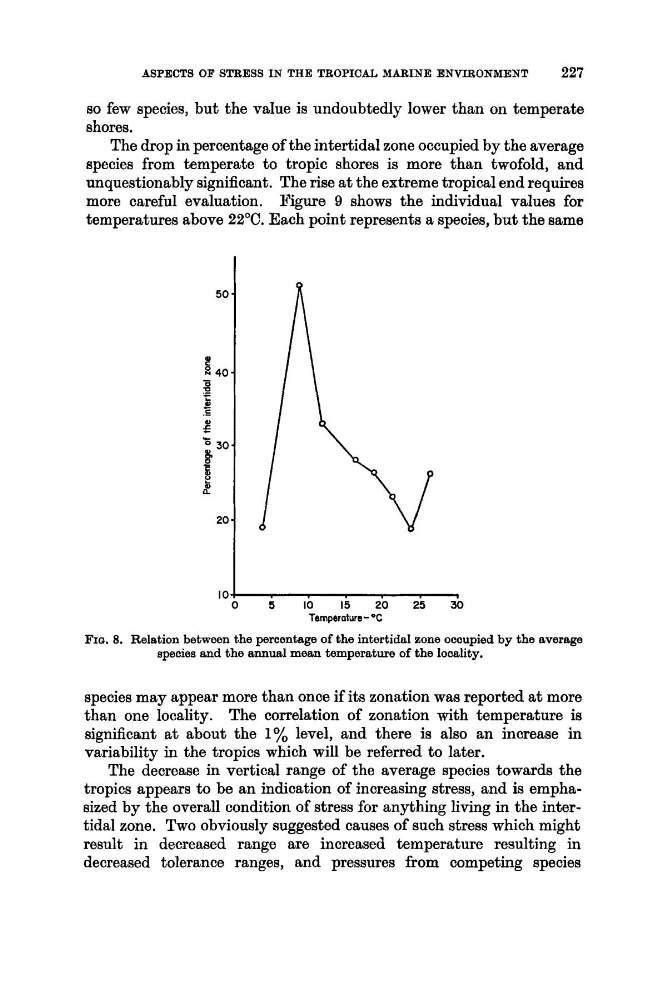
The drop in percentage of the intertidal zone occupied by the average
species from temperate to tropic shores is more than twofold, and
unquestionably significant. The rise at the extreme tropical end requires
more careful evaluation. Figure 9 shows the individual values for
temperatures above 22OC. Each point represents a species, but the same
4
0
5
1 0
15
20
25
30
Temperature- OC
FIQ. 8. Relation between the percentage of the intertidal zone occupied by the average
species and the annual mean temperature of the locality.
species may appear more than once if its zonation was reported at more
than one locality. The correlation of zonation with temperature is
significant at about the 1% level, and there is also an increase in
variability in the tropics which will be referred to later.
The decrease in vertical range of the average species towards the
tropics appears to be an indication of increasing stress, and is emphasized by the overall condition of stress for anything living in the intertidal zone. Two obviously suggested causes of such stress which might
result in decreased range are increased temperature resulting in
decreased tolerance ranges , and pressures from competing species
227
so few species, but the value is undoubtedly lower than on temperate
shores.
The drop in percentage of the intertidal zone occupied by the average
species from temperate to tropic shores is more than twofold, and
unquestionably significant. The rise at the extreme tropical end requires
more careful evaluation. Figure 9 shows the individual values for
temperatures above 22OC. Each point represents a species, but the same
4
0
5
1 0
15
20
25
30
Temperature- OC
FIQ. 8. Relation between the percentage of the intertidal zone occupied by the average
species and the annual mean temperature of the locality.
species may appear more than once if its zonation was reported at more
than one locality. The correlation of zonation with temperature is
significant at about the 1% level, and there is also an increase in
variability in the tropics which will be referred to later.
The decrease in vertical range of the average species towards the
tropics appears to be an indication of increasing stress, and is emphasized by the overall condition of stress for anything living in the intertidal zone. Two obviously suggested causes of such stress which might
result in decreased range are increased temperature resulting in
decreased tolerance ranges , and pressures from competing species