

THE BIOLOGY OF ASCIDIANS
49
molluscan super families Lamellariacea and Cypraeacea appear to
prefer ascidians to other prey (Fretter and Graham, 1962). Lamellaria
perspicua (L.) possibly lives entirely on colonial ascidians. Velutina
velutina (Miiller) attacks Ascidia a n d a pyurid species (Ankel, 1936) and
Diehl (1956) has described how it bores through the test of Styela
wriacea remaining with its prey for about 2 days until nothing remains
but an empty test. This gastropod also lays its eggs on the ascidian and
appcers to spend much of its time in association with it. Fusilriton
oregonensis feeds on Halocynthia aurantium (Pallas), both in the field
and laboratory (Smith, 1070), although this ascidian is believed to be
relatively free of prcdators. Milkman (1967) found that the snail
Mitrella lunata attacked Botryllus schlosseri grown in laboratory
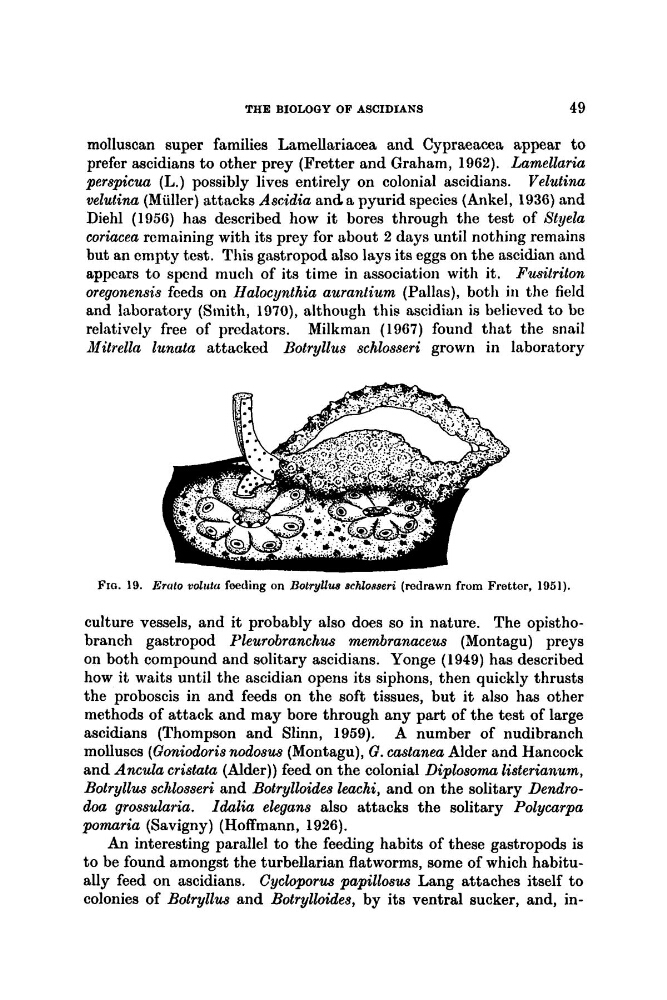
FIG. 19. Ercrto volutu feeding on BotryZlua schloeaeri (redrawn from Frettor, 1951).
culture vessels, and it probably also does so in nature. The opisthobranch gastropod Pleurobranchus membranaceus (Montagu) preys
on both compound and solitary ascidians. Yonge (1949) has described
how it waits until the ascidian opens its siphons, then quickly thrusts
the proboscis in and feeds on the soft tissues, but it also has other
methods of attack and may bore through any part, of the test of large
ascidians (Thompson and Slinn, 1959). A number of nudibranch
molluscs (Goniodoris nodosus (Montagu), G. castanea Alder and Hancock
and Ancula cristata (Alder)) feed on the colonial Diplosomu listerianum,
Botryllus schlosseri and Botrylloides leachi, and on the solitary Dendrodoa grossularia. Idulia elegans also attacks the solitary Polymrpa
pomuria (Savigny) (Hoffmann, 1926).
An interesting parallel to the feeding habits of these gastropods is
to be found amongst the turbellarian flatworms, some of which habitually feed on ascidians. Cycloporus papillosus Lang attaches itself to
colonies of Botryllus and Botrylloides, by its ventral sucker, and, in-
49
molluscan super families Lamellariacea and Cypraeacea appear to
prefer ascidians to other prey (Fretter and Graham, 1962). Lamellaria
perspicua (L.) possibly lives entirely on colonial ascidians. Velutina
velutina (Miiller) attacks Ascidia a n d a pyurid species (Ankel, 1936) and
Diehl (1956) has described how it bores through the test of Styela
wriacea remaining with its prey for about 2 days until nothing remains
but an empty test. This gastropod also lays its eggs on the ascidian and
appcers to spend much of its time in association with it. Fusilriton
oregonensis feeds on Halocynthia aurantium (Pallas), both in the field
and laboratory (Smith, 1070), although this ascidian is believed to be
relatively free of prcdators. Milkman (1967) found that the snail
Mitrella lunata attacked Botryllus schlosseri grown in laboratory
FIG. 19. Ercrto volutu feeding on BotryZlua schloeaeri (redrawn from Frettor, 1951).
culture vessels, and it probably also does so in nature. The opisthobranch gastropod Pleurobranchus membranaceus (Montagu) preys
on both compound and solitary ascidians. Yonge (1949) has described
how it waits until the ascidian opens its siphons, then quickly thrusts
the proboscis in and feeds on the soft tissues, but it also has other
methods of attack and may bore through any part, of the test of large
ascidians (Thompson and Slinn, 1959). A number of nudibranch
molluscs (Goniodoris nodosus (Montagu), G. castanea Alder and Hancock
and Ancula cristata (Alder)) feed on the colonial Diplosomu listerianum,
Botryllus schlosseri and Botrylloides leachi, and on the solitary Dendrodoa grossularia. Idulia elegans also attacks the solitary Polymrpa
pomuria (Savigny) (Hoffmann, 1926).
An interesting parallel to the feeding habits of these gastropods is
to be found amongst the turbellarian flatworms, some of which habitually feed on ascidians. Cycloporus papillosus Lang attaches itself to
colonies of Botryllus and Botrylloides, by its ventral sucker, and, in-