

THE BIOLOGY OF WOOD-BORING TEREDINID MOLLUSCS
413
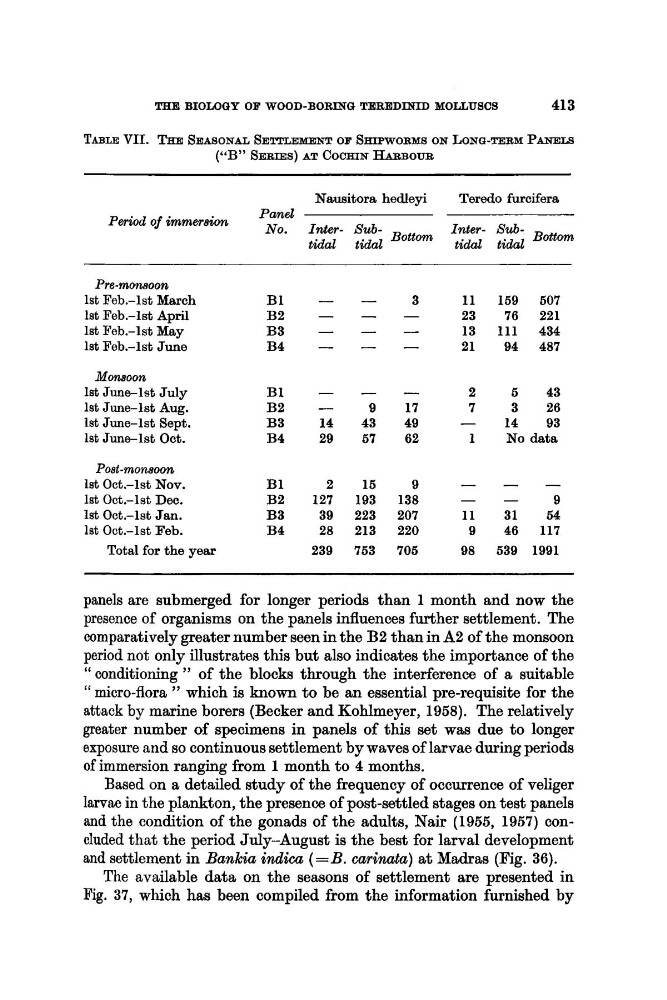
TABLE VII. T m SEASONAL S E T T L E ~ N T
OB SHIPWORMS ON LONG-TERM PANELS
(“B” SERIES) AT COCHIN HARBOUR
Nausitora hedeyi
Teredo furcifera
Panel
Period of immersion
No. Inter- Sub- Bottom
Inter- Sub- BoHom
tidal tidal
tidal tidal
Pre-monsoon
1st Feb.-1st March
1st Feb.-1st May
1st Feb.-lst April
1st Feb.-lst June
Molzsoon
1st June-1st July
1st Jme-lst AUg.
1st June-1st Sept.
1st June-1st Oct.
Post-mowoon
1st 0ct.-1st Dec.
1st 0ct.-1st Jan.
1st Oct.-lst NOV.
1st Oct.-lst Feb.
Total for the year
B1
B2
B3
B4
B1
B2
B3
B4
B1
B2
B3
B4
-
14
29
2
127
39
28
239
-
3
11 169 607
23
76 221
- -
13 111 434
21
94 487
- -
- -
2
6
43
9
17
7
3
26
43
49
- 14 93
67
62
1
No data
- -
- - -
16
9
9
193 138
223 207
11
31
64
213 220
9
46
117
763 706
98 639 1991
- -
panels are submerged for longer periods than 1 month and now the
presence of organisms on the panels influences further settlement. The
comparatively greater number seen in the B2 than in A2 of the monsoon
period not only illustrates this but also indicates the importance of the
“ conditioning ” of the blocks through the interference of a suitable
L r micro-flora ” which is known t o be an essential pre-requisite for the
attack by marine borers (Becker and Kohlmeyer, 1958). The relatively
greater number of specimens in panels of this set was due to longer
exposure and so continuous settlement by waves of larvae during periods
of immersion ranging from 1 month to 4 months.
Based on a detailed study of the frequency of occurrence of veliger
larvae in the plankton, the presence of post-settled stages on test panels
and the condition of the gonads of the adults, Nair (1955, 1957) concluded that the period July-August is the best for larval development
and settlement in Bankia indica (= B. carinata) at Madras (Fig. 36).
The available data on the seasons of settlement are presented in
Fig. 37, which has been compiled from the information furnished by
413
TABLE VII. T m SEASONAL S E T T L E ~ N T
OB SHIPWORMS ON LONG-TERM PANELS
(“B” SERIES) AT COCHIN HARBOUR
Nausitora hedeyi
Teredo furcifera
Panel
Period of immersion
No. Inter- Sub- Bottom
Inter- Sub- BoHom
tidal tidal
tidal tidal
Pre-monsoon
1st Feb.-1st March
1st Feb.-1st May
1st Feb.-lst April
1st Feb.-lst June
Molzsoon
1st June-1st July
1st Jme-lst AUg.
1st June-1st Sept.
1st June-1st Oct.
Post-mowoon
1st 0ct.-1st Dec.
1st 0ct.-1st Jan.
1st Oct.-lst NOV.
1st Oct.-lst Feb.
Total for the year
B1
B2
B3
B4
B1
B2
B3
B4
B1
B2
B3
B4
-
14
29
2
127
39
28
239
-
3
11 169 607
23
76 221
- -
13 111 434
21
94 487
- -
- -
2
6
43
9
17
7
3
26
43
49
- 14 93
67
62
1
No data
- -
- - -
16
9
9
193 138
223 207
11
31
64
213 220
9
46
117
763 706
98 639 1991
- -
panels are submerged for longer periods than 1 month and now the
presence of organisms on the panels influences further settlement. The
comparatively greater number seen in the B2 than in A2 of the monsoon
period not only illustrates this but also indicates the importance of the
“ conditioning ” of the blocks through the interference of a suitable
L r micro-flora ” which is known t o be an essential pre-requisite for the
attack by marine borers (Becker and Kohlmeyer, 1958). The relatively
greater number of specimens in panels of this set was due to longer
exposure and so continuous settlement by waves of larvae during periods
of immersion ranging from 1 month to 4 months.
Based on a detailed study of the frequency of occurrence of veliger
larvae in the plankton, the presence of post-settled stages on test panels
and the condition of the gonads of the adults, Nair (1955, 1957) concluded that the period July-August is the best for larval development
and settlement in Bankia indica (= B. carinata) at Madras (Fig. 36).
The available data on the seasons of settlement are presented in
Fig. 37, which has been compiled from the information furnished by