

370
N. BALAKRISHNAN NAIR AND M. SARASWATHY
Teredora, Uperotus, Psiloteredo, Teredo, Lyrodus, Nototeredo edax,
Xpathoteredo, Nausitora fusticula and Bankia and large in Nausitora
hedleyi and N . dunlopei. In Teredora and Uperotus, it is doubled on
itself to the right. Except for minor differences, the appendices of
Bankia gouldi, B. setacea, B . indica and Nausitora hedleyi are similar
in general structure and histology. The typhlosole in this organ varies
in size and extent and in the nature of coiling. In species described by
Deshayes (1848) the caecum is reported as thin-walled with a narrow
orifice and with a typhlosole (" valvule ") like a funnel and the organ
doubling on itself to end blindly. It is further reported that the intestine
takes off from it. The description given by Quatrefages (1849) is
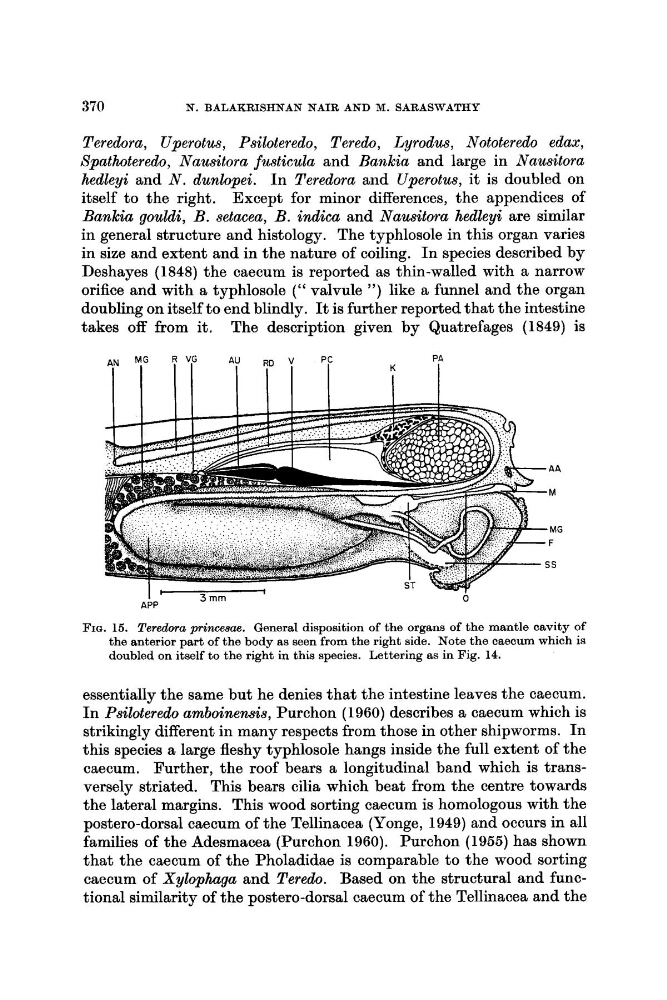
FIG. 15. Teredora princesae. General disposition of the organs of the mantle cavity of
the anterior part of the body as seen from the right side. Note the caecum which is
doubled on itself to the right in this species. Lettering as in Fig. 14.
essentially the same but he denies that the intestine leaves the caecum.
In Psiloteredo amboinensis, Purchon (1960) describes a caecum which is
strikingly different in many respects from those in other shipworms. In
this species a large fleshy typhlosole hangs inside the full extent of the
caecum. Further, the roof bears a longitudinal band which is transversely striated. This bears cilia which beat from the centre towards
the lateral margins. This wood sorting caecum is homologous with the
postero-dorsal caecum of the Tellinacea (Yonge, 1949) and occurs in all
families of the Adesmacea (Purchon 1960). Purchon (1955) has shown
that the caecum of the Pholadidae is comparable to the wood sorting
caecum of Xylophuga and Teredo. Based on the structural and functional similarity of the postero-dorsal caecum of the Tellinacea and the
N. BALAKRISHNAN NAIR AND M. SARASWATHY
Teredora, Uperotus, Psiloteredo, Teredo, Lyrodus, Nototeredo edax,
Xpathoteredo, Nausitora fusticula and Bankia and large in Nausitora
hedleyi and N . dunlopei. In Teredora and Uperotus, it is doubled on
itself to the right. Except for minor differences, the appendices of
Bankia gouldi, B. setacea, B . indica and Nausitora hedleyi are similar
in general structure and histology. The typhlosole in this organ varies
in size and extent and in the nature of coiling. In species described by
Deshayes (1848) the caecum is reported as thin-walled with a narrow
orifice and with a typhlosole (" valvule ") like a funnel and the organ
doubling on itself to end blindly. It is further reported that the intestine
takes off from it. The description given by Quatrefages (1849) is
FIG. 15. Teredora princesae. General disposition of the organs of the mantle cavity of
the anterior part of the body as seen from the right side. Note the caecum which is
doubled on itself to the right in this species. Lettering as in Fig. 14.
essentially the same but he denies that the intestine leaves the caecum.
In Psiloteredo amboinensis, Purchon (1960) describes a caecum which is
strikingly different in many respects from those in other shipworms. In
this species a large fleshy typhlosole hangs inside the full extent of the
caecum. Further, the roof bears a longitudinal band which is transversely striated. This bears cilia which beat from the centre towards
the lateral margins. This wood sorting caecum is homologous with the
postero-dorsal caecum of the Tellinacea (Yonge, 1949) and occurs in all
families of the Adesmacea (Purchon 1960). Purchon (1955) has shown
that the caecum of the Pholadidae is comparable to the wood sorting
caecum of Xylophuga and Teredo. Based on the structural and functional similarity of the postero-dorsal caecum of the Tellinacea and the