

358
N. BALAKRISHNAN NAIR AND M. SARASWATHY
Well defined ciliated tracts occur on the inner surface of the mantle.
In Bankia gouldi Sigerfoos (1908) noted the presence of columnar and
ciliated cells and, opposite the ends of the gills, he noticed that the
mantle is lined with strongly ciliated cells with numerous mucous gland
cells. A narrow strip of ciliated epithelium on the mantle opposite the
branchial groove has been observed in Teredo navalis by Lazier (1924).
Nair (1957a) noted in Bankia indica scattered groups of cilia on the
inner mantle surface which posteriorly are arranged in two tracts which
converge into a single tract behind the visceral mass. In Teredo
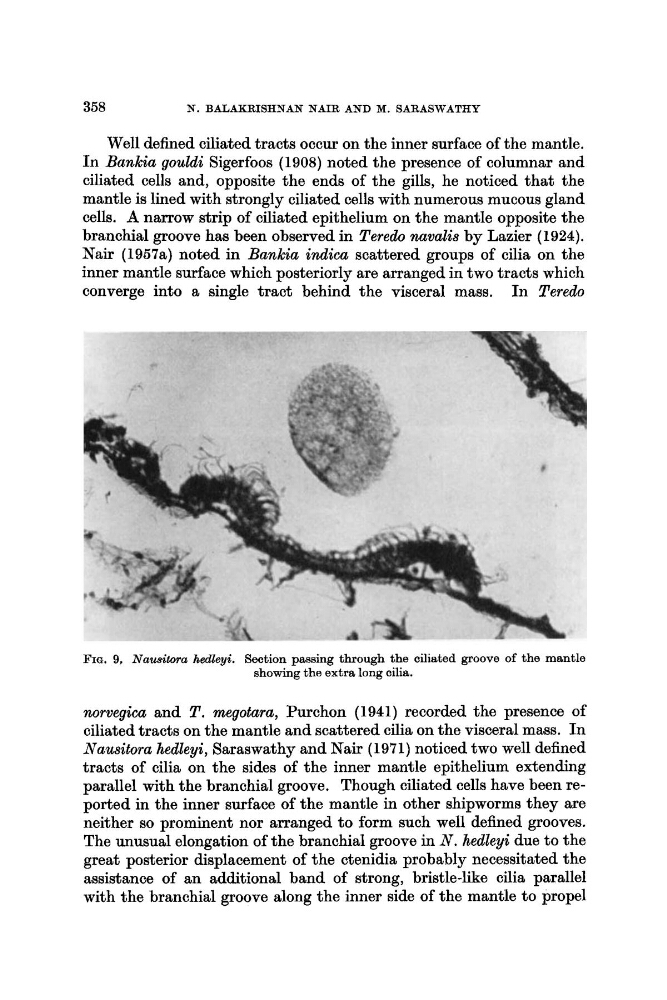
FIG. 9, Nausitora hedleyi. Section passing through the ciliated groove of the mantle
showing the extra long cilia.
norvegica and T . megotara, Purchon (1941) recorded the presence of
ciliated tracts on the mantle and scattered cilia on the visceral mass. In
Nausitora hedleyi, Saraswathy and Nair (1971) noticed two well defined
tracts of cilia on the sides of the inner mantle epithelium extending
parallel with the branchial groove. Though ciliated cells have been reported in the inner surface of the mantle in other shipworms they are
neither so prominent nor arranged to form such well defined grooves.
The unusual elongation of the branchial groove in N . hedleyi due to the
great posterior displacement of the ctenidia probably necessitated the
assistance of an additional band of strong, bristle-like cilia parallel
with the branchial groove along the inner side of the mantle to propel
N. BALAKRISHNAN NAIR AND M. SARASWATHY
Well defined ciliated tracts occur on the inner surface of the mantle.
In Bankia gouldi Sigerfoos (1908) noted the presence of columnar and
ciliated cells and, opposite the ends of the gills, he noticed that the
mantle is lined with strongly ciliated cells with numerous mucous gland
cells. A narrow strip of ciliated epithelium on the mantle opposite the
branchial groove has been observed in Teredo navalis by Lazier (1924).
Nair (1957a) noted in Bankia indica scattered groups of cilia on the
inner mantle surface which posteriorly are arranged in two tracts which
converge into a single tract behind the visceral mass. In Teredo
FIG. 9, Nausitora hedleyi. Section passing through the ciliated groove of the mantle
showing the extra long cilia.
norvegica and T . megotara, Purchon (1941) recorded the presence of
ciliated tracts on the mantle and scattered cilia on the visceral mass. In
Nausitora hedleyi, Saraswathy and Nair (1971) noticed two well defined
tracts of cilia on the sides of the inner mantle epithelium extending
parallel with the branchial groove. Though ciliated cells have been reported in the inner surface of the mantle in other shipworms they are
neither so prominent nor arranged to form such well defined grooves.
The unusual elongation of the branchial groove in N . hedleyi due to the
great posterior displacement of the ctenidia probably necessitated the
assistance of an additional band of strong, bristle-like cilia parallel
with the branchial groove along the inner side of the mantle to propel