

PLANKTON IN NITROGEN AND PHOSPHORUS CYCLES
183
In the Arctic the cover of snow and ice, which is present for a large
part of the year, has a great effect upon biological activity in the sea.
Apollonio (1958), working on an ice island, found that phytoplankton
collected from beneath the ice showed signs of light-starvation. Lakes
of melt water which form during the summer on the surface of the ice are
believed t o act as lenses which concentrate the light and increase the
plant production in the sea immediately below. The phytoplankton
blooms which follow the receding edge of melting ice in the Arctic may
similarly be caused by the higher level of radiation reaching the water
in the absence of the ice. However, increases in nutrient levels may also
play a part, as Grainger (1959) showed that at the time of the spring
01 ’
I
Mor -Apr Dec- Jon Feb-Mor Aug-Oct Nov-Dec Dec-Jon Moy-Jul Oct-Dec Nov-Mor
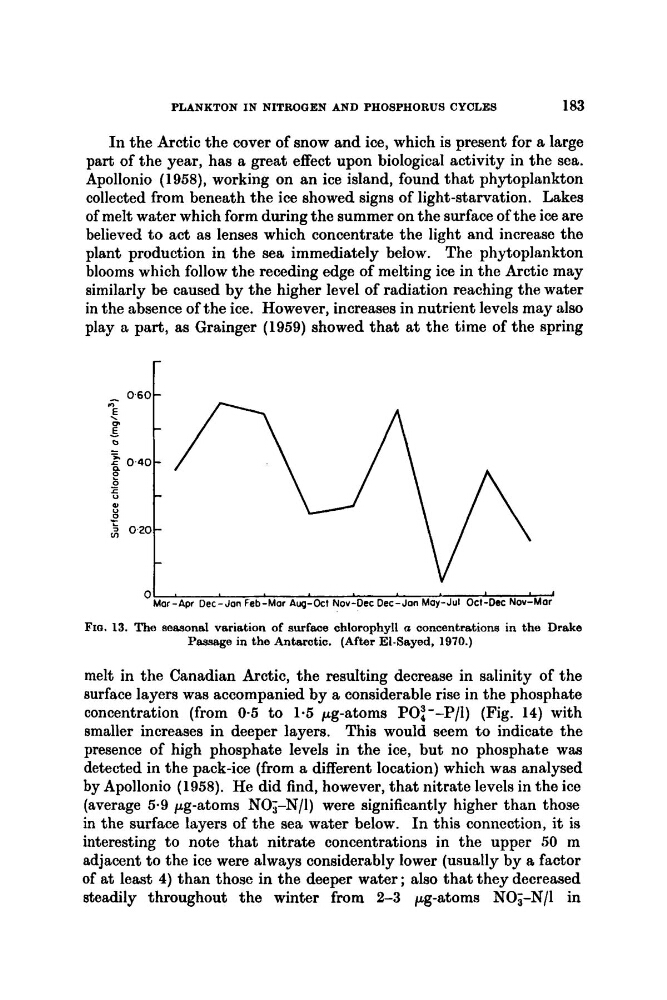
FIG. 13. The seasonal variation of surface chlorophyll ( I concentrations in the Drake
Passage in the Antarctic. (After El-Sayed, 1970.)
melt in the Canadian Arctic, the resulting decrease in salinity of the
surface layers was accompanied by a considerable rise in the phosphate
concentration (from 0-5 to 1.5 pg-atoms PO:--P/l) (Fig. 14) with
smaller increases in deeper layers. This would seem t o indicate the
presence of high phosphate levels in the ice, but no phosphate waa
detected in the pack-ice (from a different location) which was analysed
by Apollonio (1958). He did find, however, that nitrate levels in the ice
(average 5.9 pg-atoms NO;-N/l) were significantly higher than those
in the surface layers of the sea water below. In this connection, it is
interesting to note that nitrate concentrations in the upper 50 m
adjacent to the ice were always considerably lower (usually by a factor
of at least 4) than those in the deeper water ; also that they decreased
steadily throughout the winter from 2-3 pg-atoms NO;-N/1 in
183
In the Arctic the cover of snow and ice, which is present for a large
part of the year, has a great effect upon biological activity in the sea.
Apollonio (1958), working on an ice island, found that phytoplankton
collected from beneath the ice showed signs of light-starvation. Lakes
of melt water which form during the summer on the surface of the ice are
believed t o act as lenses which concentrate the light and increase the
plant production in the sea immediately below. The phytoplankton
blooms which follow the receding edge of melting ice in the Arctic may
similarly be caused by the higher level of radiation reaching the water
in the absence of the ice. However, increases in nutrient levels may also
play a part, as Grainger (1959) showed that at the time of the spring
01 ’
I
Mor -Apr Dec- Jon Feb-Mor Aug-Oct Nov-Dec Dec-Jon Moy-Jul Oct-Dec Nov-Mor
FIG. 13. The seasonal variation of surface chlorophyll ( I concentrations in the Drake
Passage in the Antarctic. (After El-Sayed, 1970.)
melt in the Canadian Arctic, the resulting decrease in salinity of the
surface layers was accompanied by a considerable rise in the phosphate
concentration (from 0-5 to 1.5 pg-atoms PO:--P/l) (Fig. 14) with
smaller increases in deeper layers. This would seem t o indicate the
presence of high phosphate levels in the ice, but no phosphate waa
detected in the pack-ice (from a different location) which was analysed
by Apollonio (1958). He did find, however, that nitrate levels in the ice
(average 5.9 pg-atoms NO;-N/l) were significantly higher than those
in the surface layers of the sea water below. In this connection, it is
interesting to note that nitrate concentrations in the upper 50 m
adjacent to the ice were always considerably lower (usually by a factor
of at least 4) than those in the deeper water ; also that they decreased
steadily throughout the winter from 2-3 pg-atoms NO;-N/1 in