

SCATOLOGICAL STIJDIES O F THE BIVALVIA (MOLLUSCA)
381
do those of Ciona, while in Dolichoglossus, which lives on the mud flats,
the pellets resemble in shape those of a mud-dwelling polychaete,
Lumbrinereis, except that the earthy material taken in by Dolichoglossus is in a more finely divided condition. Further notes on this subject are given by Moore and Kruse (1956) who state, " The type of
faeces emitted varies according to the type of feeding of the animal.
Some deposit feeders such as Holothurians and Polychaeta (Arenicola)
A
B
C
D
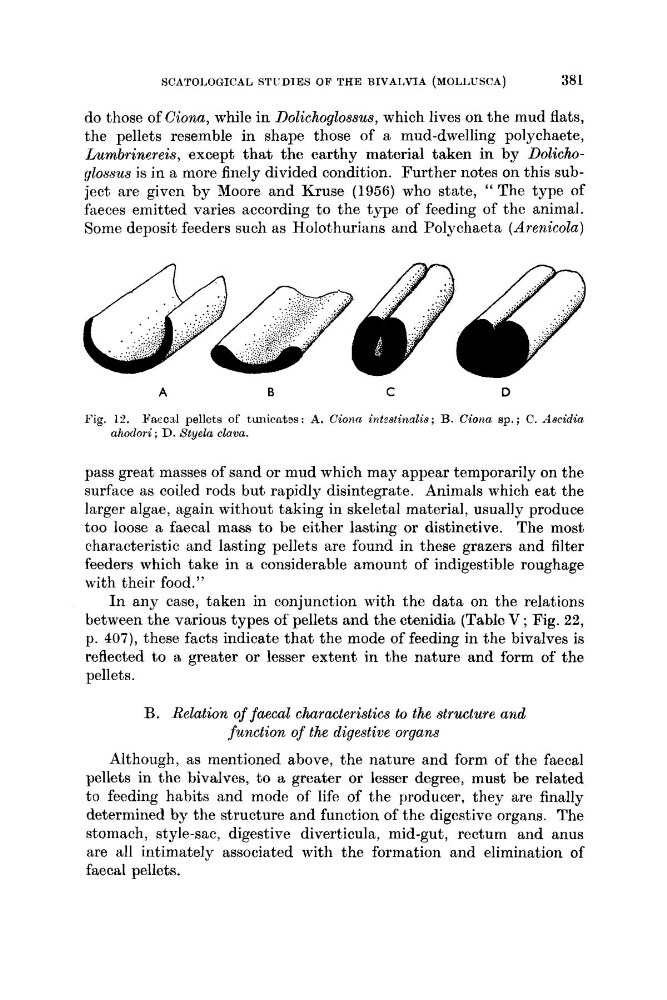
Fig. 12. Faecal pellets of tunicatss: A. Ciona intzstinalis; B. Ciona sp.; C. Ascidia
ahodori ; D. Styela clava.
pass great masses of sand or mud which may appear temporarily on the
surface as coiled rods but rapidly disintegrate. Animals which eat the
larger algae, again without taking in skeletal material, usually produce
too loose a faecal mass to be either lasting or distinctive. The most
characteristic and lasting pellets are found in these grazers and filter
feeders which take in a considerable amount of indigestible roughage
with their food."
I n any case, taken in conjunction with the data on the relations
between the various types of pellets and the ctenidia (Table V ; Fig. 22,
p. 407), these facts indicate that the mode of feeding in the bivalves is
reflected to a greater or lesser extent in the nature and form of the
pellets.
B. Relation of faecal characteristics to the structure and
#function of the digestive organs
Although, as mentioned above, the nature and form of the faecal
pellets in the bivalves, to a greater or lesser degree, must be related
t o feeding habits and mode of life of the producer, they are finally
determined by the structure and function of the digestive organs. The
stomach, style-sac, digestive diverticula, mid-gut, rectum and anus
are all intimately associated with the formation and elimination of
faecal pellets.
381
do those of Ciona, while in Dolichoglossus, which lives on the mud flats,
the pellets resemble in shape those of a mud-dwelling polychaete,
Lumbrinereis, except that the earthy material taken in by Dolichoglossus is in a more finely divided condition. Further notes on this subject are given by Moore and Kruse (1956) who state, " The type of
faeces emitted varies according to the type of feeding of the animal.
Some deposit feeders such as Holothurians and Polychaeta (Arenicola)
A
B
C
D
Fig. 12. Faecal pellets of tunicatss: A. Ciona intzstinalis; B. Ciona sp.; C. Ascidia
ahodori ; D. Styela clava.
pass great masses of sand or mud which may appear temporarily on the
surface as coiled rods but rapidly disintegrate. Animals which eat the
larger algae, again without taking in skeletal material, usually produce
too loose a faecal mass to be either lasting or distinctive. The most
characteristic and lasting pellets are found in these grazers and filter
feeders which take in a considerable amount of indigestible roughage
with their food."
I n any case, taken in conjunction with the data on the relations
between the various types of pellets and the ctenidia (Table V ; Fig. 22,
p. 407), these facts indicate that the mode of feeding in the bivalves is
reflected to a greater or lesser extent in the nature and form of the
pellets.
B. Relation of faecal characteristics to the structure and
#function of the digestive organs
Although, as mentioned above, the nature and form of the faecal
pellets in the bivalves, to a greater or lesser degree, must be related
t o feeding habits and mode of life of the producer, they are finally
determined by the structure and function of the digestive organs. The
stomach, style-sac, digestive diverticula, mid-gut, rectum and anus
are all intimately associated with the formation and elimination of
faecal pellets.