

276
A . NELSON-SNITH
will not burn readily. Portable oxy-propane burners will clean seawalls and breakwaters, but only by causing the stone or concrete surface to flake. Steam-cleaning was attempted on some rocky shores in
Brittany (Holme, 1967; Smith, 1968). The softened oil was carried
away with water-jets, using a small quantity of surfactant or emulsifier. This is also slow and requires reasonable access for the portable
boilers.
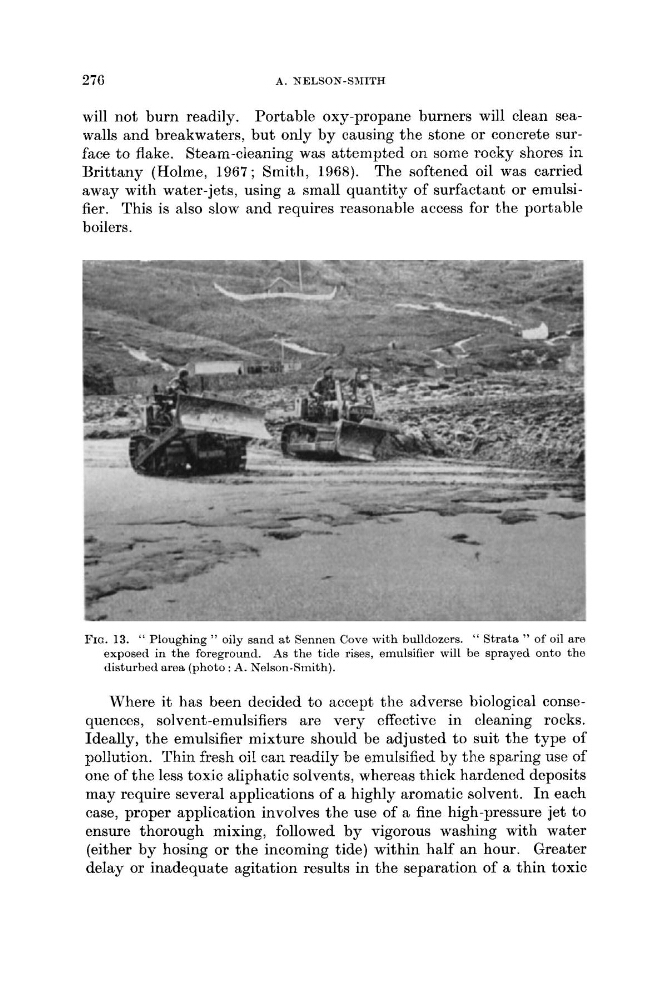
FIG. 13. ‘‘ Ploughing ” oily sand a t Sennen Cove with bulldozers. “ Strata ” of oil are
As the tide rises, emulsifier will be sprayed onto the
exposed in the foreground.
disturbed area (photo : A. Nelson-Smith).
Where it has been decided to accept the adverse biological consequences, solvent-emulsifiers are very effective in cleaning rocks.
Ideally, the emulsifier mixture should be adjusted to suit the type of
pollution. Thin fresh oil can readily be emulsified by the sparing use of
one of the less toxic aliphatic solvents, whereas thick hardened deposits
may require several applications of a highly aromatic solvent. I n each
case, proper application involves the use of a fine high-pressure jet to
ensure thorough mixing, followed by vigorous washing with water
(either by hosing or the incoming tide) within half an hour. Greater
delay or inadequate agitation results in the separation of a thin toxic
A . NELSON-SNITH
will not burn readily. Portable oxy-propane burners will clean seawalls and breakwaters, but only by causing the stone or concrete surface to flake. Steam-cleaning was attempted on some rocky shores in
Brittany (Holme, 1967; Smith, 1968). The softened oil was carried
away with water-jets, using a small quantity of surfactant or emulsifier. This is also slow and requires reasonable access for the portable
boilers.
FIG. 13. ‘‘ Ploughing ” oily sand a t Sennen Cove with bulldozers. “ Strata ” of oil are
As the tide rises, emulsifier will be sprayed onto the
exposed in the foreground.
disturbed area (photo : A. Nelson-Smith).
Where it has been decided to accept the adverse biological consequences, solvent-emulsifiers are very effective in cleaning rocks.
Ideally, the emulsifier mixture should be adjusted to suit the type of
pollution. Thin fresh oil can readily be emulsified by the sparing use of
one of the less toxic aliphatic solvents, whereas thick hardened deposits
may require several applications of a highly aromatic solvent. I n each
case, proper application involves the use of a fine high-pressure jet to
ensure thorough mixing, followed by vigorous washing with water
(either by hosing or the incoming tide) within half an hour. Greater
delay or inadequate agitation results in the separation of a thin toxic