

344
THE BIOT,OCIY O F BUPHAURITDA
60'
4 0 '
zoo
O0
zoo
Antarct
I
I Subantarctic I C e k l I
P'!atifronJ
stollorophias
E.diomedeoe, E distinguenda
-
-
'superba
, , E lucens ,
N. grocilis
S. indicum
_ _ . - -
E spinifera
---I
no, T macrura
N. flexipe,
C. frigida , , E, longjrostrjs
E.poragibba
I
I
I
E triacantha
_ _ _ _
f.vol1entini
E. pseudogibbo
I
€.sirnilis
I- -+i!i!
- _I
-
€.sirnilis var armata
I 7: acutifrons,
Egibbaides
N.megalaps, , T tricuspidata
I
Tgregoria
EPIPELAGIC
E.recurva
I F:?FJy
E.hemigibba
I _ _ _
--E.mut;ca
-__.I
I
I
I _ _ _
- P
N. microps
I
T. abtusifrans, T aequalis / T.subaequalis
E. brevis
f , tenera
I
S.suhmii, S.rnicrophthalma
S. carinaturn
t
S; abbreviatum
S. affine
I
I
S longicorne
N.tenella
MESOPELAGIC
,-I-T.~rientolb T. monocontho
I
N . bOODls
Tpectinoia S.elangatum
S.maximum
I
I
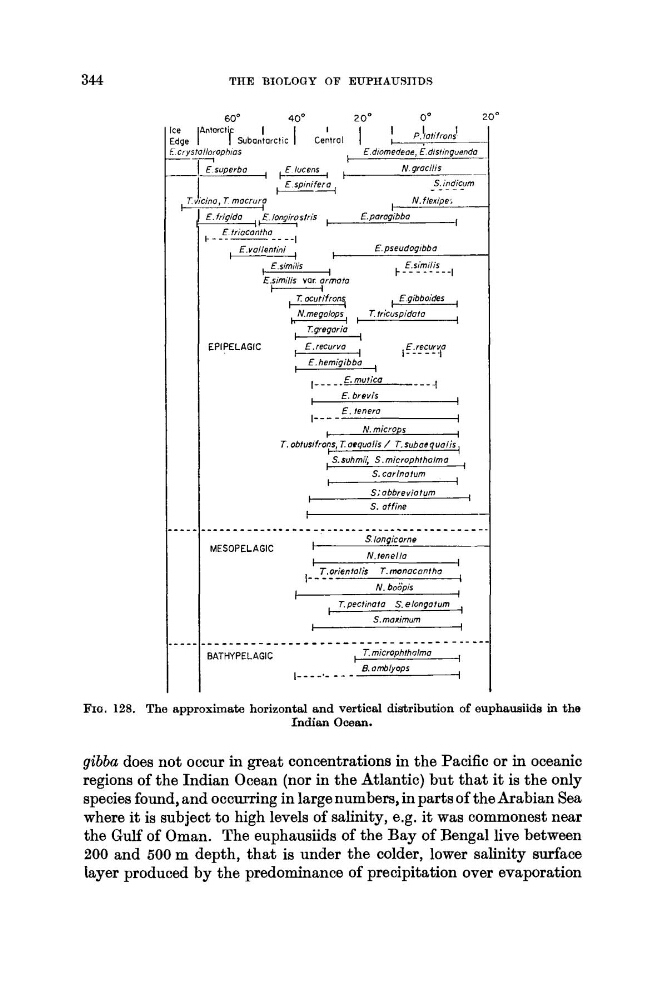
FIG. 128. The approximate horizontal and vertical distribution of euphausiids in the
Indian Ocean.
gibba does not occur in great concentrations in the Pacific or in oceanic
regions of the Indian Ocean (nor in the Atlantic) but that it is the only
species found, and occurring in large numbers, in parts of the Arabian Sea
where it is subject to high levels of salinity, e.g. it was commonest near
the Gulf of Oman. The euphausiids of the Bay of Bengal live between
200 and 500 m depth, that is under the colder, lower salinity surface
layer produced by the predominance of precipitation over evaporation
THE BIOT,OCIY O F BUPHAURITDA
60'
4 0 '
zoo
O0
zoo
Antarct
I
I Subantarctic I C e k l I
P'!atifronJ
stollorophias
E.diomedeoe, E distinguenda
-
-
'superba
, , E lucens ,
N. grocilis
S. indicum
_ _ . - -
E spinifera
---I
no, T macrura
N. flexipe,
C. frigida , , E, longjrostrjs
E.poragibba
I
I
I
E triacantha
_ _ _ _
f.vol1entini
E. pseudogibbo
I
€.sirnilis
I- -+i!i!
- _I
-
€.sirnilis var armata
I 7: acutifrons,
Egibbaides
N.megalaps, , T tricuspidata
I
Tgregoria
EPIPELAGIC
E.recurva
I F:?FJy
E.hemigibba
I _ _ _
--E.mut;ca
-__.I
I
I
I _ _ _
- P
N. microps
I
T. abtusifrans, T aequalis / T.subaequalis
E. brevis
f , tenera
I
S.suhmii, S.rnicrophthalma
S. carinaturn
t
S; abbreviatum
S. affine
I
I
S longicorne
N.tenella
MESOPELAGIC
,-I-T.~rientolb T. monocontho
I
N . bOODls
Tpectinoia S.elangatum
S.maximum
I
I
FIG. 128. The approximate horizontal and vertical distribution of euphausiids in the
Indian Ocean.
gibba does not occur in great concentrations in the Pacific or in oceanic
regions of the Indian Ocean (nor in the Atlantic) but that it is the only
species found, and occurring in large numbers, in parts of the Arabian Sea
where it is subject to high levels of salinity, e.g. it was commonest near
the Gulf of Oman. The euphausiids of the Bay of Bengal live between
200 and 500 m depth, that is under the colder, lower salinity surface
layer produced by the predominance of precipitation over evaporation