

336
THE BIOLOGY OF EUPHAUSIIDS
60"
4 0"
20"
0"
I
I
l
l
1 Centrol I Equatorial
N. simplex H
'orophias
N copensis
I
H
E lucen
uperba
I
d
, ~ m o c i u r a k . s i A / i s , Esimiiis "or armata
rigid0
E. iongirosliis
s n t h a
'
I
'
N.meQaiobs
- F
T qregorio
20"
40"
60"
I
I
I Central I Suboictic lArctir
N couchi;
Traschii
T, Germis
7: iongicaudata
M. norveqica
T. acutifrons
'
N megoloDs
1
T. qregorio
E . hemigibba
I E. reCIIr"0
,__.__._..__I
I
N. fiexipes
E. hrohnii
C, hem!'gibbo
E. recurva
- E.spmfero
H
. - -. . . - - - - - - - - - -.
E'. americana
E. honseni
E. eximia
5. microphthalma,T: tiicuspldata
I
I
T. obtusifrons, T. aequalis / T . suboequolis
I
E. mutico, E. bievis, E,tenero, E. pseudogibba, E.gibboides
N microps/N. atlantico
I
I
I
S corinafum, S.offine, S . suhmii, S. abbreviafum
Ice
idge
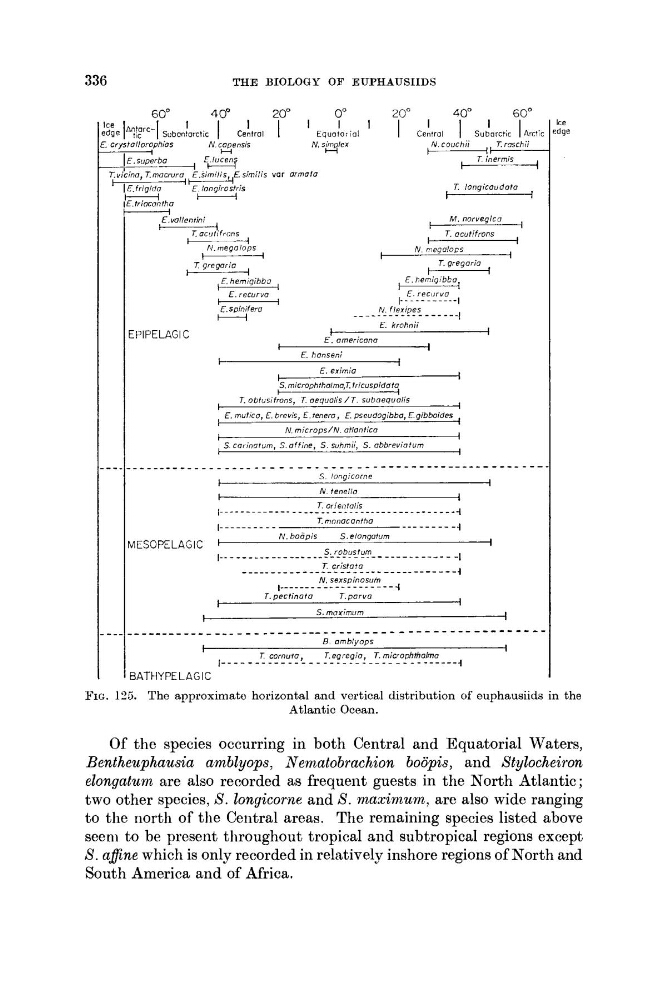
FIG. 146. The approximato horizontal and vertical distribution of euphausiids in the
Atlantic Ocean.
Of tlie species occurring in both Central and Equatorial Waters,
Bentheuphausia amblyops, Nematobrachion boopis, and Stylocheiron
elongatum are also recorded as frequent guests in the North Atlantic ;
two other species, S. longicorne and S . maximum, are also wide ranging
to tlie north of the Central areas. The remaining species listed above
seem to be present throughout tropical and subtropical regions except
8. a$;ne which is only recorded in relatively inshore regions of North and
South America and of Africa.
THE BIOLOGY OF EUPHAUSIIDS
60"
4 0"
20"
0"
I
I
l
l
1 Centrol I Equatorial
N. simplex H
'orophias
N copensis
I
H
E lucen
uperba
I
d
, ~ m o c i u r a k . s i A / i s , Esimiiis "or armata
rigid0
E. iongirosliis
s n t h a
'
I
'
N.meQaiobs
- F
T qregorio
20"
40"
60"
I
I
I Central I Suboictic lArctir
N couchi;
Traschii
T, Germis
7: iongicaudata
M. norveqica
T. acutifrons
'
N megoloDs
1
T. qregorio
E . hemigibba
I E. reCIIr"0
,__.__._..__I
I
N. fiexipes
E. hrohnii
C, hem!'gibbo
E. recurva
- E.spmfero
H
. - -. . . - - - - - - - - - -.
E'. americana
E. honseni
E. eximia
5. microphthalma,T: tiicuspldata
I
I
T. obtusifrons, T. aequalis / T . suboequolis
I
E. mutico, E. bievis, E,tenero, E. pseudogibba, E.gibboides
N microps/N. atlantico
I
I
I
S corinafum, S.offine, S . suhmii, S. abbreviafum
Ice
idge
FIG. 146. The approximato horizontal and vertical distribution of euphausiids in the
Atlantic Ocean.
Of tlie species occurring in both Central and Equatorial Waters,
Bentheuphausia amblyops, Nematobrachion boopis, and Stylocheiron
elongatum are also recorded as frequent guests in the North Atlantic ;
two other species, S. longicorne and S . maximum, are also wide ranging
to tlie north of the Central areas. The remaining species listed above
seem to be present throughout tropical and subtropical regions except
8. a$;ne which is only recorded in relatively inshore regions of North and
South America and of Africa.