

24
THE BIOLOGY OF EUPHAUSIIDS
o z m m
c (
O l m m
H
O l m m
M
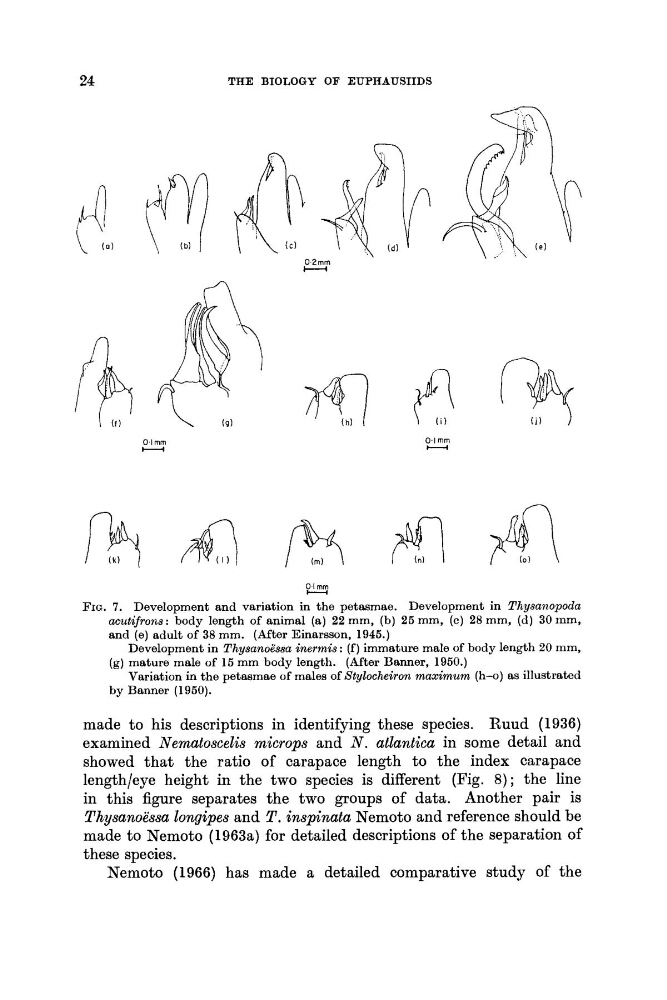
FIG. 7. Development and variation in the petasmae. Development in Th'hysanopoda
acutifrons: body length of animal (a) 22 mm, (b) 25 mm, ( c ) 28 mm, (d) 30 mm,
and (e) adult of 38 mm. (After Einarsson, 1945.)
Development in ThysanoLsa inermis : (f) immature male of body length 20 mm,
(6) mature male of 15 mm body length. (After Banner, 1950.)
Variation in the petasmae of males of Stylocheiron maximum (h-o) as illustrated
by Banner (1950).
made to his descriptions in identifying these species. Ruud (1936)
examined Nematoscelis microps and N . atlantica in some detail and
showed that the ratio of carapace length to the index carapace
lengthleye height in the two species is different (Fig. 8 ) ; the line
in this figure separates the two groups of data. Another pair is
Thysanoessa longipes and T . inspinata Nemoto and reference should be
made to Nemoto (1963a) for detailed descriptions of the separation of
these species.
Nemoto (1966) has made a detailed comparative study of the
THE BIOLOGY OF EUPHAUSIIDS
o z m m
c (
O l m m
H
O l m m
M
FIG. 7. Development and variation in the petasmae. Development in Th'hysanopoda
acutifrons: body length of animal (a) 22 mm, (b) 25 mm, ( c ) 28 mm, (d) 30 mm,
and (e) adult of 38 mm. (After Einarsson, 1945.)
Development in ThysanoLsa inermis : (f) immature male of body length 20 mm,
(6) mature male of 15 mm body length. (After Banner, 1950.)
Variation in the petasmae of males of Stylocheiron maximum (h-o) as illustrated
by Banner (1950).
made to his descriptions in identifying these species. Ruud (1936)
examined Nematoscelis microps and N . atlantica in some detail and
showed that the ratio of carapace length to the index carapace
lengthleye height in the two species is different (Fig. 8 ) ; the line
in this figure separates the two groups of data. Another pair is
Thysanoessa longipes and T . inspinata Nemoto and reference should be
made to Nemoto (1963a) for detailed descriptions of the separation of
these species.
Nemoto (1966) has made a detailed comparative study of the