

7. CHEMICAL COM'POSITION
215
We do have measurements of the amounts of vitamin B,, present
in euphausiids. Cowey (1956) found 5-6 pg per 100 g wet wt Meganyctiphanes norvegica and 7-8 pg per 100 g wet wt Thysanoessa raschii
as vitamin B12. He divided the bodies of Meganyctiphanes norvegica
into the following portions ; muscle, gut, exoskeleton, eyes and appendages and found similar concentrations of vitamin B,, in each fraction
except the gut which had a concentration equal to twice that in the
tissues. More recently, this vitamin was estimated by Hirano et al.
(1964) in thirteen different species of Crustacea and the levels found in
Euphausia superba were higher than in the other crustaceans examined.
0
I '2
6
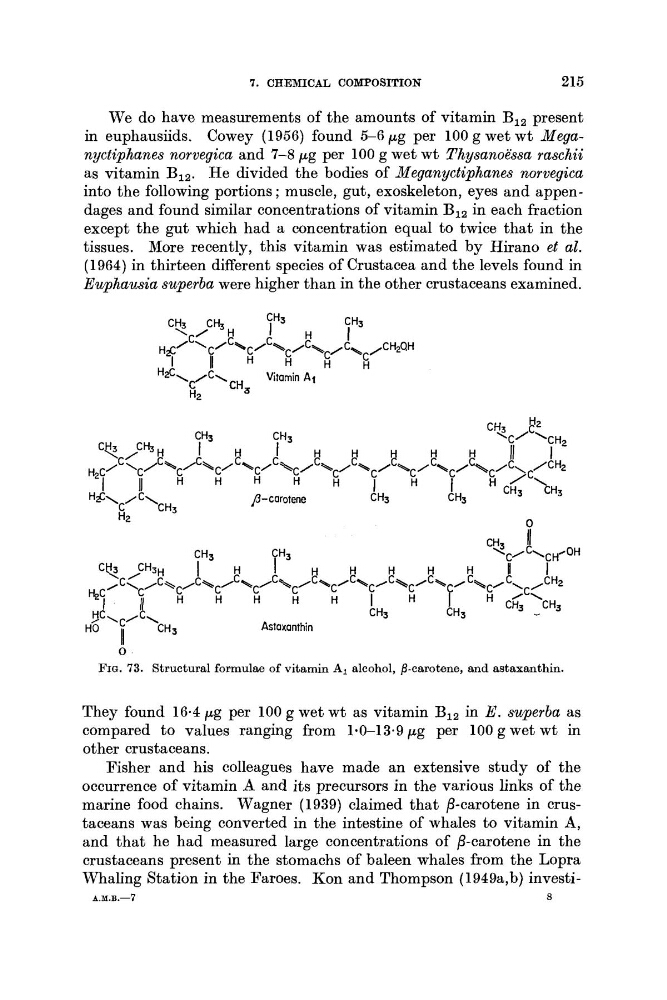
FIG. 73. Structural formulae of vitamin A, alcohol, ,%carotene, and astaxanthin.
They found 16.4 pg per 100 g wet wt as vitamin B,, in E. superba as
compared to values ranging from 1.0-13.9 pg per 100 g wet wt in
other crustaceans.
Fisher and his colleagues have made an extensive study of the
occurrence of vitamin A and its precursors in the various links of the
marine food chains. Wagner (1939) claimed that ,%carotene in crustaceans was being converted in the intestine of whales to vitamin A,
and that he had measured large concentrations of p-carotene in the
crustaceans present in the stomachs of baleen whales from the Lopra
Whaling Station in the Faroes. Kon and Thompson (1949a,b) investiA.M.B.-7
8
215
We do have measurements of the amounts of vitamin B,, present
in euphausiids. Cowey (1956) found 5-6 pg per 100 g wet wt Meganyctiphanes norvegica and 7-8 pg per 100 g wet wt Thysanoessa raschii
as vitamin B12. He divided the bodies of Meganyctiphanes norvegica
into the following portions ; muscle, gut, exoskeleton, eyes and appendages and found similar concentrations of vitamin B,, in each fraction
except the gut which had a concentration equal to twice that in the
tissues. More recently, this vitamin was estimated by Hirano et al.
(1964) in thirteen different species of Crustacea and the levels found in
Euphausia superba were higher than in the other crustaceans examined.
0
I '2
6
FIG. 73. Structural formulae of vitamin A, alcohol, ,%carotene, and astaxanthin.
They found 16.4 pg per 100 g wet wt as vitamin B,, in E. superba as
compared to values ranging from 1.0-13.9 pg per 100 g wet wt in
other crustaceans.
Fisher and his colleagues have made an extensive study of the
occurrence of vitamin A and its precursors in the various links of the
marine food chains. Wagner (1939) claimed that ,%carotene in crustaceans was being converted in the intestine of whales to vitamin A,
and that he had measured large concentrations of p-carotene in the
crustaceans present in the stomachs of baleen whales from the Lopra
Whaling Station in the Faroes. Kon and Thompson (1949a,b) investiA.M.B.-7
8