

7. CHEMICAL COMPOSITION
205
of euphausiids living in high latitudes than in those of euphausiids
living nearer equatorial regions and so in water of higher temperatures.
There are also seasonal variations in the amount of lipid present in
euphausiids living in any one sea area. The lipids are not contained
within " oil sacs " but are present within the body of the animal as
dispersed lipids and occur mainly in the thoracic region. Identifications
of the different fatty acids present in different species of euphausiids
have been reported but further work is required in this field.
Fisher (1962a)
determined the lipid content of Meganyctiphanes norvegica and
Thysanoessa raschii in relation to season of the year and body size. The
weight of lipid per single Meganyctiphanes norvegica reaches maximal
values in the autumn but there is also a small increase in lipid content
in the spring (Fig. 71) ; minimal values occur at the end of the winter
We shall examine the seasonal variations first.
Eggs in
plankion
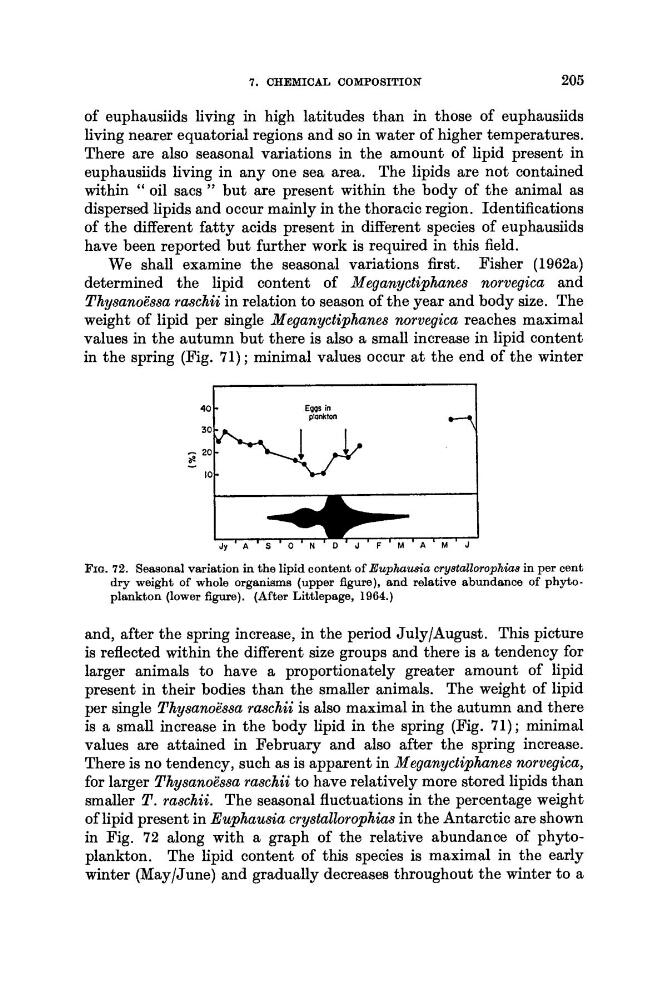
FIG. 12. Seasonal variation in the lipid content of Euphuusia crystallorophias in per cent
dry weight of whole organisms (upper figure), and relative abundance of phytoplankton (lower figure). (After Littlepage, 1964.)
and, after the spring increase, in the period July/August. This picture
is reflected within the different size groups and there is a tendency for
larger animals to have a proportionately greater amount of lipid
present in their bodies than the smaller animals. The weight of lipid
per single Thysanoessa raschii is also maximal in the autumn and there
is a small increase in the body lipid in the spring (Fig. 71) ; minimal
values are attained in February and also after the spring increase.
There is no tendency, such as is apparent in Meganyctiphanes norvegica,
for larger Thysanoessa raschii to have relatively more stored lipids than
smaller T . raschii. The seasonal fluctuations in the percentage weight
of lipid present in Euphausia crystallorophias in the Antarctic are shown
in Fig. 72 along with a graph of the relative abundance of phytoplankton. The lipid content of this species is maximal in the early
winter (May/June) and gradually decreases throughout the winter to a
205
of euphausiids living in high latitudes than in those of euphausiids
living nearer equatorial regions and so in water of higher temperatures.
There are also seasonal variations in the amount of lipid present in
euphausiids living in any one sea area. The lipids are not contained
within " oil sacs " but are present within the body of the animal as
dispersed lipids and occur mainly in the thoracic region. Identifications
of the different fatty acids present in different species of euphausiids
have been reported but further work is required in this field.
Fisher (1962a)
determined the lipid content of Meganyctiphanes norvegica and
Thysanoessa raschii in relation to season of the year and body size. The
weight of lipid per single Meganyctiphanes norvegica reaches maximal
values in the autumn but there is also a small increase in lipid content
in the spring (Fig. 71) ; minimal values occur at the end of the winter
We shall examine the seasonal variations first.
Eggs in
plankion
FIG. 12. Seasonal variation in the lipid content of Euphuusia crystallorophias in per cent
dry weight of whole organisms (upper figure), and relative abundance of phytoplankton (lower figure). (After Littlepage, 1964.)
and, after the spring increase, in the period July/August. This picture
is reflected within the different size groups and there is a tendency for
larger animals to have a proportionately greater amount of lipid
present in their bodies than the smaller animals. The weight of lipid
per single Thysanoessa raschii is also maximal in the autumn and there
is a small increase in the body lipid in the spring (Fig. 71) ; minimal
values are attained in February and also after the spring increase.
There is no tendency, such as is apparent in Meganyctiphanes norvegica,
for larger Thysanoessa raschii to have relatively more stored lipids than
smaller T . raschii. The seasonal fluctuations in the percentage weight
of lipid present in Euphausia crystallorophias in the Antarctic are shown
in Fig. 72 along with a graph of the relative abundance of phytoplankton. The lipid content of this species is maximal in the early
winter (May/June) and gradually decreases throughout the winter to a