

2. THE SPECIES OF KRILL
15
ventrally flexed abdomen, and a tail fan formed by two pairs of uropods
in association with the telson; these features are called the caridoid
facies and together with others, such as the presence of exopodites on
the thoracic legs, are those of the hypothetical malacostracan stock.
The caridoid form has been retained in each of the divergent branches
of this stock by those members adhering most closely to the primitive
habits of life, particularly of locomotion. The one character said to
distinguish Mysidacea and Euphausiacea from the Decapoda was the
freedom of the carapace from the dorsal surface of one or more posterior
a
-
I
I
C
e
d
._______-- ---A
8
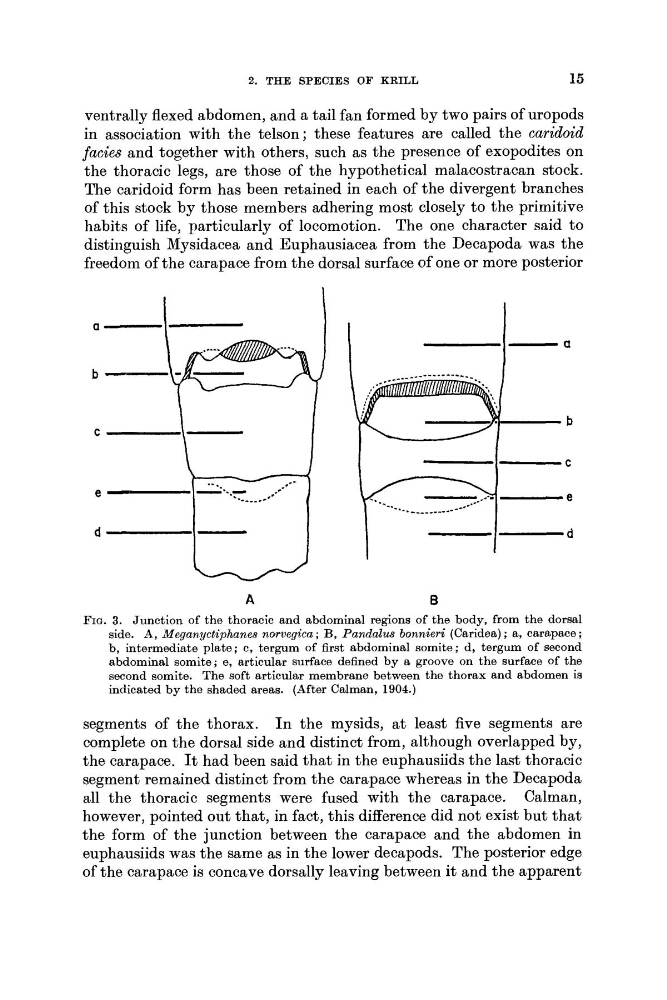
FIG. 3. Junction of the thoracic and abdominal regions of the body, from the dorsal
side. A, Megan.yctiphanes norvegica ; B, Pandalus bonn,ieri (Caridea) ; a, carapace ;
b, intermediate plate ; c, tergum of first abdominal somite ; d, tergum of second
abdominal somite; e, articular surface defined by a groove on the surface of the
second somite. The soft articular membrane between the thorax and abdomen is
indicated by the shaded areas. (After Calman, 1904.)
segments of the thorax. I n the mysids, a t least five segments are
complete on the dorsal side and distinct from, although overlapped by,
the carapace. It had been said that in the euphausiids the last thoracic
segment remained distinct from the carapace whereas in the Decapoda
all the thoracic segments were fused with the carapace. Calman,
however, pointed out that, in fact, this difference did not exist but that
the form of the junction between the carapace and the abdomen in
euphausiids was the same as in the lower decapods. The posterior edge
of the carapace is concave dorsally leaving between it and the apparent
15
ventrally flexed abdomen, and a tail fan formed by two pairs of uropods
in association with the telson; these features are called the caridoid
facies and together with others, such as the presence of exopodites on
the thoracic legs, are those of the hypothetical malacostracan stock.
The caridoid form has been retained in each of the divergent branches
of this stock by those members adhering most closely to the primitive
habits of life, particularly of locomotion. The one character said to
distinguish Mysidacea and Euphausiacea from the Decapoda was the
freedom of the carapace from the dorsal surface of one or more posterior
a
-
I
I
C
e
d
._______-- ---A
8
FIG. 3. Junction of the thoracic and abdominal regions of the body, from the dorsal
side. A, Megan.yctiphanes norvegica ; B, Pandalus bonn,ieri (Caridea) ; a, carapace ;
b, intermediate plate ; c, tergum of first abdominal somite ; d, tergum of second
abdominal somite; e, articular surface defined by a groove on the surface of the
second somite. The soft articular membrane between the thorax and abdomen is
indicated by the shaded areas. (After Calman, 1904.)
segments of the thorax. I n the mysids, a t least five segments are
complete on the dorsal side and distinct from, although overlapped by,
the carapace. It had been said that in the euphausiids the last thoracic
segment remained distinct from the carapace whereas in the Decapoda
all the thoracic segments were fused with the carapace. Calman,
however, pointed out that, in fact, this difference did not exist but that
the form of the junction between the carapace and the abdomen in
euphausiids was the same as in the lower decapods. The posterior edge
of the carapace is concave dorsally leaving between it and the apparent