

178
THE BIOLOGY O F EUPHAUSITDS
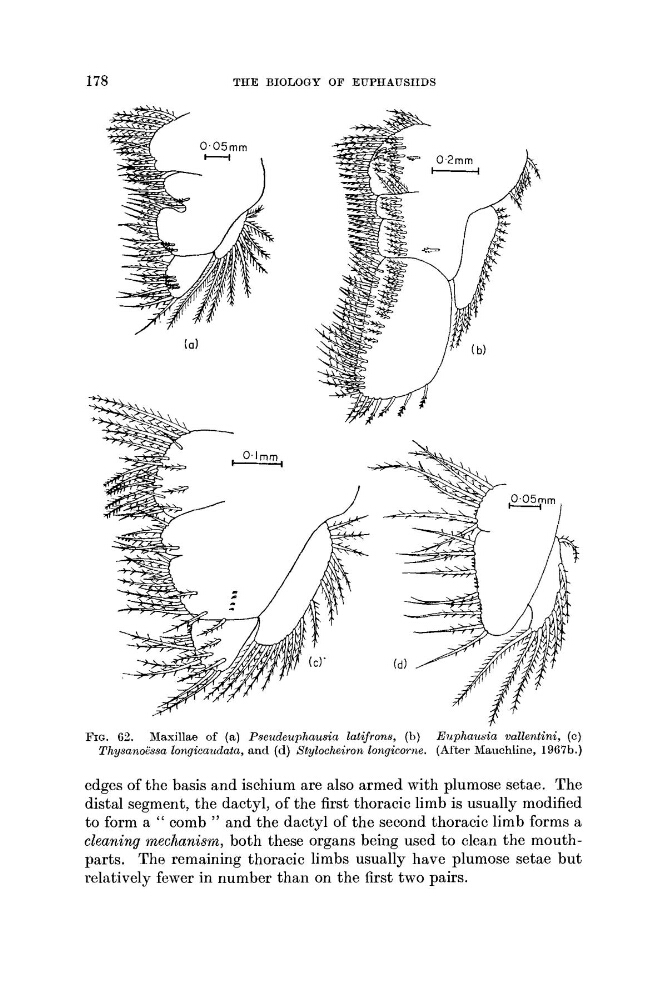
FIG. 63. Maxillae of (a) Pseudeuphausia Zatifrons, (b) Euphaiisia wallentini, (c)
Thysanoissa Zongicaudata, and (d) Stylocheiron longicortae. (After Mauchline, 1967b.)
edges of the basis and ischium are also armed with plumose setae. The
distal segment, the dactyl, of the first thoracic limb is usually modified
to form a " comb " and the dactyl of the second thoracic limb forms a
cleaning mechanism, both these organs being used to clean the mouthparts. The remaining thoracic limbs usually have plumose setae but
relatively fewer in number than on the first two pairs.
THE BIOLOGY O F EUPHAUSITDS
FIG. 63. Maxillae of (a) Pseudeuphausia Zatifrons, (b) Euphaiisia wallentini, (c)
Thysanoissa Zongicaudata, and (d) Stylocheiron longicortae. (After Mauchline, 1967b.)
edges of the basis and ischium are also armed with plumose setae. The
distal segment, the dactyl, of the first thoracic limb is usually modified
to form a " comb " and the dactyl of the second thoracic limb forms a
cleaning mechanism, both these organs being used to clean the mouthparts. The remaining thoracic limbs usually have plumose setae but
relatively fewer in number than on the first two pairs.