

138
THE BIOLOGY OF EUPHAUSIIDS
whole, probably moves upwards at night so producing a surface aggregation. There is no evidence to suggest that the calyptopes living at
depths of 600 m during the day ever reach the surface layers a t night.
Thysanob'sso raschii
Meganyctiphanes norvegica
Euphausia tr;acantha
Cal. day Fur.day
Cal. day
Fur. day
Col.day
Cal. night Fur.day
Fur.night
Euphausia superba
Euphausia brevis
Pseudeuphausia latifrons
Cal. day Col. night Fur day Fur night
Cal .day Gal. night
Cal.doy
Cal.night
400 "'lt IT /t I T : : : i f 17 ;;kit
Euphausia tenera
Nematoscelis microps
Cal. day
Cal. night Fur. day
Fur. night
Cal. day
Cal. night Fur. day
Fur. night
Stylocheiron carinaturn
Thysonopoda tricuspidata
Caf . day Caf. night Fur.day Fur.night
Cal.day
Cal. night Fur. day
Fur. night
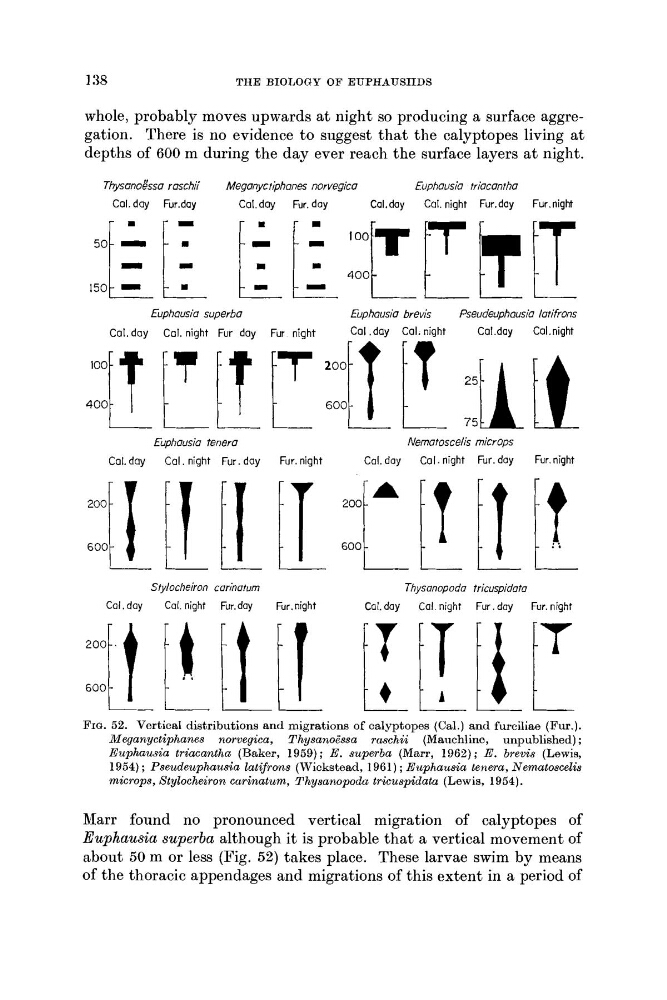
FIG. 52. Vertical distributions and migrations of calyptopes (Cal.) and furciliae (Fur.).
Meganyctiphanes norvegica, Thysanoessa raschii (Mauchline, unpublished) ;
Euphausia triaeantha (Baker, 1959); E. superba (Marr, 1962); 23. brevis (Lewis,
1954) ; Pseudeuphausia latifrons (Wickstead, 1961) ; Euphausia tenera, Nematoscelis
microps, Stylocheiron carinaturn, Thysanopoda tricuspidata (Lewis, 1954).
Marr found no pronounced vertical migration of calyptopes of
Euphausia superba although it is probable that a vertical movement of
about 50 m or less (Fig. 5 2 ) takes place. These larvae swim by means
of the thoracic appendages and migrations of this extent in a period of
THE BIOLOGY OF EUPHAUSIIDS
whole, probably moves upwards at night so producing a surface aggregation. There is no evidence to suggest that the calyptopes living at
depths of 600 m during the day ever reach the surface layers a t night.
Thysanob'sso raschii
Meganyctiphanes norvegica
Euphausia tr;acantha
Cal. day Fur.day
Cal. day
Fur. day
Col.day
Cal. night Fur.day
Fur.night
Euphausia superba
Euphausia brevis
Pseudeuphausia latifrons
Cal. day Col. night Fur day Fur night
Cal .day Gal. night
Cal.doy
Cal.night
400 "'lt IT /t I T : : : i f 17 ;;kit
Euphausia tenera
Nematoscelis microps
Cal. day
Cal. night Fur. day
Fur. night
Cal. day
Cal. night Fur. day
Fur. night
Stylocheiron carinaturn
Thysonopoda tricuspidata
Caf . day Caf. night Fur.day Fur.night
Cal.day
Cal. night Fur. day
Fur. night
FIG. 52. Vertical distributions and migrations of calyptopes (Cal.) and furciliae (Fur.).
Meganyctiphanes norvegica, Thysanoessa raschii (Mauchline, unpublished) ;
Euphausia triaeantha (Baker, 1959); E. superba (Marr, 1962); 23. brevis (Lewis,
1954) ; Pseudeuphausia latifrons (Wickstead, 1961) ; Euphausia tenera, Nematoscelis
microps, Stylocheiron carinaturn, Thysanopoda tricuspidata (Lewis, 1954).
Marr found no pronounced vertical migration of calyptopes of
Euphausia superba although it is probable that a vertical movement of
about 50 m or less (Fig. 5 2 ) takes place. These larvae swim by means
of the thoracic appendages and migrations of this extent in a period of